Casualties unknown

1990-07-23: Aircoupe F-1 (N93905) — Cochran Aviation — Washington, MO

Washington, MO, US

On July 23, 1990, an Aircoupe F-1 (registration N93905) operated by Cochran Aviation was involved in an aviation accident near Washington, MO. Investigators recorded the probable cause as: The pilots' failure to see and avoid each other while on final approach to runway 34. This summary draws on records from the U.S. National Transportation Safety Board (NTSB) historical archive; 1 related events involving the same aircraft type or operator are linked below.

Sourcesthe U.S. National Transportation Safety Board (NTSB) historical archivePrimary reportUpdated 1781061362Data APIEditorial standards
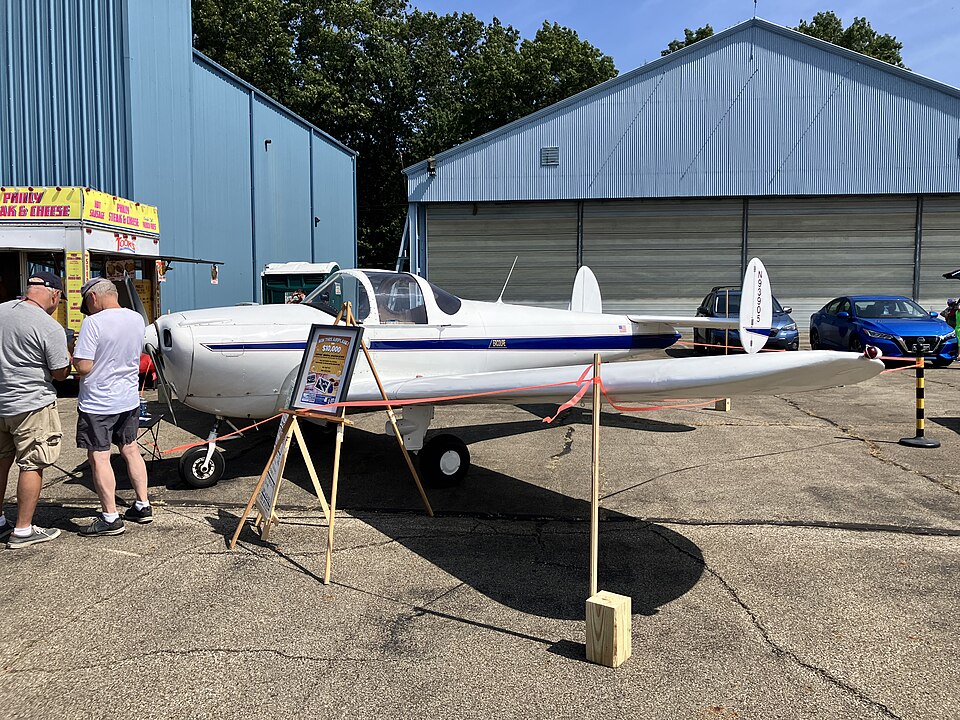
Aircraft registered N93905
Aircraft registered N93905. Photo: Designism / CC0, via Wikimedia Commons

A high-wing monoplane collided with a low-wing monoplane while both were on final approach to runway 34. The low-wing aircraft struck the upper cockpit area of the other plane, resulting in a mid-air impact.

What happened

Two aircraft were operating in close proximity during the final stages of their approaches to runway 34. One aircraft, characterized as a high-wing monoplane, was established on its final approach path. Simultaneously, a second aircraft, identified as a low-wing monoplane, also turned onto the final approach course for the same runway.

The two aircraft collided in mid-air. The impact occurred when the nosewheel of the low-wing aircraft struck the upper cockpit section and the right wing root area of the high-wing aircraft. Both pilots were operating under visual flight rules conditions typical of such approaches, but neither pilot reported having sighted the other aircraft prior to the moment of impact.

Despite the proximity of the two aircraft on converging or parallel final paths, no evasive maneuvers were executed by either pilot before the collision occurred. The lack of mutual visual contact and the absence of corrective action resulted in the structural damage described above.

The investigation

The primary finding from the operational narrative is that neither pilot was able to visually acquire the other aircraft in time to avoid the collision. This indicates a failure in the see-and-avoid principle, which is critical for separation in uncontrolled or non-towered airspace environments during final approach phases.

Probable cause

The pilots' failure to see and avoid each other while on final approach to runway 34.

Investigation report by the U.S. National Transportation Safety Board (NTSB) historical archive. Original record: https://carol.ntsb.gov/event/20001212X23663. This page is a structured re-presentation; facts and quotes are in the National Transportation Safety Board (NTSB), United States.