Casualties unknown

Hard Landing After Loss of Indicated Airspeed on Final Approach (N14816)

Denver, CO, US

On April 26, 1993, a Mcdonnell Douglas DC-9-82 (registration N14816) operated by Continental Airlines was involved in an aviation accident near Denver, CO. Investigators recorded the probable cause as: AN INFLIGHT ENCOUNTERWITH A MICROBURST AT AN ALTITUDE INSUFFICIENT TO EFFECT RECOVERY. This summary draws on records from the U.S. National Transportation Safety Board (NTSB) historical archive; 8 related events involving the same aircraft type or operator are linked below.

Sourcesthe U.S. National Transportation Safety Board (NTSB) historical archivePrimary reportUpdated 2026-06-10Data APIEditorial standards
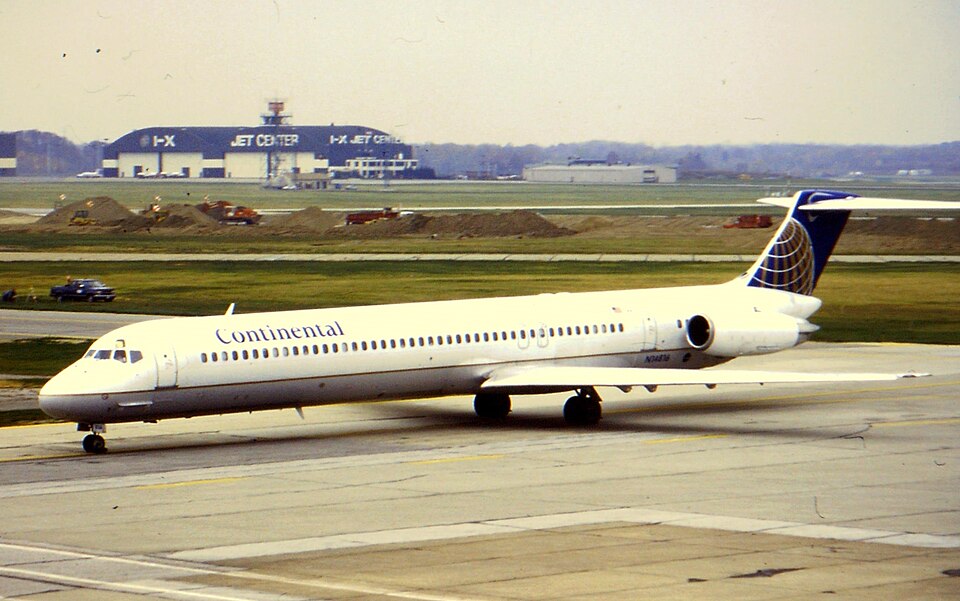
Aircraft registered N14816
Aircraft registered N14816. Photo: G B_NZ / CC BY-SA 2.0, via Wikimedia Commons

On final approach at approximately 100 feet AGL, the aircraft experienced a significant loss of indicated airspeed and high sink rate, leading to a hard landing. The lower aft body was crushed inward, causing structural damage. Touchdown occurred at 110 knots with full power and a nose-up attitude of 8.334 degrees, with a vertical acceleration of 2.246 G.

Event Description

During final approach, at approximately 100 feet above ground level (AGL), the aircraft experienced a significant loss of indicated airspeed and encountered a high sink rate. This condition culminated in a hard landing. The lower aft body of the aircraft, in the area of the tail skid, was crushed inward, resulting in structural damage.

Descent Profile

The descent profile data indicate that at 47 feet above touchdown and an airspeed of 126 knots, the airplane began to rotate. It descended to 3 feet above touchdown, with an airspeed of 109 knots, over a period of 3 seconds.

Touchdown Parameters

Touchdown occurred with a nose-up attitude of 8.334 degrees and a vertical acceleration of 2.246 G. At the moment of touchdown, the airspeed was 110 knots, and full power was being developed.

LLWAS and Microburst

The Low-Level Wind Shear Alert System (LLWAS) did not activate during the event. Researchers from the National Center for Atmospheric Research (NCAR) reported that a localized microburst could occur without activating the LLWAS.

Investigation report by the U.S. National Transportation Safety Board (NTSB) historical archive. Original record: https://carol.ntsb.gov/event/20001211X12113. This page is a structured re-presentation; facts and quotes are in the National Transportation Safety Board (NTSB), United States.