Casualties unknown

1994-04-05: Fairchild SA-227AC (N174SW) — Skywest Airlines Inc. — Ontario, CA

Ontario, CA, US

On April 5, 1994, a Fairchild SA-227AC (registration N174SW) operated by Skywest Airlines Inc. was involved in an aviation accident near Ontario, CA. Investigators recorded the probable cause as: the failure of maintenance personnel to detect a crack in the windscreen which exceeded the operational limits for pressurized flight. A factor in the accident was the inadequacy of the inspection method published by the manufacturer. This summary draws on records from the U.S. National Transportation Safety Board (NTSB) historical archive; 1 related events involving the same aircraft type or operator are linked below.

Sourcesthe U.S. National Transportation Safety Board (NTSB) historical archivePrimary reportUpdated 1781061362Data APIEditorial standards
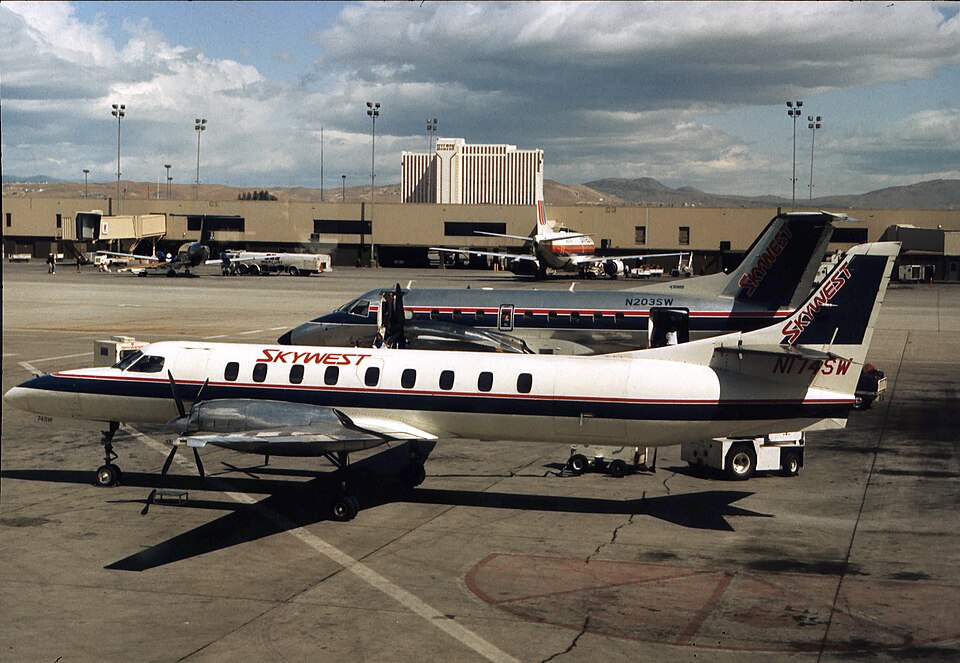
Aircraft registered N174SW
Aircraft registered N174SW. Photo: Sirujs Enobs / CC BY-SA 3.0, via Wikimedia Commons

During climb to 21,000 feet, a loud bang occurred and the captain was partially sucked through the broken left side window. He pulled himself back, declared an emergency, and landed safely. Maintenance records showed AD compliance 143.8 flight hours prior.

Incident

The aircraft was climbing at 1,000 feet per minute to a cruising altitude of 21,000 feet. Upon passing 19,800 feet, a loud 'bang' was heard. The captain was partially sucked through the broken left side window. After approximately 4 seconds, he was able to pull himself back into the aircraft unassisted. He declared an emergency and landed the aircraft without further incident.

Maintenance Records

A review of the maintenance records revealed that an applicable airworthiness directive (AD) requiring an inspection of the windows was complied with within the last 143.8 flight hours.

Inspection Procedures

The technical representative for Fairchild stated that maintenance personnel who conducted the AD inspection and service bulletin inspections may have failed to detect the crack due to the subtle inspection procedures employed. The approved inspection procedures allow for two methods: (1) removal of the outer frame retainer for direct viewing of the screw holes, and (2) using a 90-degree prism seated in mineral oil for an indirect view of the screw holes. The airline was using the second method.

Investigation report by the U.S. National Transportation Safety Board (NTSB) historical archive. Original record: https://carol.ntsb.gov/event/20001206X01120. This page is a structured re-presentation; facts and quotes are in the National Transportation Safety Board (NTSB), United States.