Casualties unknown

Collision Between MD-82 and Cessna 441 During Takeoff Roll at Lambert-St. Louis International Airport (N954U)

Bridgeton, MO, US

On November 23, 1994, a Mcdonnell Douglas DC-9-82 (registration N954U) operated by Trans World Airlines, Inc. was involved in an aviation accident near Bridgeton, MO. Investigators recorded the probable cause as: The Cessna 441 pilot's mistaken belief that his assigned departure runway was runway 30R, which resulted in his undetected entrance onto runway 30R, which was being used by the MD-82 for its departure. This summary draws on records from the U.S. National Transportation Safety Board (NTSB) historical archive; 3 related events involving the same aircraft type or operator are linked below.

Sourcesthe U.S. National Transportation Safety Board (NTSB) historical archivePrimary reportUpdated 2026-06-10Data APIEditorial standards
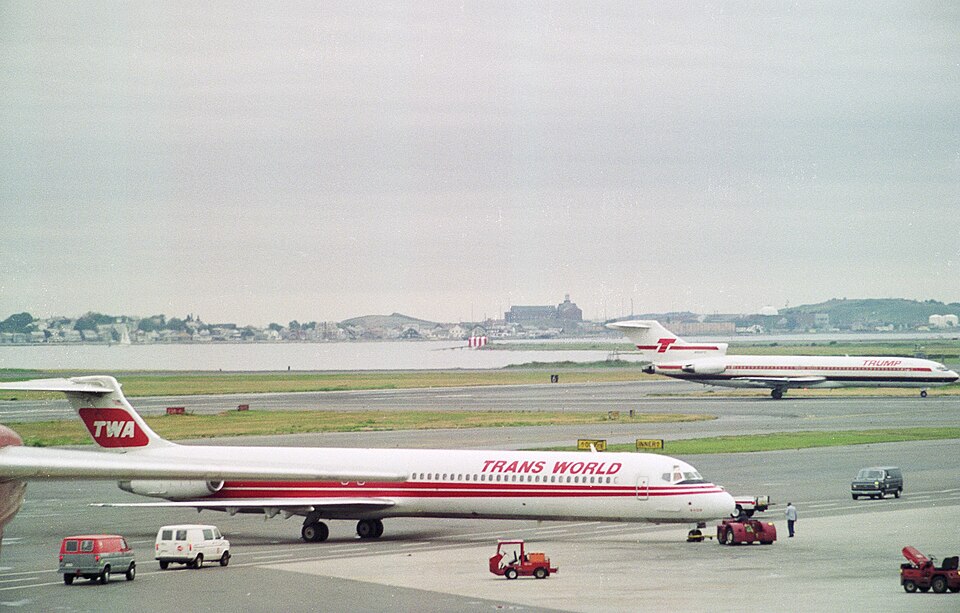
Aircraft registered N954U
Aircraft registered N954U. Photo: Andrew Thomas from Shrewsbury, UK / CC BY-SA 2.0, via Wikimedia Commons

An MD-82 collided with a Cessna 441 on runway 30R during takeoff roll after the Cessna pilot taxied onto the runway based on a preconceived departure plan, contrary to taxi clearance for runway 31.

Incident

During the takeoff roll on runway 30R, an MD-82, registration N954U, collided with a Cessna 441, registration N441KM. The Cessna was positioned on the runway waiting for takeoff clearance.

Sequence of Events

The pilot of the Cessna acted on an apparently preconceived idea that he would use his arrival runway, runway 30R, for departure. After receiving taxi clearance to back-taxi into position and hold on runway 31, the pilot instead taxied into a position at an intersection on runway 30R, which was the assigned departure runway for the MD-82.

The Automatic Terminal Information Service (ATIS) current at the time the Cessna pilot was operating in the Lambert-St. Louis area listed runways 30R and 30L as the active runways for arrivals and departures; there was no mention of the occasional use of runway 31.

Air traffic control personnel were not able to maintain visual contact with the Cessna after it taxied from the well-lighted ramp area into the runway/taxiway environment of the northeast portion of the airport.

An operational ASDE-3, particularly ASDE-3 enhanced with Airport Movement Area Safety System (AMASS), could be used to supplement visual scan of the northeast portion of the airport.

Investigation report by the U.S. National Transportation Safety Board (NTSB) historical archive. Original record: https://carol.ntsb.gov/event/20001206X02586. This page is a structured re-presentation; facts and quotes are in the National Transportation Safety Board (NTSB), United States.