Casualties unknown

Uncommanded Roll During Descent Traced to Contamination in Electronics Compartment (N390US)

Orlando, FL, US

On July 18, 1995, a Boeing 737-3B7 (registration N390US) was involved in an aviation accident near Orlando, FL. Investigators recorded the probable cause as: CONTAMINATION OF THE WIRING HARNESS AND ELECTRICAL CONNECTORS TO THE E-1-2 AND E-1-3 SHELF DISCONNECT BRACKETS IN THE ELECTRONICS COMPARTMENT, WHICH RESULTED IN AN ELECTRICAL FAULT AND AN UNCOMMANDED ROLL MALFUNCTION OF THE AUTOPILOT. This summary draws on records from the U.S. National Transportation Safety Board (NTSB) historical archive; 2 related events involving the same aircraft type or operator are linked below.

Sourcesthe U.S. National Transportation Safety Board (NTSB) historical archivePrimary reportUpdated 2026-06-10Data APIEditorial standards
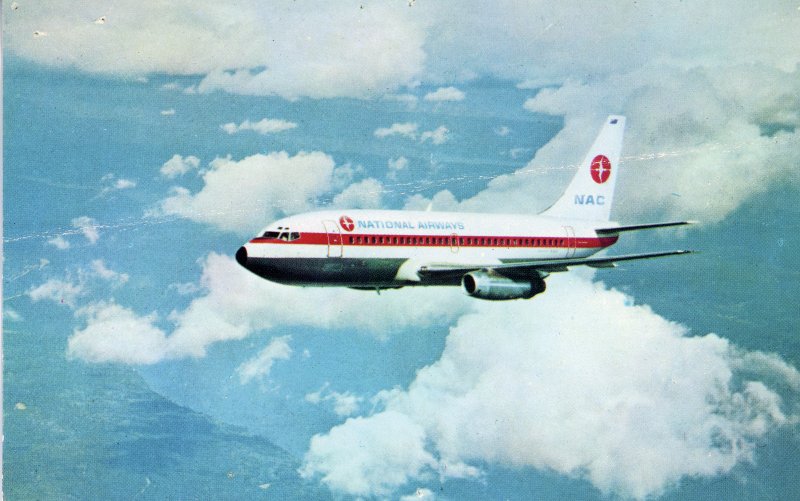
Boeing 737-3B7
Photo: San Diego Air & Space Museum Archives / Public domain, via Wikimedia Commons

A flight experienced an uncommanded roll to the left during descent. Examination revealed water and blue residue contamination on connector plugs and wiring harnesses in the electronics compartment, from a cabin door leak and a previous lavatory leak.

Incident Overview

During descent for landing, the aircraft experienced an uncommanded roll to the left. The flight crew responded by disengaging the autopilot and the yaw damper. After noticing no apparent yaw problem, they reengaged the yaw damper. The descent continued and the landing was completed without further incident.

Post-Flight Examination

Following the flight, inspection of the electronics compartment revealed contamination on the connector plugs and wiring harnesses attached to the E-1-2 and E-1-3 shelf disconnect brackets. The contaminants were identified as water and a blue residue.

Sources of Contamination

The water originated from a current leak in the main cabin door. The blue residue was attributed to a previous leak from the forward lavatory. The presence of these contaminants on the electrical components likely interfered with normal system operation, causing the uncommanded roll.

Crew Actions

The flight crew correctly identified the roll and took appropriate steps by disengaging the autopilot and yaw damper. Their decision to reengage the yaw damper after confirming no yaw issues was based on observed conditions. The landing was executed safely.

Conclusion

The incident was directly linked to the contamination of critical electrical connections in the electronics compartment. No further anomalies were reported after landing.

Investigation report by the U.S. National Transportation Safety Board (NTSB) historical archive. Original record: https://carol.ntsb.gov/event/20001207X04023. This page is a structured re-presentation; facts and quotes are in the National Transportation Safety Board (NTSB), United States.