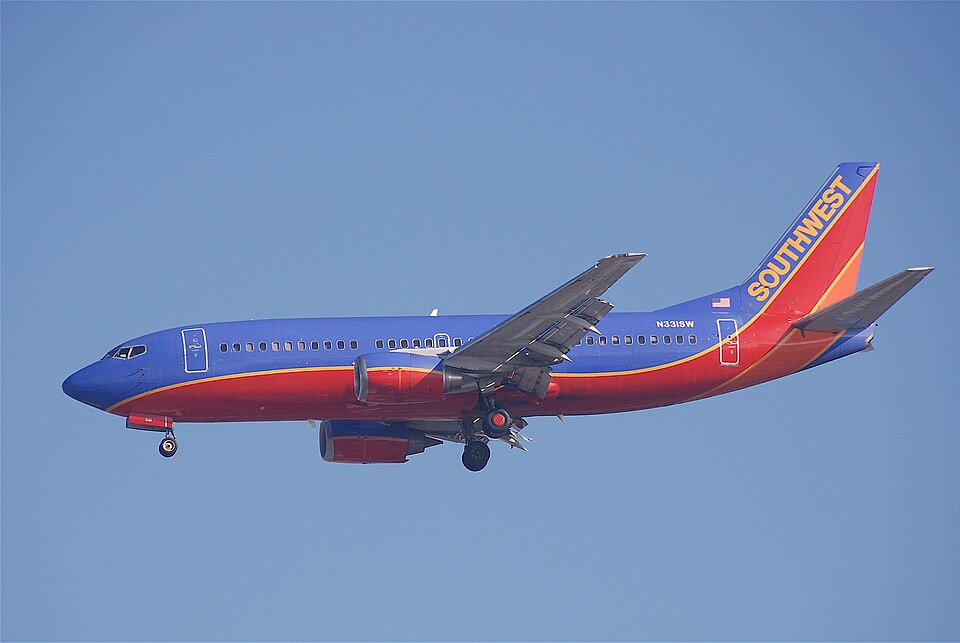
On April 30, 1996, a Boeing 737-300-3H4 (registration N331SW) was involved in an aviation accident near Ontario, CA. Investigators recorded the probable cause as: The over extension of the strut was a result of the gradual breakup of the bearings and bearing carriers due to improper/incompatible wear surfaces from the repair facility's improper assembly at overhaul. This summary draws on records from the U.S. National Transportation Safety Board (NTSB) historical archive; 2 related events involving the same aircraft type or operator are linked below.
A pilot experienced unresolved left main landing gear issues, performed emergency procedures and low-G maneuvers, then diverted to another airport for an emergency landing with minor damage and no injuries.
Incident Overview
A pilot reported an unresolved main landing gear problem while operating an aircraft. The pilot orbited the area and performed normal emergency gear extension procedures, which were unsuccessful. Subsequent attempts included low-G maneuvers and touch-and-go landings intended to lower the left main landing gear. The pilot eventually diverted to an alternate airport where an emergency landing was conducted. The landing resulted in minor damage to the aircraft, and no injuries were reported.
Post-Incident Examination
After the incident, the landing gear was removed and disassembled for inspection. Examination revealed that the upper bearing carriers and bearing half shells were out of position in the upper portion of the oleo strut. The over extension of the strut occurred as a result of the gradual breakup of the bearings and bearing carriers. This breakup was attributed to improper and incompatible wear surfaces, which stemmed from the repair facility's improper assembly during overhaul. Additionally, compression/extension measurements after installation were not required.
Probable cause
The over extension of the strut was a result of the gradual breakup of the bearings and bearing carriers due to improper/incompatible wear surfaces from the repair facility's improper assembly at overhaul.
An X-AIR HAWK ultralight crashed in Chonburi, Thailand, killing the pilot and injuring a passenger. The accident was caused by deteriorated wing fabric and…
A Challenger II Special ultralight aircraft (U-B23) landed off-runway at Pai Airport, Mae Hong Son, on September 17, 2024, due to a gust of wind. No injuries…
The Polish aviation safety authority is investigating a serious incident involving an AT-3R100 aircraft that occurred on September 2, 2024. The investigation…
A SZD-48-3 glider suffered damage when its left wing struck a ground obstacle during a low final approach at EPWK on June 20, 2025. The pilot was uninjured.
A 39-year-old skydiver died after a hard landing near Leszno on May 1, 2026. The PKBWL preliminary report indicates the fatal impact resulted from a late,…
A student pilot crashed an SZD-50-3 Puchacz glider into the airfield fence during a solo training flight on June 6, 2026. The pilot was uninjured, but the…