Casualties unknown

1997-03-27: Boeing 767-232 (N105DA) — Dfw Airport, TX

Dfw Airport, TX, US

On March 27, 1997, a Boeing 767-232 (registration N105DA) was involved in an aviation accident near Dfw Airport, TX. Investigators recorded the probable cause as: Fatigue cracking of the four aft bolts fastening the flap to the inboard flap carriage support beam, resulting from insufficient bolt preload due to either longer bolt grip lengths or inadequate shimming. This summary draws on records from the U.S. National Transportation Safety Board (NTSB) historical archive; 5 related events involving the same aircraft type or operator are linked below.

Sourcesthe U.S. National Transportation Safety Board (NTSB) historical archivePrimary reportUpdated 1781061362Data APIEditorial standards
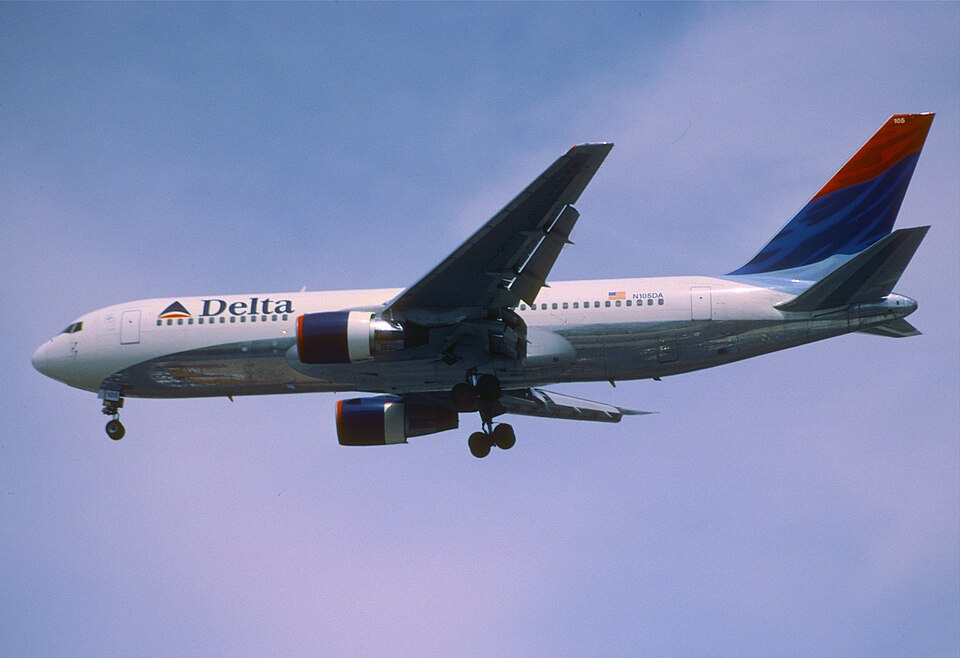
Aircraft registered N105DA
Aircraft registered N105DA. Photo: Aero Icarus from Zürich, Switzerland / CC BY-SA 2.0, via Wikimedia Commons

During landing approach, an 18-foot section of the right outboard flap separated after fatigue cracking of four aft bolts. Investigators found the bolts likely lacked sufficient preload due to longer grip lengths or inadequate shimming.

Incident Description

During the landing approach, with the flaps extended to 15 degrees and the spoilers deployed, an 18-foot section of the right outboard flap separated from the trailing edge of the right wing. The flightcrew performed a flyby of the tower to allow controllers to assess the damage, then landed the airplane without further incident.

Investigation Findings

Examination revealed that the flap separation resulted from fatigue cracking of the four aft bolts that fastened the flap to the inboard flap carriage support beam. The relief shoulders on three of the bolts exhibited thread contact marks, indicating that the attachment nuts were inserted fully down to the relief shoulders. This condition suggested that either the bolt grip lengths were longer than necessary for the installation or insufficient shims were installed under the heads of the bolts or attachment nuts. Consequently, the bolts most likely did not receive sufficient preload in tension, as the nuts probably bottomed onto the relief shoulders before preload could be produced.

Maintenance History

Maintenance records showed that the flap had not been removed from the wing since the airplane's manufacture in 1982 and had accumulated 45,577 flight hours and 22,155 flight cycles.

Probable cause

Fatigue cracking of the four aft bolts fastening the flap to the inboard flap carriage support beam, resulting from insufficient bolt preload due to either longer bolt grip lengths or inadequate shimming.

Investigation report by the U.S. National Transportation Safety Board (NTSB) historical archive. Original record: https://carol.ntsb.gov/event/20001208X07526. This page is a structured re-presentation; facts and quotes are in the National Transportation Safety Board (NTSB), United States.