Casualties unknown

1998-07-07: Boeing 737-7H4 (N701GS) — Birmingham, AL

Birmingham, AL, US

On July 7, 1998, a Boeing 737-7H4 (registration N701GS) was involved in an aviation accident near Birmingham, AL. Investigators recorded the probable cause as: A broken wire in the no. 2 engine electronic engine control, hydromechanical unit, fuel metering valve resolver Channel B, due to damage incurred during the manufacturing process. This summary draws on records from the U.S. National Transportation Safety Board (NTSB) historical archive.

Sourcesthe U.S. National Transportation Safety Board (NTSB) historical archivePrimary reportUpdated 1781061362Data APIEditorial standards
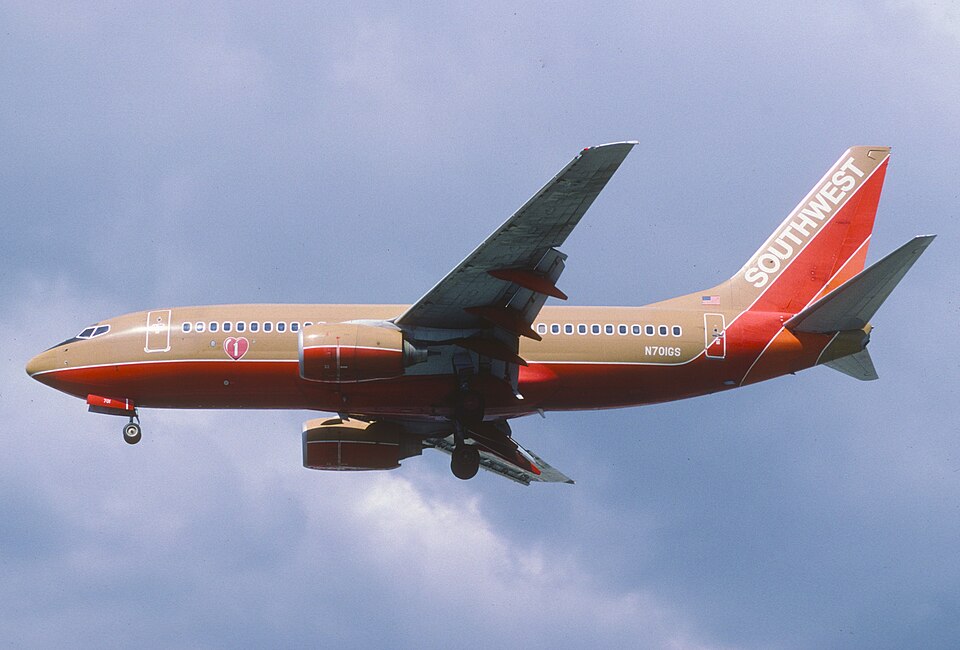
Aircraft registered N701GS
Aircraft registered N701GS. Photo: Aero Icarus from Zürich, Switzerland / CC BY-SA 2.0, via Wikimedia Commons

A broken wire in the engine's electronic control system caused a fuel metering valve to open fully, leading to an engine stall and heat damage during approach.

Incident Overview

During an approach to landing, the flight data recorder indicated that as the aircraft descended through 2,875 feet pressure altitude, the number 2 engine fuel flow increased, followed by a rise in exhaust gas temperature (EGT). The engine's N1 speed, initially at 25.6 percent, decreased to 12.8 percent. The crew performed an engine cutoff 74 seconds after the fuel flow increase began. The aircraft subsequently made an uneventful landing.

Examination Findings

Post-incident examination of the number 2 engine revealed a broken wire in the electronic engine control's hydromechanical unit, specifically the fuel metering valve resolver Channel B. The wire break was attributed to damage incurred during the manufacturing process. This damage caused unstable Channel B sine out voltage when the resolver was heated above 160 degrees Fahrenheit.

System Response

The fuel control computer software locked on Channel B, disabling Channel A. Due to the unstable sine out voltage, the computer commanded the fuel metering valve to a full open position. The resulting large increase in fuel flow, with the engine at idle speed, caused the engine core to stall and produced heat damage to the low pressure turbine.

Probable cause

A broken wire in the no. 2 engine electronic engine control, hydromechanical unit, fuel metering valve resolver Channel B, due to damage incurred during the manufacturing process.

Investigation report by the U.S. National Transportation Safety Board (NTSB) historical archive. Original record: https://carol.ntsb.gov/event/20001211X10653. This page is a structured re-presentation; facts and quotes are in the National Transportation Safety Board (NTSB), United States.