Casualties unknown

Boeing 737-300 Experiences Landing Gear Torsion Link Failure on Landing (N12318)

Newark, NJ, US

On November 6, 1998, a Boeing 737-3TO (registration N12318) operated by Continental Air Lines was involved in an aviation accident near Newark, NJ. Investigators recorded the probable cause as: A loss of torque on the apex nut of the shimmy damper for undetermined reason(s), which resulted in a failure of the shimmy damper, and the subsequent failure of the lower torsion link of the right main landing gear. This summary draws on records from the U.S. National Transportation Safety Board (NTSB) historical archive; 3 related events involving the same aircraft type or operator are linked below.

Sourcesthe U.S. National Transportation Safety Board (NTSB) historical archivePrimary reportUpdated 2026-06-10Data APIEditorial standards
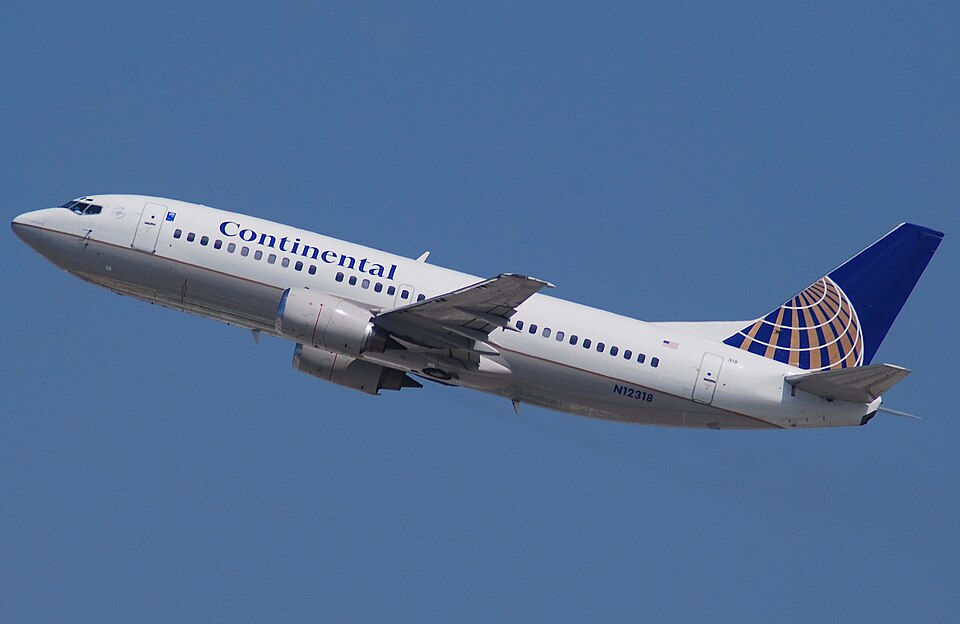
Aircraft registered N12318
Aircraft registered N12318. Photo: Eddie Maloney from North Las Vegas, USA / CC BY-SA 2.0, via Wikimedia Commons

During landing, a Boeing 737-300 experienced a shimmy due to failure of the lower torsion link on the right main landing gear. Examination revealed overstress and a loose apex nut.

Event Description

The Boeing 737-300 touched down under the control of the first officer. Immediately after touchdown, the pilots felt a vibration or shimmy. The captain then took control of the airplane and brought it to a stop on the runway.

Examination Findings

Post-event inspection of the right main landing gear revealed that the lower torsion link had failed, allowing the wheels to rotate 45 degrees outboard. A metallurgical examination of the failed torsion link determined that the failure was due to overstress. Additionally, the shaft on the shimmy damper was found bent approximately 20 degrees rearward. The apex nut, which secures the upper and lower torsion links together, was loose on the shaft. The extent of the damage prevented a check of the apex nut for proper torque.

Historical Context

According to a Boeing 737 Service Letter, similar failures of the lower torsion link have occurred previously. These incidents were traced to excessive play at the torsion link apex joint, which rendered the shimmy dampers ineffective. The presence of a loose apex nut and a bent shimmy damper shaft in this event are consistent with that mechanism.

Investigation report by the U.S. National Transportation Safety Board (NTSB) historical archive. Original record: https://carol.ntsb.gov/event/20001211X11488. This page is a structured re-presentation; facts and quotes are in the National Transportation Safety Board (NTSB), United States.