No fatalities

Turbulence Encounter Injures Passengers and Crew on Minneapolis-Chicago Flight (N781UA)

Madison, WI, US

On June 12, 1999, a Boeing 777-222 (registration N781UA) was involved in an aviation accident near Madison, WI. No fatalities were reported. Investigators recorded the probable cause as: the pilot-in-command's inadequate evaluation of the weather conditions. Factors associated with the accident were the turbulence encountered and the seat belt sign was not illuminated. This summary draws on records from the U.S. National Transportation Safety Board (NTSB) historical archive.

Sourcesthe U.S. National Transportation Safety Board (NTSB) historical archivePrimary reportUpdated 2026-07-04Data APIEditorial standards
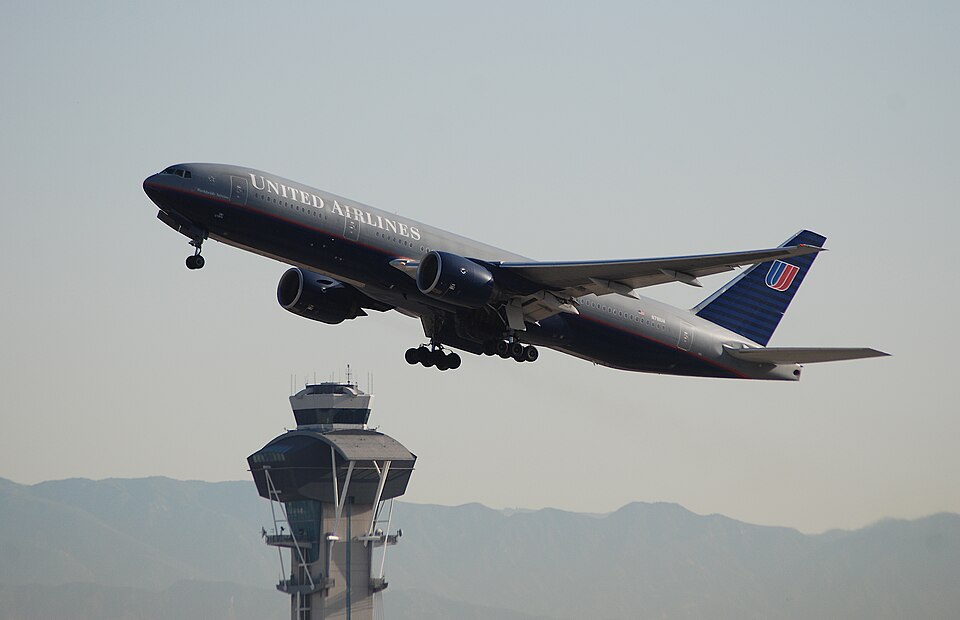
Aircraft registered N781UA
Aircraft registered N781UA. Photo: Aero Icarus from Zürich, Switzerland / CC BY-SA 2.0, via Wikimedia Commons

During a descent at 19,680 feet, a flight from Minneapolis to Chicago encountered unexpected turbulence, injuring four passengers and four flight attendants, with one passenger suffering a broken ankle.

Incident Overview

A flight operating between Minneapolis and Chicago experienced unexpected turbulence while descending at 19,680 feet mean sea level (msl). The turbulence resulted in minor injuries to four passengers and four flight attendants, with one passenger sustaining a broken ankle.

Flight History

The flight had originally diverted to Minneapolis due to thunderstorm activity in the Chicago area. Following the diversion, the flight departed Minneapolis en route to Chicago. According to the captain, the flight was smooth until the abrupt turbulence was encountered. At the time of the encounter, the seat belt sign was not illuminated.

Weather and Flight Planning

Prior to departing Minneapolis, the flight crew received a Weather Briefing Message (WBM) that contained convective SIGMETs for Wisconsin, Illinois, and Indiana. The turbulence occurred ahead of a stationary front that extended northeast-southwest through central Wisconsin and Iowa. This front had been generating showers and thunderstorm activity throughout the afternoon and evening on the day of the incident.

Recorded Data

Analysis of data from the Quick Access Recorder (QAR) indicated that the aircraft experienced a change in vertical G-loading from 0.0843 g to 1.9375 g over a two-second period while at an altitude of 19,680 feet msl.

All Boeing 777-300ER accidents →

Frequently asked questions

What happened in the 12 Jun 1999 Boeing 777-222 accident near Madison, WI?

During a descent at 19,680 feet, a flight from Minneapolis to Chicago encountered unexpected turbulence, injuring four passengers and four flight attendants, with one passenger suffering a broken ankle.

Were there any fatalities in the 12 Jun 1999 Boeing 777-222 accident?

No fatalities were recorded in this accident.

What aircraft was involved and where did it happen?

The accident on 12 Jun 1999 involved a Boeing 777-222, registration N781UA, at Madison, WI.

What was the probable cause of the accident?

the pilot-in-command's inadequate evaluation of the weather conditions. Factors associated with the accident were the turbulence encountered and the seat belt sign was not illuminated.

Investigation report by the U.S. National Transportation Safety Board (NTSB) historical archive. Original record: https://carol.ntsb.gov/event/20001212X18945. This page is a structured re-presentation; facts and quotes are in the National Transportation Safety Board (NTSB), United States.