Casualties unknown

1999-12-06: Boeing 767-232 (N111DN) — Salt Lake City, UT

Salt Lake City, UT, US

On December 6, 1999, a Boeing 767-232 (registration N111DN) was involved in an aviation accident near Salt Lake City, UT. Investigators recorded the probable cause as: Stress corrosion cracking of the landing gear retract actuator piston due to moisture ingress through a faulty fillet seal. This summary draws on records from the U.S. National Transportation Safety Board (NTSB) historical archive; 5 related events involving the same aircraft type or operator are linked below.

Sourcesthe U.S. National Transportation Safety Board (NTSB) historical archivePrimary reportUpdated 1781061362Data APIEditorial standards
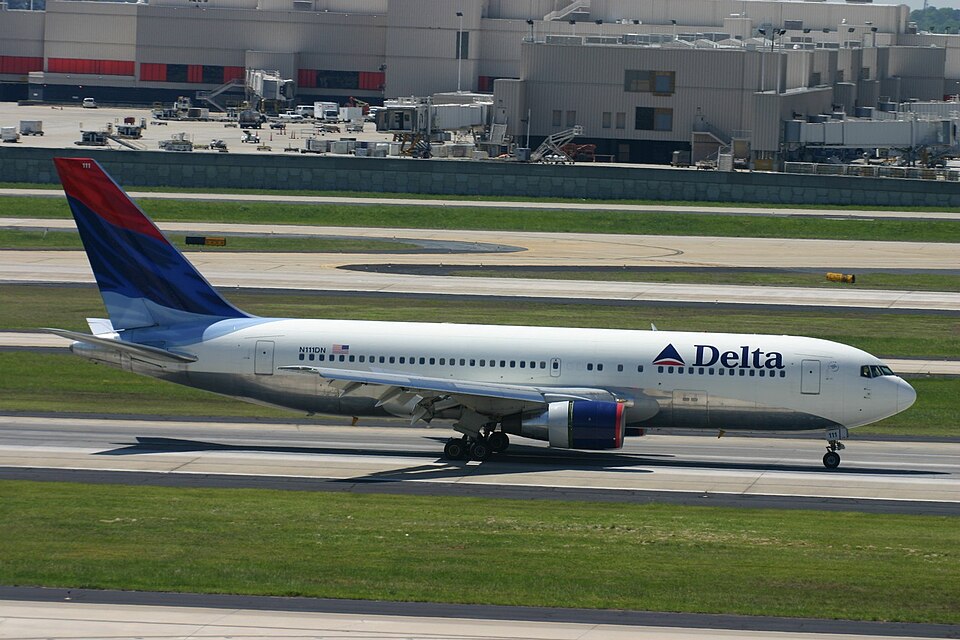
Aircraft registered N111DN
Aircraft registered N111DN. Photo: Aeroprints.com / CC BY-SA 3.0, via Wikimedia Commons

After takeoff, the crew heard a loud noise and felt vibration during landing gear retraction. An emergency was declared and the flight returned to Salt Lake City. Maintenance later found the retract actuator piston had sheared due to stress corrosion cracking from moisture ingress via a faulty seal.

Incident Overview

Shortly after departure, the flight crew heard a loud noise and felt a vibration when the landing gear was retracted. Declaring an emergency, the crew returned to Salt Lake City International Airport. During the approach, when the landing gear was lowered, the nose and right main landing gear DOWN AND LOCKED lights illuminated, but a GEAR UNSAFE light illuminated for the left main landing gear. After a low pass over the airport, maintenance personnel advised the crew that the landing gear appeared to be down and locked, and an uneventful landing was subsequently made.

Maintenance Findings

Following the incident, maintenance personnel informed the crew that the landing gear retract actuator had sheared and could not be pinned for towing. The part was removed and examined. Examination revealed that stress corrosion cracking had occurred through 75% of the piston, followed by ductile separation. The corrosion had formed when a faulty fillet seal around the base of the rod end allowed moisture to enter the joint. The retract actuator was an original part, but it was determined that it had previously been reworked.

Investigation Details

The investigation focused on the metallurgical failure of the actuator. The stress corrosion cracking was attributed to the faulty seal, which permitted moisture intrusion over time. The actuator's prior rework did not prevent the corrosion process. No other contributing factors were identified in the source material.

Probable cause

Stress corrosion cracking of the landing gear retract actuator piston due to moisture ingress through a faulty fillet seal.

Investigation report by the U.S. National Transportation Safety Board (NTSB) historical archive. Original record: https://carol.ntsb.gov/event/20001212X20224. This page is a structured re-presentation; facts and quotes are in the National Transportation Safety Board (NTSB), United States.