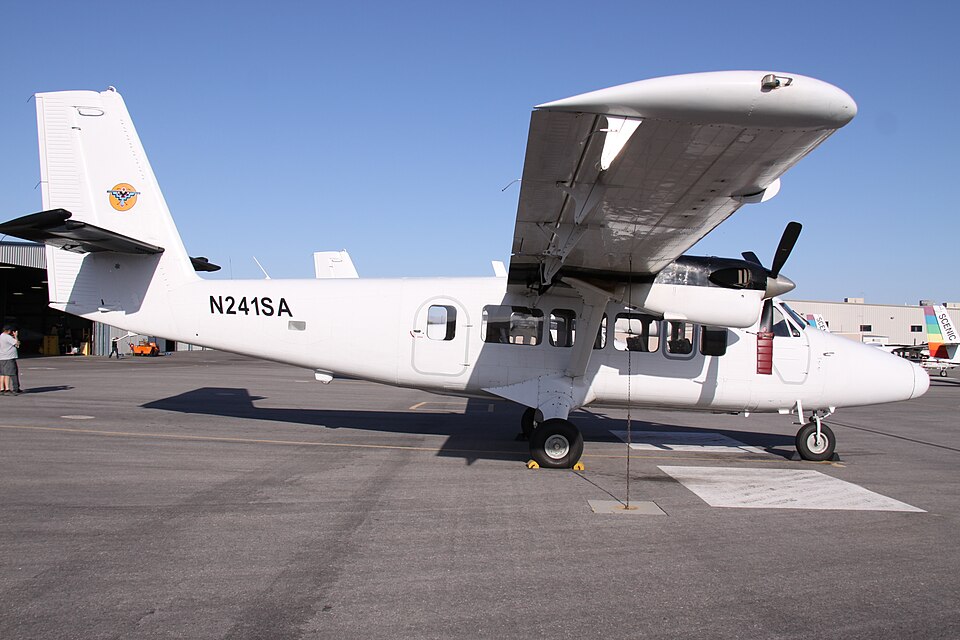
On May 5, 2000, a DE Havilland DHC-6-300 (registration N241SA) was involved in an aviation accident near Monument Valley, UT. Investigators recorded the probable cause as: The pilot's failure to maintain directional control during an aborted takeoff due to wind shear. This summary draws on records from the U.S. National Transportation Safety Board (NTSB) historical archive.
During a takeoff attempt on a dirt runway, the pilot encountered wind shear from both sides, leading to an aborted takeoff and loss of directional control as the aircraft veered into a berm.
What happened
The flight was preparing for departure from runway 34, which measured 4,000 feet in length and 75 feet in width with a dirt surface. According to the operator, the airplane encountered wind shear from the right and then from the left. The takeoff was aborted. Directional control was lost and the airplane veered left and hit a dirt berm. Winds were reported to be from 210 degrees at 10 knots, with gusts to 20 knots.
Findings
The wind shear encountered during the takeoff roll contributed to the loss of directional control. The dirt surface of the runway may have reduced traction, exacerbating the difficulty in maintaining course. The aborted takeoff was likely a prudent decision given the sudden change in wind conditions.
Safety message
Pilots should be aware of the potential for wind shear during takeoff and landing, especially on unpaved runways. Monitoring weather reports and being prepared to abort if necessary is crucial for safety.
Probable cause
The pilot's failure to maintain directional control during an aborted takeoff due to wind shear.