Casualties unknown

Crew Fails to Brief Runway Change, Leading to Landing Overrun (N335SW)

Phoenix, AZ, US

On March 5, 2001, a Boeing 737-3H4 (registration N335SW) was involved in an aviation accident near Phoenix, AZ. Investigators recorded the probable cause as: the pilot's misjudgment of distance, which resulted in a runway overrun. A factor in the incident was the failure of the flightcrew to conduct a briefing for the approach to runway eight. This summary draws on records from the U.S. National Transportation Safety Board (NTSB) historical archive; 2 related events involving the same aircraft type or operator are linked below.

Sourcesthe U.S. National Transportation Safety Board (NTSB) historical archivePrimary reportUpdated 2026-06-10Data APIEditorial standards
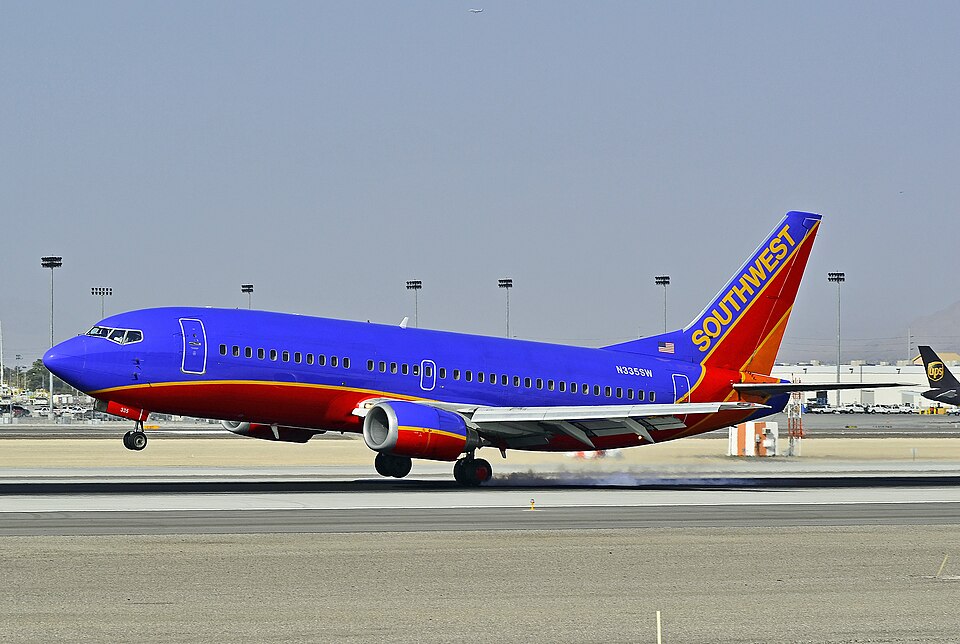
Aircraft registered N335SW
Aircraft registered N335SW. Photo: Tomás Del Coro from Las Vegas, Nevada, USA / CC BY-SA 2.0, via Wikimedia Commons

After switching to a different runway without briefing, a crew landed long on a 6,000-foot runway, overrunning the end and coming to rest with the tail beyond the pavement.

Incident Overview

During an approach to an airport, air traffic control initially cleared the flight for the approach to runway 7. The captain briefed the first officer for that approach. Subsequently, the crew received a gate assignment and requested, and was cleared for, an approach to runway 8. No additional briefing was conducted for the runway 8 approach. According to the investigation, there was no discussion regarding runway length or the fact that runway 8 was a visual runway, lacking the lighting and markings associated with an instrument runway.

Flight Details

The target airspeed for the approach was 135 knots. The last airspeed callout from the crew was 137 knots, and flight data recorder information showed the actual approach speed was 137.5 knots. Data from the flight data recorder also indicated that the airplane touched down approximately 2,000 feet past the approach end of the 6,000-foot-long runway.

Landing and Overrun

Upon touchdown, the captain deployed the thrust reversers and applied the wheel brakes. When he noticed that the end of the runway was approaching faster than anticipated, he applied maximum braking and maximum reverse thrust. Despite these actions, the aircraft rolled beyond the end of the paved surface. It came to rest within one airplane length of the departure end of the runway, with the empennage positioned over the end of the runway.

Investigation report by the U.S. National Transportation Safety Board (NTSB) historical archive. Original record: https://carol.ntsb.gov/event/20010308X00561. This page is a structured re-presentation; facts and quotes are in the National Transportation Safety Board (NTSB), United States.