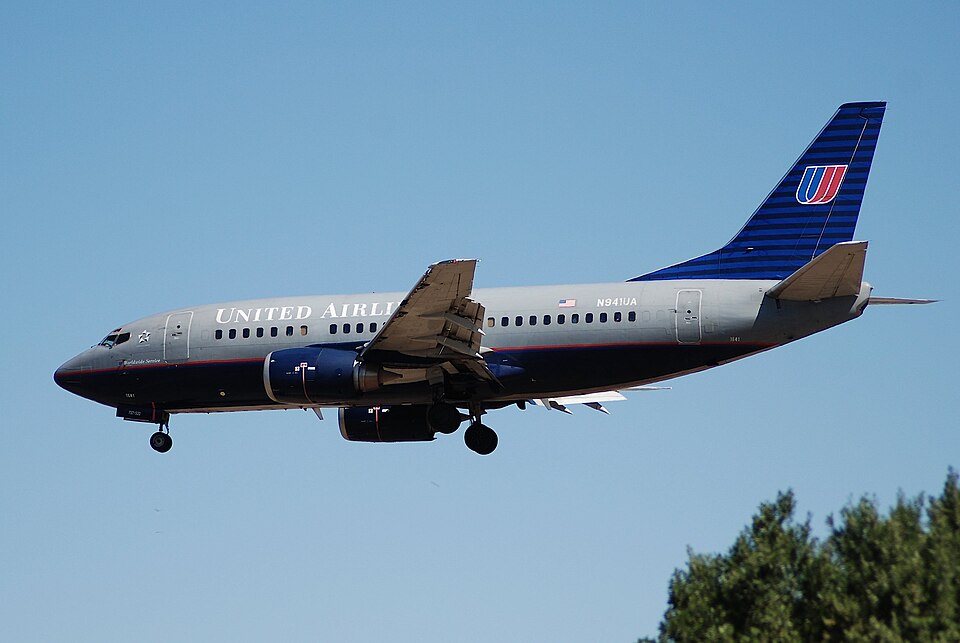
Incident Overview
A Boeing 737 aircraft, operating as United Airlines Flight 1260 (UAL 1260), encountered wake turbulence while descending during cruise. The captain reported a subtle vibration followed by an uncommanded roll to the right. The autopilot was disconnected at approximately 20 degrees of right roll, and the captain regained control using manual inputs of left rudder and left aileron. The captain stated he had complete usage of the rudder during the recovery. The flight crew declared an emergency and subsequently made an uneventful landing.
Sequence of Events
According to aircraft radar track data, UAL 1260 was following a Boeing 777 operated by American Airlines as Flight 154 (AAL 154). Both aircraft were en route to Chicago O'Hare International Airport and were flying the same arrival procedure. Lateral separation between the two aircraft was approximately 8.3 nautical miles, or about 97 seconds. AAL 154 began its descent 12.56 nautical miles from the KRENA intersection. Twenty-three seconds later, UAL 1260 began its descent 6.23 nautical miles from the same intersection.
Post-Inspection Findings
During the uncommanded roll and subsequent recovery, all rudder control surface movements correlated with the position of the rudder pedals. A post-incident examination and verification flight test found no flight control anomalies.