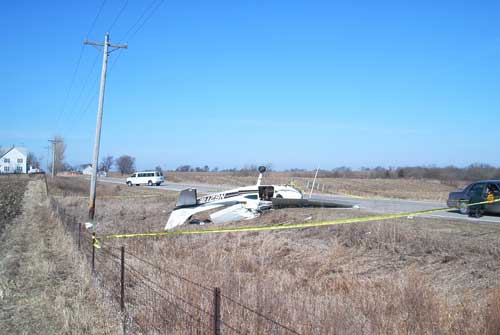
Casualties unknown

Loss of Control During Takeoff From Grass Taxiway After Power Line Evasion Attempt (N6211E)

North English, IA, US

On March 22, 2003, a Cessna 182R (registration N6211E) was involved in an aviation accident near North English, IA. Investigators recorded the probable cause as: The pilot's failure to maintain adequate airspeed which resulted in a stall. Contributing to the accident was the CFI's improper decision to attempt to takeoff from a short, grass taxiway instead of departing from a runway aligned with the prevailing winds,… This summary draws on records from the U.S. National Transportation Safety Board (NTSB) historical archive.

Sourcesthe U.S. National Transportation Safety Board (NTSB) historical archivePrimary reportUpdated 2026-07-04Data APIEditorial standards
Aircraft registered N6211E
Aircraft registered N6211E. Photo: US National Transportation Safety Board / Public domain, via Wikimedia Commons

A training flight ended when the airplane was destroyed after losing control while avoiding power lines and trees during takeoff climb from a 1,000-foot grass taxiway. The pilot and CFI had briefed the flight; no mechanical issues were found.

Accident Summary

The airplane was destroyed by impact forces following a loss of control while attempting to avoid a power line and trees during the takeoff climb from a grass taxiway measuring 1,000 feet by 70 feet. The flight was intended for practicing dead reckoning navigation and performing a grass strip landing.

Flight History

According to the pilot receiving training, he and the certified flight instructor (CFI) briefed the flight and conducted a preflight inspection. No mechanical difficulties were noted, and the airplane operated normally during the flight. The pilot reported that the airplane touched down within 150 feet of the south end of the taxiway and he performed a full stop landing. After back taxiing, he initiated a “short field” takeoff. He attempted to lift off at 65 knots indicated airspeed about halfway down the taxiway, but the aircraft was not climbing. The CFI then took control of the airplane during the climb-out. The pilot recalled seeing orange balls on the power lines located at the north end of the taxiway and heard the stall warning horn sounding. The airplane veered left, and then the right side of the airplane impacted the terrain.

Aircraft and Airstrip Information

The Pilot’s Operating Handbook indicated that the required takeoff distance to clear a 50-foot obstacle from a grass airstrip on a 15-degree Celsius day was approximately 1,409 feet. The private airstrip had runway 9/27, which was 2,400 feet by 70 feet. The prevailing wind at the time of the accident was 280 degrees at 10 knots.

Post-Accident Inspection

An inspection of the airplane revealed no pre-existing anomalies that could have contributed to the accident.

Frequently asked questions

What happened in the 22 Mar 2003 Cessna 182R accident near North English, IA?

A training flight ended when the airplane was destroyed after losing control while avoiding power lines and trees during takeoff climb from a 1,000-foot grass taxiway. The pilot and CFI had briefed the flight; no mechanical issues were found.

What aircraft was involved and where did it happen?

The accident on 22 Mar 2003 involved a Cessna 182R, registration N6211E, at North English, IA.

What was the probable cause of the accident?

The pilot's failure to maintain adequate airspeed which resulted in a stall. Contributing to the accident was the CFI's improper decision to attempt to takeoff from a short, grass taxiway instead of departing from a runway aligned with the prevailing winds, the short, grass taxiway, the crosswind, trees, and…

Investigation report by the U.S. National Transportation Safety Board (NTSB) historical archive. Original record: https://carol.ntsb.gov/event/20030326X00396. This page is a structured re-presentation; facts and quotes are in the National Transportation Safety Board (NTSB), United States.