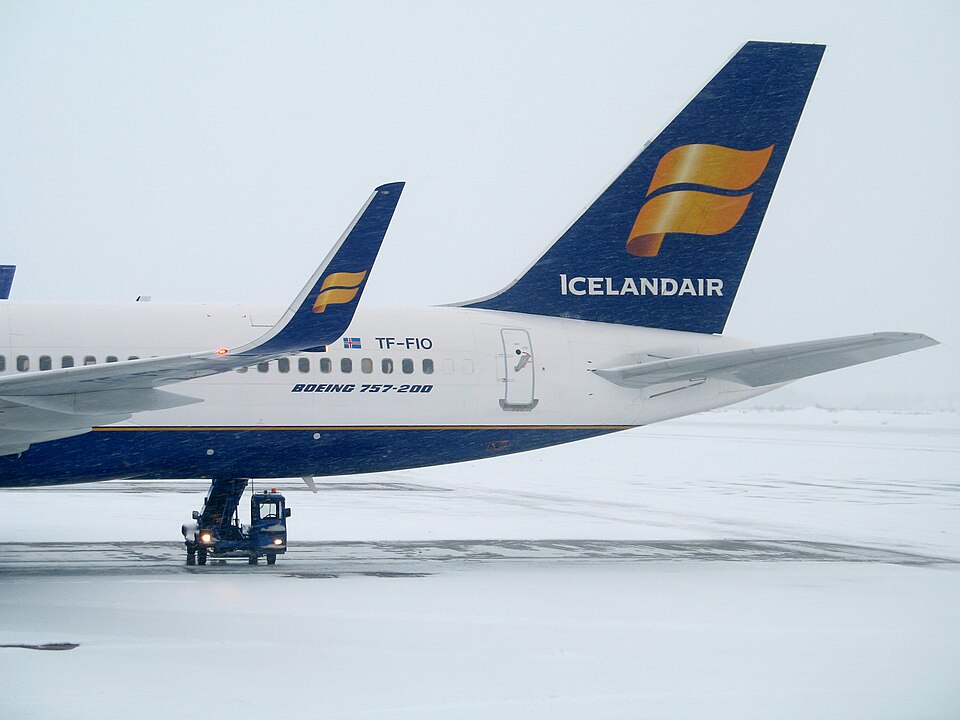
On January 22, 2002, a Boeing 757-208 (registration TF-FIO) was involved in an aviation accident near Oslo Airport Gardermoen (ENGM), NO. This summary draws on records from the Norwegian Safety Investigation Authority (NSIA); 6 related events involving the same aircraft type or operator are linked below.
On 22 January 2002, Icelandair flight 315, a Boeing 757-208 (TF-FIO), experienced a serious incident during a go-around at Oslo Airport Gardermoen. The aircraft exceeded speed and load limits before landing safely.
Incident Overview and Notification Process On 22 January 2002, Icelandair flight 315, operating a Boeing 757-208 with registration TF-FIO, made an approach to Oslo Airport Gardermoen (ENGM). The aircraft was dispatched from Keflavik (BIKF) with the right ILS, right GPS, and center autopilot inoperative. The flight carried 75 passengers and a crew of two. The incident was not initially reported to the Norwegian Aircraft Accident Investigation Board (AAIB/N) after landing. The commander provided a non-specific notification to the company's chief pilot at Stockholm Arlanda (ESSA) and later detailed the abnormal maneuvering to the chief pilot in Reykjavik. Icelandair informed AAIB Iceland on 23 January 2002, describing the occurrence as an upset after an interrupted approach. AAIB/N was notified the same morning but did not start an investigation until 31 January 2002, after receiving information about high load factors and excessive speed from the Flight Data Recorder (FDR). The Boeing Aircraft Company was also informed, and the aircraft was grounded for inspections. ## Flight History and Approach Conditions The flight departed Keflavik at 0735 UTC. The commander was the pilot flying, and the first officer was the non-flying pilot. The aircraft was flown by the autopilots until the approach. The crew initially planned for a practice CAT II approach to runway 01R, but the runway in use was changed to 01L due to snow clearing. The descent and approach were made in a strong tailwind, which was not communicated by ATC. The crew was initially aware of the tailwind but failed to notice it was much stronger than forecasted due to high workload. The change of runway, strong tailwind, and shortened approach path resulted in the aircraft becoming high on the approach profile. ## Go-Around and Extreme Maneuvering The aircraft was flown on the autopilot flight director system (AFDS). The commander extended speed brakes to maintain the descent profile. At 10 NM from the NDB Solberg (SLB), the crew was cleared to descend to 3,000 ft. The aircraft was slowed to 220 kt, and flaps were extended. The crew intercepted the localizer at 0945 UTC, but the aircraft overshot the centerline and was above the glide path. The commander disconnected both autopilots and the auto throttle to manually capture the glide path. The commander's instrument panel indicated intermittent ILS failures of raw data without flag warnings. The aircraft descended through 1,000 ft AAL in an unstabilized mode. At approximately 580 ft AAL, the commander initiated a go-around. The go-around was started at 182 kt. The aircraft pitch increased to 20 degrees, and the auto throttle engaged, increasing thrust to the EPR limit. The aircraft climbed rapidly through the MCP altitude of 2,500 ft. The maximum pitch reached 21 degrees, and the speed dropped to 137 kt. The commander applied nose down and pushed the FLCH button to break the flight director altitude lock. The speed selected on the MCP was changed from 150 kt to 210 kt. The aircraft exceeded maximum negative and positive g-values and speed limits during the maneuver. After the upset, the aircraft was flown for another approach and landed at 1102. The aircraft structure appeared not to be damaged. AAIB/N made four safety recommendations.