What happened
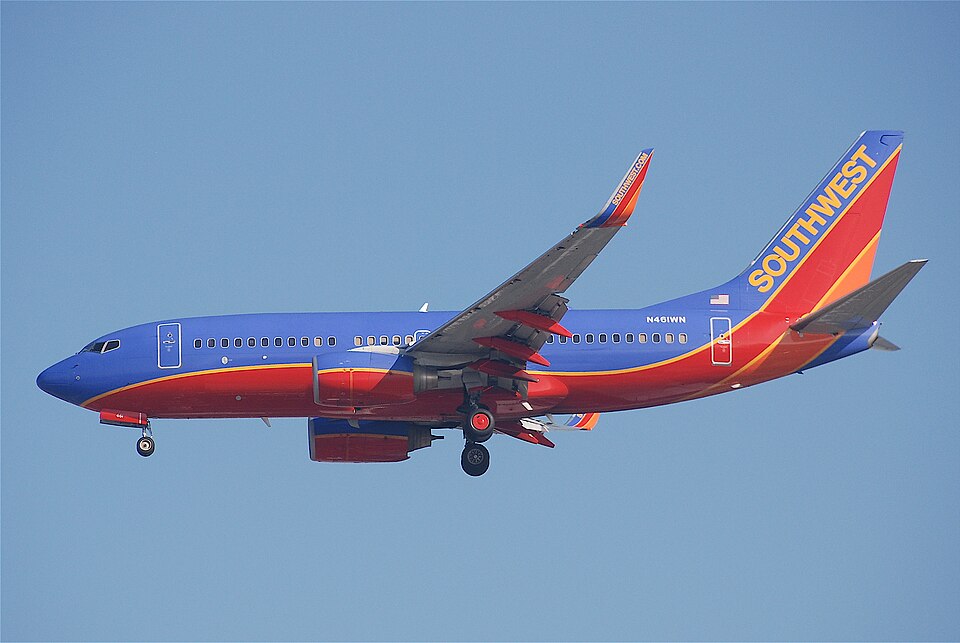
During a shift change at Los Angeles International Airport, an Asiana Airlines Boeing 747-400 cleared to land on runway 24L initiated a go-around after observing a Southwest Airlines Boeing 737 approaching the runway. The Asiana aircraft, operating as AAR204, overflew the Southwest aircraft, SWA440, at approximately 200 feet.
The incident began during a relief briefing between the outgoing and incoming LC2 controllers. While the outgoing controller accurately stated that AAR204 was cleared to land on runway 24L, the relief controller subsequently instructed SWA440 to taxi into position and hold on runway 24L. The pilot of SWA440 believed the approaching Asiana aircraft was lined up for runway 24R and did not expect a conflict. Twelve seconds after the taxi instruction, the relief controller cleared SWA440 for takeoff.
The Asiana crew observed the Southwest aircraft entering the runway and immediately executed a go-around. The collision was avoided due to the prompt actions of the Asiana flight crew; the airport's automated safety system (AMASS) only generated an alert 12 seconds before the potential impact.
The investigation
The investigation examined the controller relief briefing, radar data, and cockpit communications. It was found that while the outgoing controller provided an accurate briefing, a subsequent radio transmission interrupted the controllers, which likely hindered the relief controller's ability to retain the information in working memory.
Analysis of the Digital Bright Radar Indicator Terminal Equipment (DBRITE) showed that runway assignment information on the aircraft data tags was time-shared, alternating with altitude and speed data every five seconds. This prevented the relief controller from perceiving the critical runway assignment for AAR204. Additionally, investigators found that staffing levels were reduced due to illness, meaning a local assist controller was not present to provide an extra layer of safety.
Findings
- The relief controller failed to recall the specific landing runway for AAR204 despite being briefed correctly.
- Acute sleep loss in the relief controller resulted in decreased cognitive performance regarding working memory and reaction time.
- The design of the radar data tags, which cycled through different information sets, increased the likelihood that critical runway assignment data would be missed.
- Reduced staffing levels eliminated the safety net provided by a local assist controller.