Accident Sequence
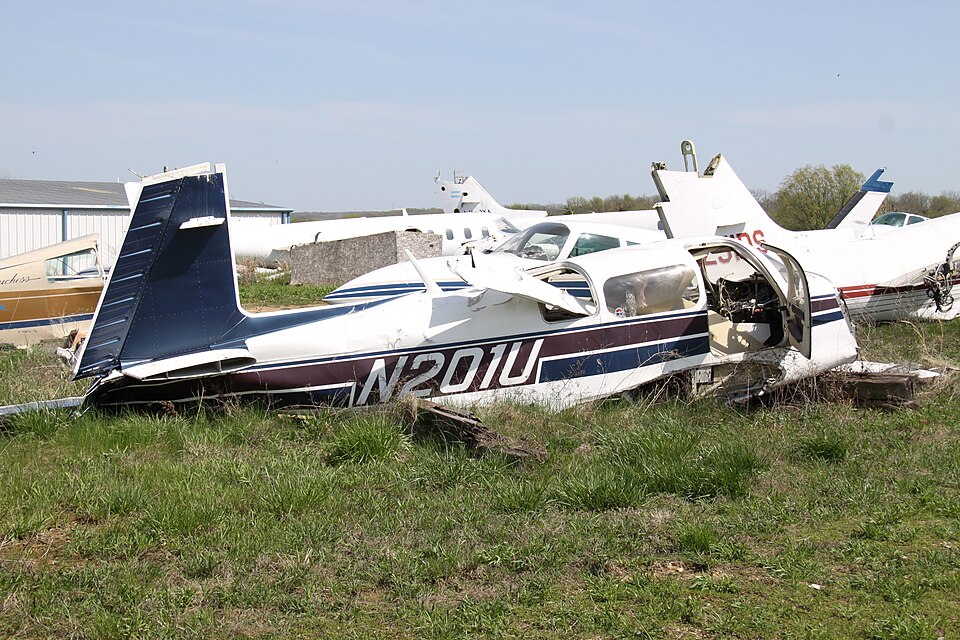
The pilot reported being cleared to land. While at approximately 300 feet above ground level (AGL), the airplane's nose pitched up about 15 degrees and the left wing dropped roughly 30 degrees. The pilot attempted to correct with ailerons and rudder but obtained no response, describing the controls as "as if the yoke was locked with a gust lock." He immediately checked a flight bag and oxygen bottle located on the floor in front of the front passenger seat to ensure they were not interfering with the yoke or rudders; they were not. The pilot confirmed that the autopilot was off, having been hand-flying for several minutes. Believing he was approaching a stall, he increased power to full. Subsequently, the airplane impacted the ground after approximately 160 degrees of left turn.
Witness Observations
One witness reported the airplane was on a quarter-mile final with landing gear and flaps extended. It appeared to initiate a go-around to the left with a high power setting. After turning approximately 180 degrees, the left wing contacted terrain and the airplane cartwheeled. Another witness noted the airplane never exceeded 100 to 150 feet above the ground during the maneuver.
Pilot Background and Conditions
The pilot had recently completed a Mooney Pilot Proficiency Program (dated June 5, 2005) and received the required FAA flight review endorsement. He had flown the accident airplane approximately 31 hours during the previous 30 days. The density altitude at the time of the accident was calculated to be 7,292 feet.