Casualties unknown

2005-07-06: Cessna 185 (N8360Q) — Bureau OF Land Management — Delta Junction, AK

Delta Junction, AK, US

On July 6, 2005, a Cessna 185 (registration N8360Q) operated by Bureau OF Land Management was involved in an aviation accident near Delta Junction, AK. Investigators recorded the probable cause as: The pilot's misjudged distance/altitude during the landing touchdown and subsequent undershoot, and his failure to maintain directional control of the airplane during the landing roll, which resulted in an on-ground encounter with high vegetation. This summary draws on records from the U.S. National Transportation Safety Board (NTSB) historical archive; 8 related events involving the same aircraft type or operator are linked below.

Sourcesthe U.S. National Transportation Safety Board (NTSB) historical archivePrimary reportUpdated 1781061362Data APIEditorial standards
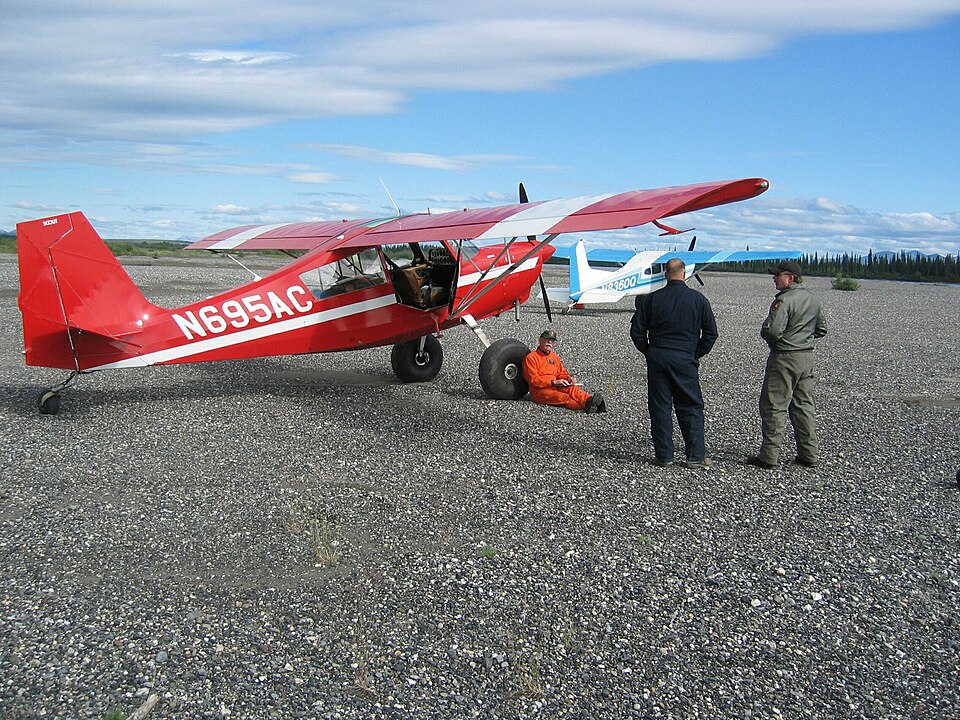
Aircraft registered N8360Q
Aircraft registered N8360Q. Photo: Western Arctic National Parklands / CC BY 2.0, via Wikimedia Commons

During a landing at a remote mining airstrip, a pilot reported that the right main landing gear tire dropped into a rut, pulling the airplane into willow trees. Inspection revealed damage to an inboard stabilizer rib requiring major repair.

Accident Overview

A pilot conducting a public use flight under Title 14, CFR Part 91 landed at a remote mining airstrip. The airstrip, which slopes uphill, measures approximately 1,000 feet in length and 16 feet in width.

Landing and Sequence of Events

According to the pilot, during the landing roll, the right main landing gear tire dropped into a rut. This caused the airplane to veer to the right and into several willow trees.

Examination of the Airstrip

An air safety investigator from the Department of the Interior, Aviation Management Directorate, Aviation Safety Division examined the accident airstrip. The investigator reported that the airplane's tailwheel first contacted the ground approximately 53 feet before the beginning of the airstrip. The main landing gear tires made contact with the airstrip surface about 75 feet after the initial tailwheel strike. The propeller then struck the ground about 52 feet beyond the approach end of the airstrip, which was approximately 30 feet from the point of initial main wheel contact.

Post-Impact and Inspection

Following the propeller strikes, the airplane veered to the right and passed through several willow trees, which were 2 to 4 feet tall. An inspection of the airplane at a Department of Interior repair facility revealed damage to an inboard stabilizer rib, which required a major repair.

Probable Cause

No probable cause was stated in the source.

Investigation report by the U.S. National Transportation Safety Board (NTSB) historical archive. Original record: https://carol.ntsb.gov/event/20050727X01109. This page is a structured re-presentation; facts and quotes are in the National Transportation Safety Board (NTSB), United States.