Casualties unknown

2005-10-14: Hughes 369D (N58267) — Alexair — Kahului, HI

Kahului, HI, US

On October 14, 2005, a Hughes 369D (registration N58267) operated by Alexair was involved in an aviation accident near Kahului, HI. Investigators recorded the probable cause as: The tail rotor control rod failed as a result of fatigue cracking that propagated from the outside in, leading to a loss of tail rotor control and subsequent hard landing. This summary draws on records from the U.S. National Transportation Safety Board (NTSB) historical archive.

Sourcesthe U.S. National Transportation Safety Board (NTSB) historical archivePrimary reportUpdated 1781061362Data APIEditorial standards
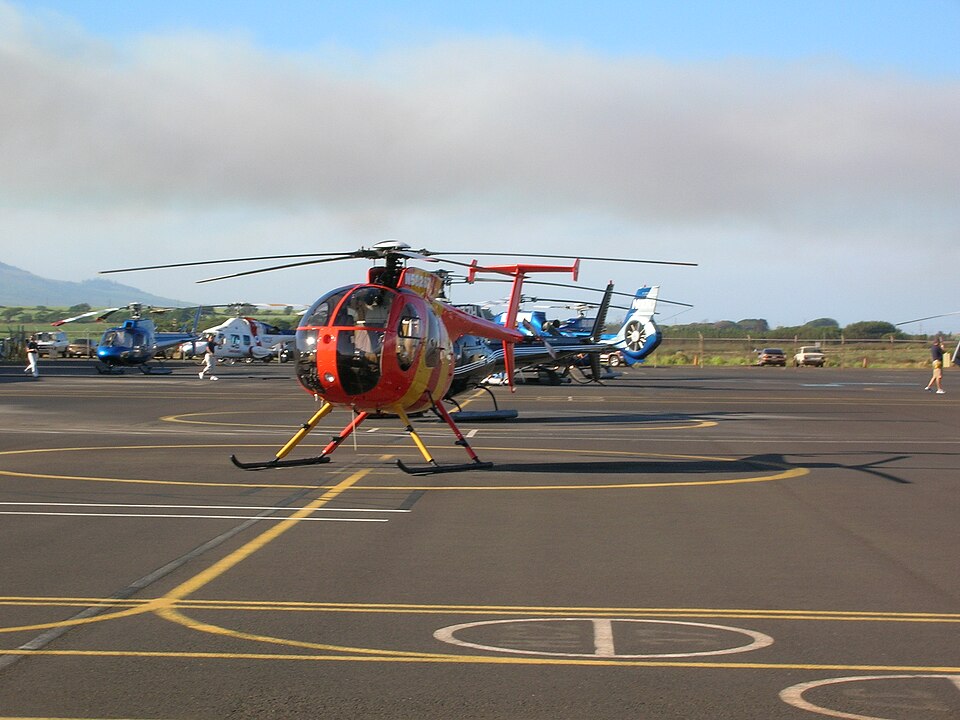
Aircraft registered N58267
Aircraft registered N58267. Photo: Forest & Kim Starr / CC BY 3.0, via Wikimedia Commons

A helicopter experienced a hard landing during an emergency landing after losing tail rotor control due to a fatigue-cracked control rod that fractured during a tour flight.

Accident Overview

A helicopter conducting a tour flight sustained damage during a hard landing following a loss of tail rotor control. The pilot performed an emergency landing, and the helicopter landed hard after encountering a gust of wind.

Examination of Tail Rotor System

Post-accident examination of the tail rotor system revealed that the tail rotor control rod had failed approximately 6.5 inches forward of its aft attach point, where the control rod connects to the tail rotor pitch change bell crank. The control rod fractured perpendicular to its longitudinal axis, exhibiting a flat fracture surface.

Metallurgical Analysis

Metallurgical examination of the fracture determined that the control rod failed due to fatigue cracking that propagated from the outside inward. The origin of the crack could not be identified because of severe mechanical damage caused by relative movement between the fracture mating surfaces. Due to this damage, the size of the crack could not be determined, and therefore an assessment of the crack's age was not possible.

Inspection History

It was not possible to determine whether the crack would have been visible during the last inspection, which occurred 91.2 hours prior to the accident. The inspection checklist for that maintenance event required the removal and inspection of the tail rotor control rod.

Probable cause

The tail rotor control rod failed as a result of fatigue cracking that propagated from the outside in, leading to a loss of tail rotor control and subsequent hard landing.

Investigation report by the U.S. National Transportation Safety Board (NTSB) historical archive. Original record: https://carol.ntsb.gov/event/20051019X01694. This page is a structured re-presentation; facts and quotes are in the National Transportation Safety Board (NTSB), United States.