History of Flight
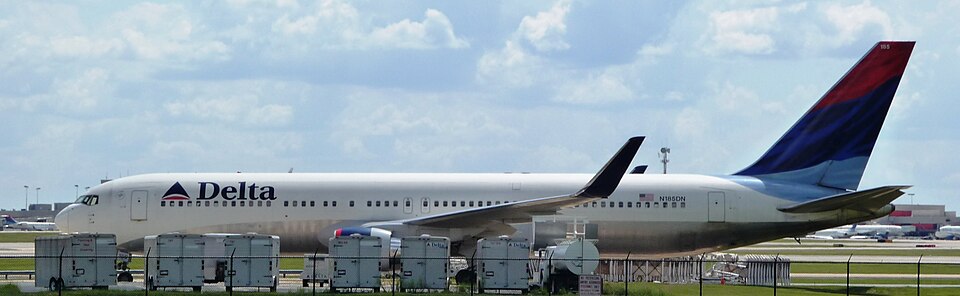
On Monday, October 19, 2009, at 0605 EDT, Delta Air Lines Flight 60, a Boeing B767-332ER registered as N185DN, landed on taxiway M at Atlanta Hartsfield-Jackson International Airport (ATL). The flight originated from Rio de Janeiro–Galeão International Airport (SBGL/GIG) and had been cleared to land on runway 27R. The flight deck crew consisted of a check airman, a captain receiving special airport qualification operating experience, and a first officer. During the cruise, the check airman became ill with a gastrointestinal disorder and remained in the cabin for the remainder of the flight.
Prior to the flight, on October 18, 2009, the check airman had fallen ill during preflight activities but initially continued with preparations. The flight departed the gate at about 2040 EDT. After reaching top of climb, the crew calculated rest breaks, and the check airman took the first break of about 2 hours and 50 minutes. After the break, it was determined he was ill, and a physician on board was consulted. The crew notified the company dispatcher via satellite communications and requested emergency services upon arrival.
During the approach, the crew was initially assigned runway 27L, then reassigned to 26R, then back to 27L. The local controller offered runway 27R, which the crew accepted. The captain stated that when cleared to land on 27R, he saw "bright edge lights and centerline lights" and believed he had the runway in sight. The flight landed on taxiway M, a parallel taxiway about 200 feet north of runway 27R.
Personnel Information
The captain had accumulated about 9,122 total flight hours, including 3,131 hours in the Boeing 767, and held a first-class medical certificate issued August 21, 2009. The first officer had about 4,000 total hours, including 1,591 hours in the Boeing 767, and held a first-class medical certificate issued April 13, 2009.
Aircraft Information
The airplane was manufactured in 1995 and had accumulated 70,009 total hours of operation as of its last inspection in February 2009.
Meteorological Information
Weather at ATL at 0552 EDT reported calm winds, clear sky, visibility 10 statute miles, and temperature 3°C. Moon data indicated a waxing crescent with 3% illumination; moonset had occurred the previous evening, and moonrise was after the incident. Civil twilight began at 0721 EDT.
Aerodrome Information
ATL had five east-west runways. Runway 27R was 11,890 feet long and 150 feet wide, equipped with high-intensity edge lights and centerline lights. Taxiway M was a 75-foot-wide concrete taxiway parallel to and north of runway 27R, with blue edge lights and green centerline lights.
Lighting System
Runway 27R edge and centerline lights were set to step 1 of 5 (lowest intensity). Taxiway M edge lights on the east end were set to step 3 of 3, and centerline lights were set to step 2 of 5. LED lights installed during a 2009 construction project on the east end of taxiway M were perceived as brighter than incandescent lights in clear conditions.
Air Traffic Control
DAL 60 checked in with Atlanta Approach at about 0554 EDT and was assigned runway 26R. The crew queried and was given runway 27L. At 0603, the local controller offered runway 27R, which the crew accepted. The tower's ASDE-X system did not alert for taxiway landings. At about 0605, the ground controller reported the landing on taxiway M. The captain called the tower after arriving at the gate.
Flight Recorders
The cockpit voice recorder captured audio from cruise through taxi. The recording included the captain yawning, comments about lack of sleep, and a statement after landing that he was fatigued and had "fixated on the VASI." The first realization of landing on a taxiway occurred about 4 seconds before touchdown.
Company Procedures
Company procedures required approach briefings for each runway; however, no additional briefing was conducted for the last-minute change to runway 27R. The procedures did not specify a definition of "positive confirmation" for runway changes. The crew identified fatigue as the highest threat during the initial approach briefing.
The company's Flight Operations Manual included fatigue guidance but no formal fatigue management program was in place at the time. A "Sleep/Fatigue Management Guide" existed for ultra-long-range crews but was not used by the Flight 60 crew.