History of Flight
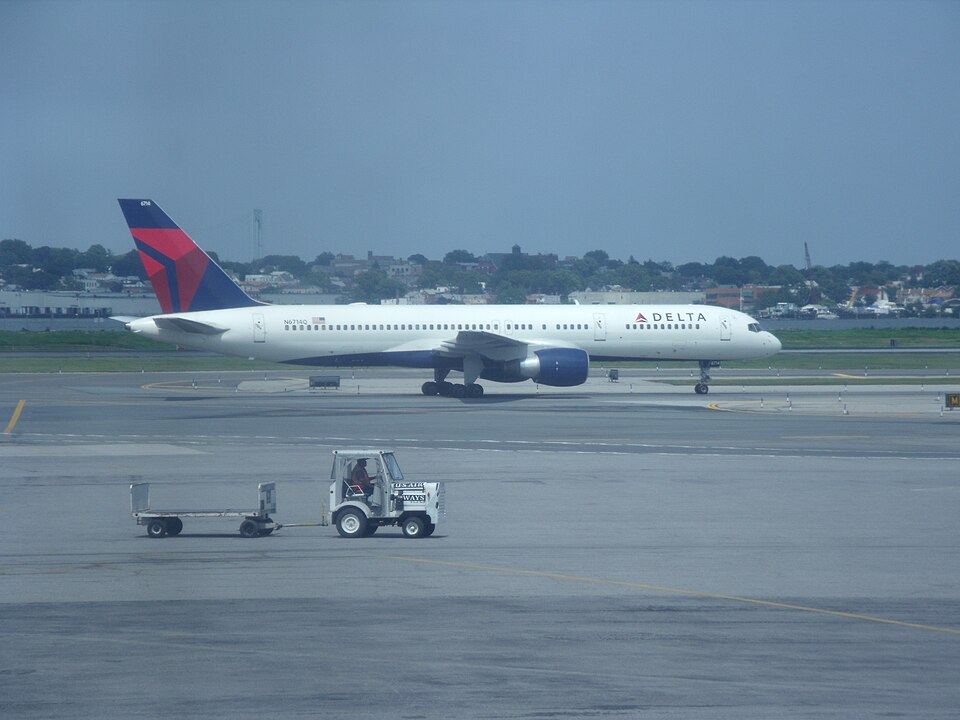
On June 21, 2011, at 0007 eastern daylight time, a Boeing B-757-232, registration N6714Q, operated by Delta Air Lines as flight 1323, experienced a left engine (No. 1) fire while departing from Atlanta's Hartsfield International Airport (ATL), Atlanta, Georgia. The aircraft, powered by two Pratt & Whitney PW2037 turbofan engines, was climbing through 3,000 feet during gear retraction when the captain observed a small yaw followed by a left engine fire indication. The captain declared an emergency, shut down the No. 1 engine, and initiated a return to ATL. The airplane performed a successful overweight single-engine landing on runway 26L, after which an emergency evacuation was conducted on the right side onto the runway. Airport Rescue and Firefighting personnel arrived to find the No. 1 engine still on fire and discharged fire retardant into the aft end of the engine. Of the 172 passengers and 6 crew members aboard, three passengers sustained minor injuries related to the slide evacuation. The flight was a domestic passenger operation under 14 CFR Part 121 from ATL to Los Angeles International Airport. Night visual meteorological conditions prevailed, and an instrument flight rules flight plan was filed.
Engine Damage
Following evacuation, the airplane was towed to a Delta maintenance hangar where it was confirmed that the No. 1 engine had sustained an undercowl fire. The left-hand core cowl was installed but damaged and detached in some areas, while the right-hand core cowl was almost entirely missing. An in-situ examination by the Powerplant Group (comprising Pratt & Whitney, Boeing, Delta, ALPA, FAA, and NTSB) found that all engine cowls except the inlet cowl exhibited varying degrees of thermal distress and fire damage. The fan cowls, thrust reverser/fan duct assembly, and core cowls remained hinged to the strut at the top and latched at the bottom. The No. 1 engine strut was distorted; several thermal blankets and electrical wires were fire damaged; and conductivity and hardness measurements at multiple locations exceeded Aircraft Maintenance Manual serviceable limits. No other airplane damage was noted.
Detailed disassembly revealed fire damage to the fan and core compartments, with the most extensive thermal distress in the fan compartment from the intermediate case back to the turbine exhaust case, between the 2:00 and 6:00 o'clock positions. Notable findings included: the 14th-stage pilot control valve (at about 2:00 on the intermediate case) was completely consumed; the stator vane actuator (at about 4:00) was thermally damaged, melted, and had lost about half its housing; the fuel flow transmitter (FFT) end housing had backed off, creating a 0.3-inch gap, with the forward two-thirds of its outer shell melted; on the core side of the bifurcation panel, the air/oil heat exchanger muscle pressure fuel lines were disconnected at the braze joint; and the FFT-to-fuel divider valve (FDV) fuel line was intact but distorted.
Testing and Research
The FFT and its associated fuel line underwent additional examination. An installation fit check and dimensional inspection showed the FFT-to-FDV fuel line was plastically deformed about 1.3 inches vertically from its normal orientation. A deflection analysis using finite element modeling indicated that the deformation was the result, not the cause, of the FFT end housing separation.
Metallurgical examination of the FFT hardware found that all four threaded inserts in the main housing that attach the end housing were pulled out to varying lengths. One insert was completely sheared. The main housing threads exhibited shearing and flattening. The washers were distorted and showed coining on both surfaces. No material or dimensional anomalies were found. Graphite lubricant residue was present on all bolts and on only one surface of each washer.
Torque tension tests were conducted on exemplar hardware. Results showed that the quantity and location of graphite lubricant significantly affected installation preload. At the higher end of the installation torque (150±10 in-lb), the bolted joint load capacity at soak-back temperature was below the installation preload. At the lower torque, load capability exceeded preload. The load capability of the washers was marginal at room temperature and fell below preload well before reaching soak-back temperature, indicating that main housing threads may not maintain preload over time.
Maintenance Findings
A review of the AMETEK FFT Component Maintenance Manual (CMM) identified several areas for improvement. Two different end housing bolt installation torque values were referenced, causing confusion. The assembly procedures called for graphite lubricant but did not specify the amount to be applied, which was found to significantly affect preload. Additionally, Service Bulletin 757/FF/8TJ124-73-03 required that washers not be reused, but the disassembly and assembly procedures did not enforce this. Testing showed distorted washers (from reuse or over-torquing) adversely affected joint integrity. AMETEK proposed changes to standardize torque values, clarify lubricant application, and require new washers during reassembly.