History
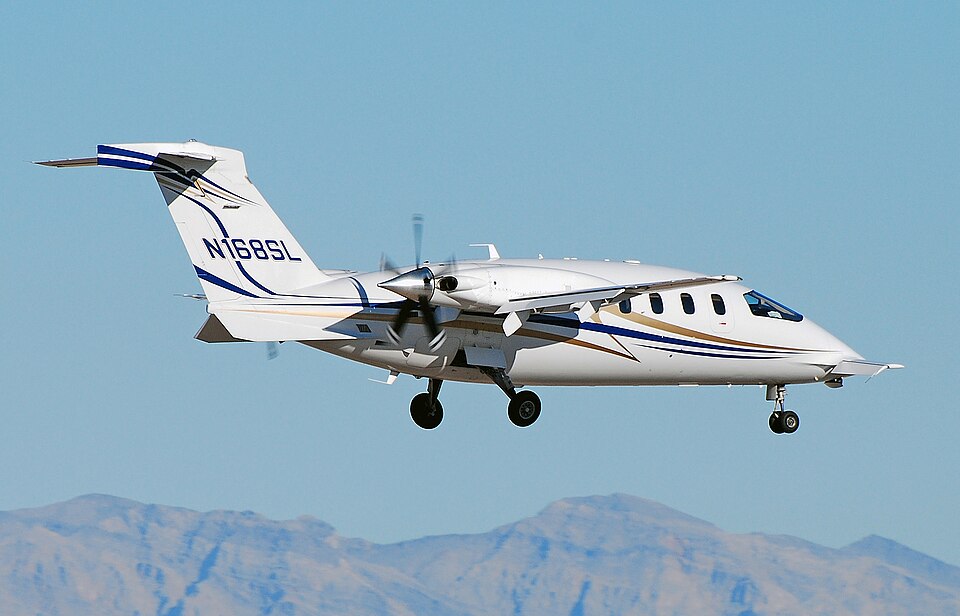
On November 16, 2011, at approximately 0940 eastern standard time, a Piaggio Aero Industries S.p.A. P180, registration N168SL, operating as Avantair Flight 168, departed the runway during landing at Bishop International Airport (KFNT), Flint, Michigan. The captain, first officer, and two passengers sustained minor injuries; the airplane sustained substantial damage. The flight was conducted under 14 CFR Part 91 Subpart K in visual meteorological conditions with an IFR flight plan. The aircraft had departed Detroit Metropolitan Wayne County Airport (KDTW) at 0906, destined for West Bend Municipal Airport (KETB), Wisconsin.
On November 14, the airplane arrived at Toronto Pearson International Airport (CYYZ). The crew noted a generator amperage split and the left engine power lever would not go into beta or reverse. Maintenance personnel performed corrective actions on November 15, including swapping generator control units and cleaning/lubricating the left power lever system. The airplane was returned to service.
On November 16, the flight from CYYZ to KDTW was uneventful. Climbing through FL220, the left engine torque was 94% and the captain felt resistance when moving the power lever. After applying pressure, a pop was heard, and the engine over-torqued and over-temped. The captain shut down the left engine, declared an emergency, and diverted to KFNT.
Shortly after shutdown, both primary flight displays blanked. The captain reset the right generator, restoring power. During descent, a 50-degree heading discrepancy was noted, attributed to gyro resetting. The crew contacted KFNT approach, requesting runway 27. Approach control gave vectors. At 0936, the captain began descending to 3,000 feet and turning left to base. The crew discussed runway confusion. At 0938, the first officer asked tower about their base leg for runway 27. At 0939, tower cleared the airplane to land any runway. Touchdown on runway 18 occurred at 0940:21. The captain brought the right power lever into beta/reverse; the airplane veered right. Despite left rudder and brake, it departed the runway near the 4,000-foot marker, flipped over, and came to rest inverted. All four occupants exited with assistance.
Personnel
The captain held an ATP certificate with multi-engine land rating, and a commercial certificate with single-engine land rating. He held a first-class medical issued November 10, 2010. According to company records, he had 3,851 total hours, including 2,023 hours in type, with 113 hours as pilot-in-command. His last flight review was June 8, 2011.
The first officer held an ATP certificate with multi-engine land rating, and a commercial certificate with single-engine land rating. He held a second-class medical issued February 14, 2011. He had 3,957 total hours, with 259 hours in type, and 0 hours as pilot-in-command. His last flight review was July 17, 2011.
Aircraft
The airplane was a 2007 Piaggio P180, serial number 1139, powered by two Pratt & Whitney PT6A-66B engines (850 shp each) with Hartzell HC-E5N five-bladed propellers. It was maintained under an approved continued airworthiness program. A C check was completed November 9, 2011, at 4,422 hours, including an inspection of engine controls that did not require disconnection of linkages. The left engine was installed on August 20, 2011.
Meteorological Information
At 0953, KFNT automated surface observing system reported wind from 280° at 16 knots, visibility 10 miles, clear skies, temperature 4°C, dew point -3°C, altimeter 29.91 inHg.
Flight Recorders
The CVR (L-3 FA2100-1010, serial 000330603) recorded the last 30 minutes. Audio was good quality; a partial transcript for the last 24 minutes, 2 seconds was prepared.
Wreckage and Impact
Tire skid marks began near runway centerline about 3,250 feet from the approach end of runway 18, arcing right until departure at about 4,100 feet from the departure end. Nosewheel marks led to impact of the 4,000-foot runway-remaining sign. A ground scar consistent with the left wing was found 65 feet from the sign; the airplane came to rest inverted 83 feet from the scar. The left wing was partially separated outboard of the engine; forward fuselage (including canards) fragmented; empennage partially separated. The left propeller was feathered.
Examination of the left engine revealed the Beta clevis pin was installed in reverse, causing interference with a fuel control unit interconnect rod and jamming the power lever linkage in full power position. Generator and electrical system inspections showed no anomalies. The nose landing gear assembly could not be tested due to damage.
Tests and Research
Nose landing gear assembly and nosewheel steering were examined. When tested, an uncommanded right turn occurred. The steering actuator's follow-up potentiometer was damaged. Disassembly revealed water inside the actuator piston dry area; the feedback potentiometer had wire damage consistent with impact and/or recovery. No pre-impact anomalies were found that would have precluded normal operation.