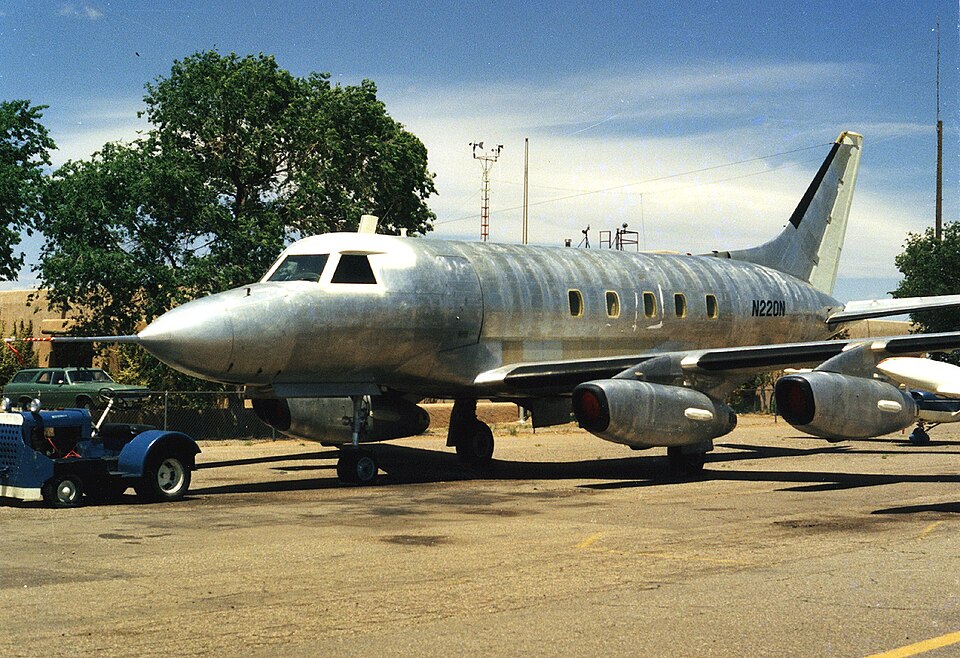
15 May 2017: MITSUBISHI MU2B 40

15 May 2017: MITSUBISHI MU2B 40 (N220N) — Unknown operator

4 fatalities • Eleuthera, Bahamas

Probable cause

The pilot's intentional flight into an area of known icing and convective thunderstorm activity, which resulted in a loss of control of the airplane.

— NTSB Determination

Accident narrative

HISTORY OF FLIGHTOn May 15, 2017, about 1329 eastern daylight time, a Mitsubishi MU 2B-40, N220N, crashed into the Atlantic Ocean 32 miles east of Eleuthera, The Bahamas. The commercial pilot and the three passengers were fatally injured, and the airplane was destroyed. The airplane was registered to and operated by Ithaca Consulting, Inc., under the provisions of Title 14 Code of Federal Regulations (CFR) Part 91. Instrument meteorological conditions prevailed, and an instrument flight rules flight plan was filed for the personal cross-country flight. The airplane departed Rafael Hernandez Airport (BQN), Aguadilla, Puerto Rico, about 1100 and was destined for Space Coast Regional Airport (TIX), Titusville, Florida.

Radar and voice communication information from the Federal Aviation Administration (FAA) revealed that the airplane climbed out of BQN, leveled at flight level (FL) 240 (24,000 ft mean sea level at standard pressure), and maintained the same relative heading, airspeed, and altitude for about 2.5 hours. The airplane was handled by the Miami Air Route Traffic Control Center (ZMA) as it entered an area of overlapping radar coverage. The overlapping facilities were ZMA, Nassau Approach Control, and Grand Turks Radar.

At 1141, while in cruise flight at FL240, the pilot contacted the ZMA controller at position R62. The ZMA R62 controller provided a clearance "direct Titusville," which the pilot acknowledged. The ZMA R62 controller later provided a frequency change, and, at 1215, the pilot checked in with the ZMA R58 controller on the new frequency, which the controller acknowledged.

At 1235, the ZMA R58 controller twice provided the pilot with frequency-change instructions with no reply. Both the R58 and R62 controllers attempted to regain contact with the pilot over both of their frequencies and the guard frequency without success. Ultimately, with the assistance of other pilots on the ZMA frequencies, contact with the pilot was reestablished at 1244.

At 1314, the ZMA R58 controller issued an all aircraft hazardous weather advisory for thunderstorms in the area moving from the northwest at 10 knots with cloud tops to FL390.

At 1328, the ZMA R58 controller provided a frequency change to the pilot, which he acknowledged. At 1329, the pilot initiated a radio call on the new frequency to ZMA controller position R59. The transmission was "cut off," and the ZMA R59 controller requested that the pilot repeat the radio call. There was no reply. Multiple attempts by multiple ZMA controllers and pilots of airplanes transitioning the area were unsuccessful in obtaining any further response from the pilot.

ZMA personnel reported that radar targets transitioning this area at "low" altitude will enter "coast" status for about 1 minute before the targets are fully reacquired. After the ZMA controller saw that the target for the airplane was in a coast status for about 3 minutes, the controller attempted to contact the pilot without success. There were no further communications with the airplane despite multiple attempts by air traffic controllers, and they saw no further radar targets that could be associated with the airplane.

A search was initiated, and on May 16, 2017; debris associated with the airplane was found floating amidst a fuel sheen in the area beneath the final recorded radar target. The United States Coast Guard conducted a search by air and sea for 3 days, but the airplane's occupants were not found. PERSONNEL INFORMATIONThe pilot held a commercial pilot certificate with ratings for airplane single-engine land, airplane multiengine land, and instrument airplane. His most recent FAA first-class medical certificate was issued December 12, 2016, and the pilot reported 1,480 total hours of flight experience on that date.

An FAA senior aviation accident investigator examined the pilot's logbook and provided a detailed summary of the examination. According to the summary, the pilot received his multiengine rating on April 3, 2008. On his application for the rating, the pilot reported 4.4 hours of experience in the Piper PA-34-300 airplane in which he would be evaluated. The entries in the pilot's logbook for two 1.5-hour flights in 2008 in the Piper PA-34-300 showed evidence of having been altered to read 6.5 hours each. An interview and logbook comparison with the flight instructor for those flights confirmed that the flights had been 1.5 hours each.

Between 2010 and July 2015, the pilot flew infrequently, and he logged only 50.1 hours during that period. He logged no flight time between July 2015 and December 2016.

After receiving his multiengine rating, the pilot did not log another multiengine flight until December 19, 2016, when he logged the first of four flights in a Diamond DA42.

On December 23, 2016, the pilot declared to his insurance company that he had 25 total hours of multiengine flight experience; when reduced by 10.0 hours to correct for the 2008 alterations, his logbook reflected 9.7 hours of multiengine experience as of that date.

Before beginning training in the Mitsubishi MU-2B airplane in January 2017, the pilot had accrued 21.2 total hours of multiengine flight experience, of which 14.6 hours were with a flight instructor. At the time of the accident, the pilot had an estimated 120 hours of multiengine flight experience, of which 100 hours were in the accident airplane.

A special federal aviation regulation (SFAR) requires that all ground and flight training conducted in Mitsubishi MU-2B series airplanes be done in accordance with the standardized training program and a pilot checklist accepted by the FAA's Flight Standardization Board (FSB). According to 14 CFR Part 91, Subpart N – "Mitsubishi MU-2B Series Special Training, Experience, and Operating Requirements," initial training must include a minimum of 20 hours of ground instruction and a minimum of 12 hours of flight instruction, with a minimum of 6 hours accomplished in the airplane, a level C simulator, or a level D simulator. Pilots must also satisfactorily complete a training course final phase check. According to the regulation, a pilot cannot act as pilot-in-command (PIC) of a Mitsubishi MU-2B series airplane unless the pilot has logged a minimum of 100 flight hours as PIC in multiengine airplanes.

The pilot began instructional flights in the accident airplane on January 5, 2017. The FAA-approved instruction for the pilot was provided by a company that specialized in MU-2 training.

During January 2017, the pilot accumulated 74.5 hours of MU-2B "flight training," which included 3.2 hours of actual instrument flight time. The pilot's logbook reflected that nearly all of these flights were cross-country flights totaling 42.5 hours (the remaining hours were ground instruction). One instructor stated he flew probably 30 to 40 hours with the pilot before his formal classroom and primary instruction began at the training company's base in Smyrna, Tennessee. He described the flights as familiarization flights for the pilot and demonstration flights for the pilot's girlfriend, who was the owner of the airplane.

According to both the flight and classroom instructors, the pilot was an attentive student who had performed well in both the academic and cockpit environments.

Mitsubishi Heavy Industries, Ltd. (MHI) produced an Icing Awareness Training Video to encourage MU-2 pilots to understand diverse kinds of icing and enhance awareness of icing conditions. Airworthiness directive (AD) 2003-22-07 mandates viewing of the video for all MU-2 pilots before flight into known or forecast icing conditions. According to training company flight records, the pilot completed 20 hours of aircraft systems instruction, viewed the icing video in compliance with AD 2003-22-07, and completed a flight review in the airplane on February 1, 2017.

According to one of the pilot's instructors, the purpose of the anti-icing and de-icing equipment on the airplane was to protect the airplane for the time required to exit the icing conditions. He said the SFAR and the instructional video about icing required by the SFAR stressed this point multiple times.

The records did not show that the pilot received any instruction on emergency procedures or high-altitude operations. The pilot's logbook contained an undated high-altitude endorsement signed by a company instructor.

Details about the pilot's wake/rest activities in the days before the accident are not known. On the day of the accident, the pilot sent an email to his mechanic at 0303 and then obtained on-line weather briefings through ForeFlight at 0310 and again at 0317. Fuel service was completed on the airplane at 1000, and an invoice for the fuel and other associated charges was signed by the pilot. AIRCRAFT INFORMATIONGeneral

According to FAA records, the airplane was manufactured in 1981. Its most recent annual inspection was completed December 30, 2016, at 4,634.2 total aircraft hours. The avionics installed in the airplane at the time of the accident had the capability to receive and display Next Generation Radar (NEXRAD) Mosaic (Weather) Imagery, but its use during the accident flight could not be determined.

According to FAA records, the airplane was registered to Ithaca Consulting on January 23, 2017. Flight history suggested that the pilot was familiar with the route from BQN to TIX and had completed the flight several times during the 4 months he had operated the airplane for Ithaca Consulting.

The maintenance operator who had maintained the airplane for many years stated that the airplane was due at their facility in Aiken, South Carolina, on May 16, 2017, for a 100-hour inspection and the installation of the following avionics: Garmin GTN-750 Navigator, Garmin GMA-35 Audio Panel, Dual ADS-B Transponders, Garmin GDL-69 XM Receiver, Garmin GSR-56 Satellite Transceiver, and a Honeywell KHF-950 HF System.

Icing Limitations and Equipment for Mitsubishi MU-2B Airplanes

The MHI Airplane Flight Manual, Pilot's Operating Manual, and Pilot Checklist provided information on limitations for flight in known-icing conditions and procedures in case of an inadvertent icing encounter or a severe icing encounter in flight.

MHI made aircraft modifications available to MU-2 owners to enhance the pilots' awareness of icing conditions. Safety systems that could be added under supplemental type certificate (STC) or service bulletin (SB) included an Ice Detector System (STC SA00601WI), Automatic Autopilot Disconnect System (STC SA00489WI), Trim-In-Motion Alert System (STC SA00491WI), Pneumatic De-Ice Monitoring System (STC SA00482WI), and Auto-Ignition System (SB 086/74-002).

The accident airplane was not equipped with the Ice Detector System. It was equipped with the Pneumatic De-Ice Monitoring System as well as the Trim-In-Motion Alert System. The records available did not reveal if the Automatic Autopilot Disconnect System or the Auto-Ignition System were installed. METEOROLOGICAL INFORMATIONA search of official weather briefing sources revealed that the pilot received text weather briefing information from Leidos through ForeFlight at 0310 and 0317. The weather briefings requested by the pilot provided the standard weather information for the intended route of the accident flight and for a proposed flight from Titusville, Florida, to New York, New York, for later on May 15, 2017. It is unknown if the pilot checked or received any further weather information before or during the accident flight.

At 1400, the surface weather reported at Linden Pindling International Airport (MYNN), Nassau, Bahamas, about 80 miles west of the accident site, included wind calm, light rain, visibility 5.6 miles, scattered cumulonimbus clouds at 1,200 ft above ground level (agl), a broken ceiling at 3,000 ft agl, an overcast ceiling at 10,000 ft agl, temperature 26°C, dew point 23°C, and altimeter setting 29.97 inches of mercury.

At 1340, a pilot weather report (PIREP) was received from a Boeing 737 at FL250 for light to moderate rime icing in the area near the accident site.

Significant Meteorological Information (SIGMET) Echo 2, issued at 1300 and valid for the accident site at the accident time, warned of frequent thunderstorms with tops to FL440 that were moving eastward at 25 knots. The satellite imagery for the area surrounding the airplane at the accident time depicted cloud tops up to FL400.

A review of upper air soundings indicated that supercooled liquid water would likely have been present in the cloud cover in the vicinity of the accident site between 15,000 and 26,000 ft msl. No weather radar imagery was available for the accident site.

Forecast Icing Potential (FIP) and Current Icing Potential (CIP) products were created by the National Weather Service (NWS) Aviation Weather Center (AWC) to supplement other icing advisories. The 1-hour FIP products for 1400 forecasted a 10 to 30% probability of icing at 23,500, 24,000, and 24,500 ft above mean sea level (msl) at the accident site; the FIP products also indicated that icing near the accident site would likely be moderate to heavy; the CIP product forecasted the same probabilities with icing of moderate intensity. The FIP showed a 70 to 90% supercooled large drops (SLD) potential just southwest of the accident area with unknown SLD potential directly over the accident site. The CIP provided a similar forecast, although probability of SLD were 60% to 80%. This FIP information would have been available on the NWS AWC website before the accident flight departed.

For further information, see the weather study in the public docket for this report. AIRPORT INFORMATIONGeneral

According to FAA records, the airplane was manufactured in 1981. Its most recent annual inspection was completed December 30, 2016, at 4,634.2 total aircraft hours. The avionics installed in the airplane at the time of the accident had the capability to receive and display Next Generation Radar (NEXRAD) Mosaic (Weather) Imagery, but its use during the accident flight could not be determined.

According to FAA records, the airplane was registered to Ithaca Consulting on January 23, 2017. Flight history suggested that the pilot was familiar with the route from BQN to TIX and had completed the flight several times during the 4 months he had operated the airplane for Ithaca Consulting.

The maintenance operator who had maintained the airplane for many years stated that the airplane was due at their facility in Aiken, South Carolina, on May 16, 2017, for a 100-hour inspection and the installation of the following avionics: Garmin GTN-750 Navigator, Garmin GMA-35 Audio Panel, Dual ADS-B Transponders, Garmin GDL-69 XM Receiver, Garmin GSR-56 Satellite Transceiver, and a Honeywell KHF-950 HF System.

Icing Limitations and Equipment for Mitsubishi MU-2B Airplanes

The MHI Airplane Flight Manual, Pilot's Operating Manual, and Pilot Checklist provided information on limitations for flight in known-icing conditions and procedures in case of an inadvertent icing encounter or a severe icing encounter in flight.

MHI made aircraft modifications available to MU-2 owners to enhance the pilots' awareness of icing conditions. Safety systems that could be added under supplemental type certificate (STC) or service bulletin (SB) included an Ice Detector System (STC SA00601WI), Automatic Autopilot Disconnect System (STC SA00489WI), Trim-In-Motion Alert System (STC SA00491WI), Pneumatic De-Ice Monitoring System (STC SA00482WI), and Auto-Ignition System (SB 086/74-002).

The accident airplane was not equipped with the Ice Detector System. It was equipped with the Pneumatic De-Ice Monitoring System as well as the Trim-In-Motion Alert System. The records available did not reveal if the Automatic Autopilot Disconnect System or the Auto-Ignition System were installed. WRECKAGE AND IMPACT INFORMATIONThe wreckage was not recovered, and an examination could not be performed. MEDICAL AND PATHOLOGICAL INFORMATIONThe pilot was not found, and, no post-mortem examination or toxicological testing could be performed.

Contributing factors

  • cause Pilot
  • cause Pilot
  • cause Effect on equipment
  • cause Effect on operation
  • Pilot
  • Pilot
  • Pilot

Conditions

Weather
IMC, vis 10sm

Loading the flight search…

What you can do on Flight Finder

  • Search flights between any two airports with live fares.
  • By aircraft — pick a plane model (e.g. Boeing 787, Airbus A350) and see every route it flies from your origin.
  • Route map — click any airport worldwide to explore its destinations, or draw a radius to find nearby airports.
  • Global aviation safety — aviation accident database, 5,200+ records since 1980, with map and rankings by aircraft and operator.
  • NTSB safety feed — recent U.S. aviation accidents and incidents from the official NTSB CAROL database, updated daily.

Frequently asked questions

How do I search flights by aircraft type on FlightFinder?

Pick an aircraft model — Boeing 737, Airbus A320, A380, Boeing 787 Dreamliner and more — enter your origin airport, and FlightFinder shows every route that plane flies from there with live fares.

Which aircraft types can I filter by?

We support Boeing 737/747/757/767/777/787, the full Airbus A220/A319/A320/A321/A330/A340/A350/A380 family, Embraer E170/E175/E190/E195, Bombardier CRJ and Dash 8, and the ATR 42/72 turboprops.

Is FlightFinder free to use?

Search and schedules are free. Pro ($4.99/month, $39/year, or $99 one-time lifetime) unlocks the enriched flight card — on-time stats, CO₂ per passenger, amenities, live gate & weather — plus My Trips with push alerts.

Where does the route data come from?

Live schedules come from Amadeus, AeroDataBox and Travelpayouts. Observed routes (which aircraft actually flew a given city pair) are crowdsourced from adsb.lol ADS-B data under the Open Database License.