Incident Overview
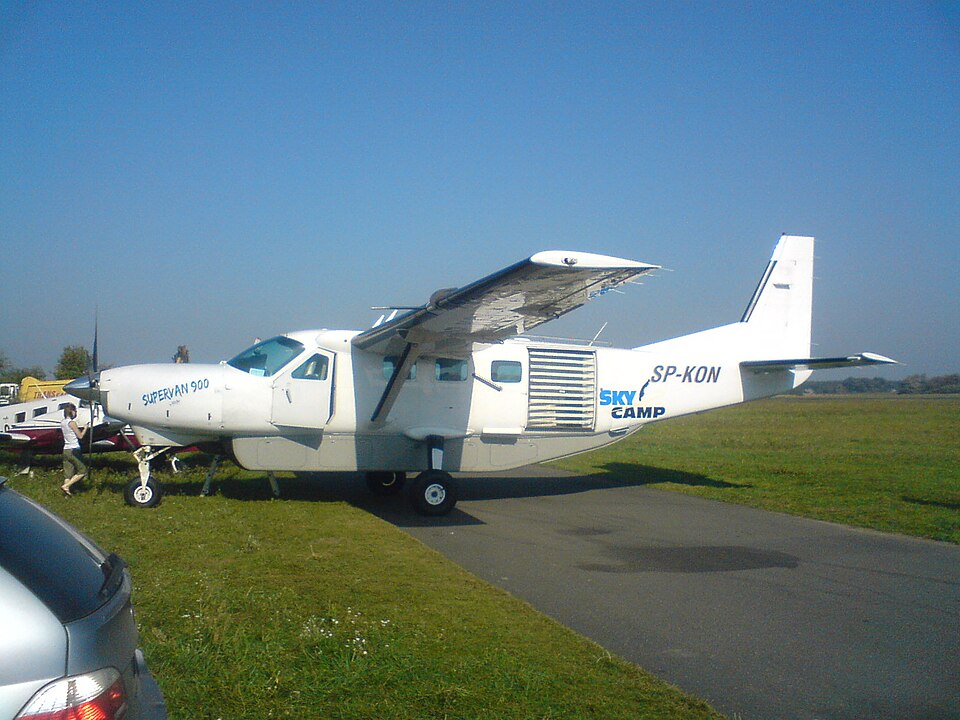
On 23 June 2018, a serious incident involving a Cessna 208B Caravan, registration SP-KON, occurred at Chrcynno airfield (EPNC). The aircraft was operated by Aeroklub Warszawski for a parachute jump flight. The incident happened around 14:30 UTC (16:20 LMT) during the third flight of the day.
Flight Details
The pilot, a 58-year-old male holding a CPL(A) license with a Cessna SET rating, had completed two previous jump flights without issues. On the third flight, the aircraft carried 10 parachutists, 4 tandem passengers, and an observer pilot who was training for type differences. The takeoff and climb to approximately 4000 m AGL were normal.
Sequence of Events
While approaching the drop zone at the top of a cloud layer, the pilot began reducing speed to the drop speed. As the airspeed decreased below 90 kt, the pilot continued a slight climb. When about 100 m below the planned drop altitude, the pilot extended flaps to 10° and reduced engine power to about 30%, maintaining an aft yoke. After deploying flaps and reducing power, the pilot signaled to open the door. Three parachutists moved rearward toward the door. The pilot, focusing on the GPS drop point and lacking ground visibility, initiated a left turn. At that moment, the stall warning activated, and the aircraft rolled to the right. The pilot increased engine power while holding the yoke aft. The resulting torque from the propeller, combined with the aft yoke, caused the aircraft to enter a right spin.
During the spin, the three parachutists near the door were essentially ejected, and the remaining jumpers, including tandems, exited the aircraft in an emergency. The pilot identified the spin direction, reduced engine power, and performed recovery procedures. The aircraft recovered from the spin at about 3000 m AGL. The pilot then checked engine parameters and aircraft attitude, flew back to the airfield, and landed safely.
Aftermath
All 15 parachutists (including four tandems) landed within the airfield perimeter without injury. The aircraft sustained no damage. Flights for the day were canceled.
Investigation and Cause
The Polish State Commission on Aircraft Accident Investigation (PKBWL) determined that the cause of the incident was the pilot's incorrect action when the stall warning activated. No safety recommendations were issued, as the operator had already taken preventive measures.