Incident Overview
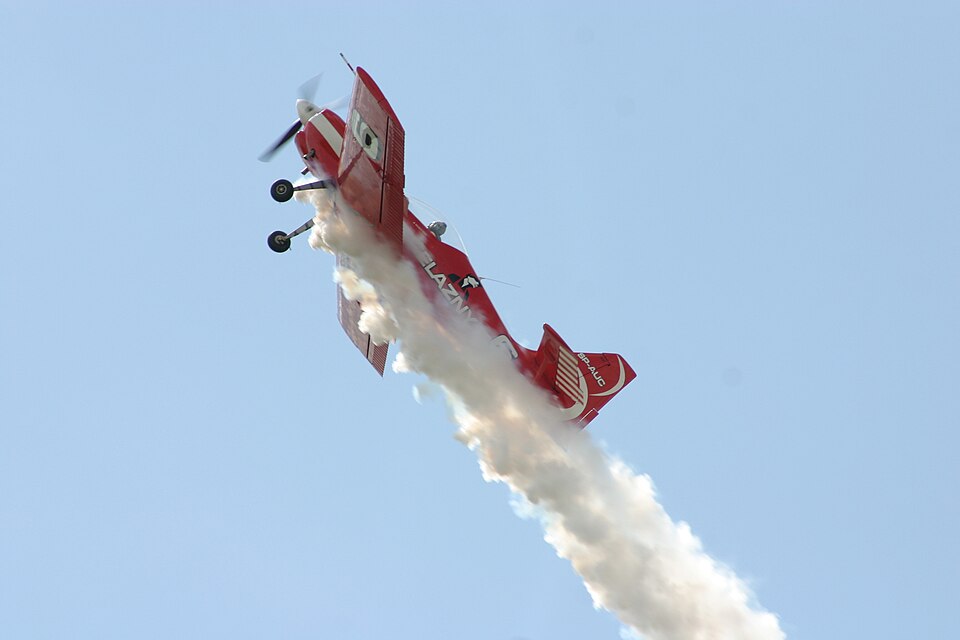
On April 13, 2021, at 14:10 local time, a pilot departed in a Zlin 50LS (registration SP-AUC) from Poznań Kobylnica airfield (EPPK) for a technical test flight. After climbing to 800-900 meters above the airfield, the pilot checked engine parameters, propeller operation, and control surfaces, then proceeded to evaluate stall speed and spin characteristics. Satisfied with the aircraft's handling and engine-propeller performance, the pilot began testing aerobatic maneuvers, including fast barrel rolls—autorotative figures that require significant control column and stick force on this aircraft type.
Sequence of Events
Upon completing the test flight in the airfield zone, the pilot requested a touch-and-go landing. After receiving clearance, the pilot executed an approach at prescribed airspeed and performed a correct three-point landing (for a tailwheel aircraft). The pilot then gradually opened the throttle to initiate a rolling takeoff, but noticed the aircraft pulling to the left. Immediately reducing the throttle fully, the pilot aborted the takeoff via radio and attempted to keep the aircraft straight on the ground using maximum rudder deflection, without success. Assessing that the ground speed was too high to prevent a nose-over if the direction changed further, the pilot applied the right wheel brake. The aircraft maintained direction, slowed, but then tilted and stood on its propeller. The pilot was uninjured and exited the cockpit unassisted.
Investigation Findings
Post-flight inspection revealed that the left wheel brake had locked, with damage to propeller blades and minor damage to the left wing skin at the Pitot tube mounting point. After manually releasing the brake handle, the wheel brake system functioned normally. The pilot's statement indicated that during a fast barrel roll, the pilot pushed the left pedal fully while inadvertently pressing the brake lever nose with the toe of the boot. Further disassembly and inspection of the brake system components showed that the left wheel cam (regulating brake shoe clearance) had a much longer wear mark than the right, indicating that significantly greater force had been applied during the unintended in-flight braking than during normal ground braking or directional changes. Additionally, the brake drum was found to be ovalized.
Cause
The accident investigation determined that the cause was the locking of the left wheel brake, resulting from the pilot pressing the brake lever with maximum force during flight. A contributing factor was the ovalization of the brake drum, which allowed excessive cam rotation and wheel lock.