History of the Flight
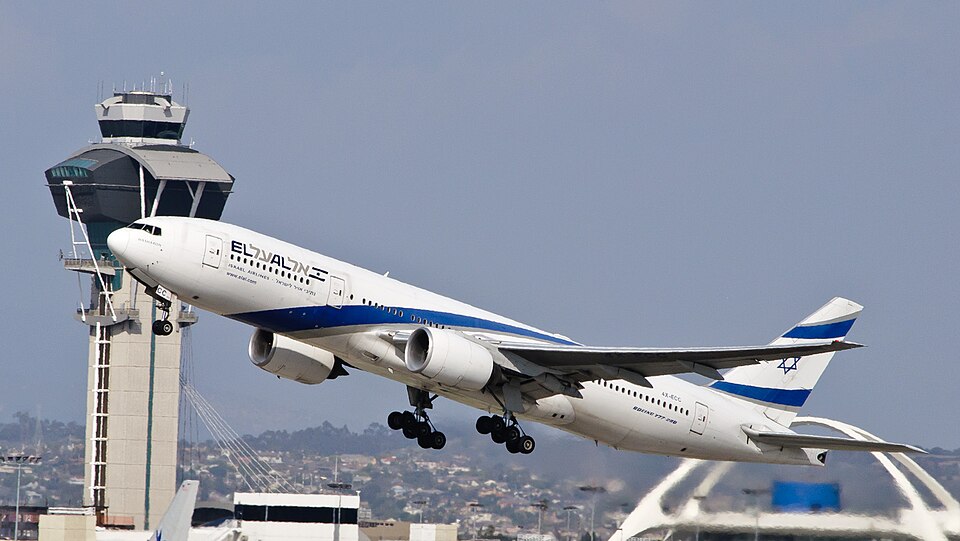
On 14 February 2019, a HEAD status flight of a Boeing 777-258, registration 4X-ECC, operated by EL AL Israel Airlines Ltd., was planned on the Warsaw (EPWA) – Tel Aviv (LLBG) route. The aircraft was scheduled to take off at 23:00 LMT. Final preparation occurred on the BRAWO apron on the military part of EPWA. The crew arrived on schedule. Prior to boarding, the captain agreed with the headset operator to start the engines during the pushback-towing operation. The pushback and towing route was agreed among the headset operator, the towing tractor operator, and the military coordinator of ground movement. Passengers began boarding at around 23:55. During pushback, the crew started the right engine. After several dozen seconds, pushback was completed and towing started. A SCHOPF F210 towing tractor and universal J-TOWversa1-A towbar were used.
Sequence of Events
During towing, prior to the right turn, the right engine start-up was complete, reaching idle RPM. A few seconds later, during the right turn, the crew began starting the left engine. Moments later, in the mid phase of the turn, the left pin of the towbar sheared off. In the end phase of the turn, the left engine reached idle RPM. With both engines at idle, the aircraft began pushing the tractor, and the combination increased speed to 3 kt. A few seconds later, the towbar folded, and its right shear pin and retaining bolt sheared off, followed by a collision of the aircraft with the tractor.
Injuries and Damage
No person was injured. The aircraft, tractor, and towbar were damaged.
Cause and Contributing Factors
The direct cause of the serious incident was lack of reaction to the shearing of the towbar pin and the continuation of the aircraft towing. A contributing factor was the start-up of both engines during the pushback-towing operation.