Incident Overview
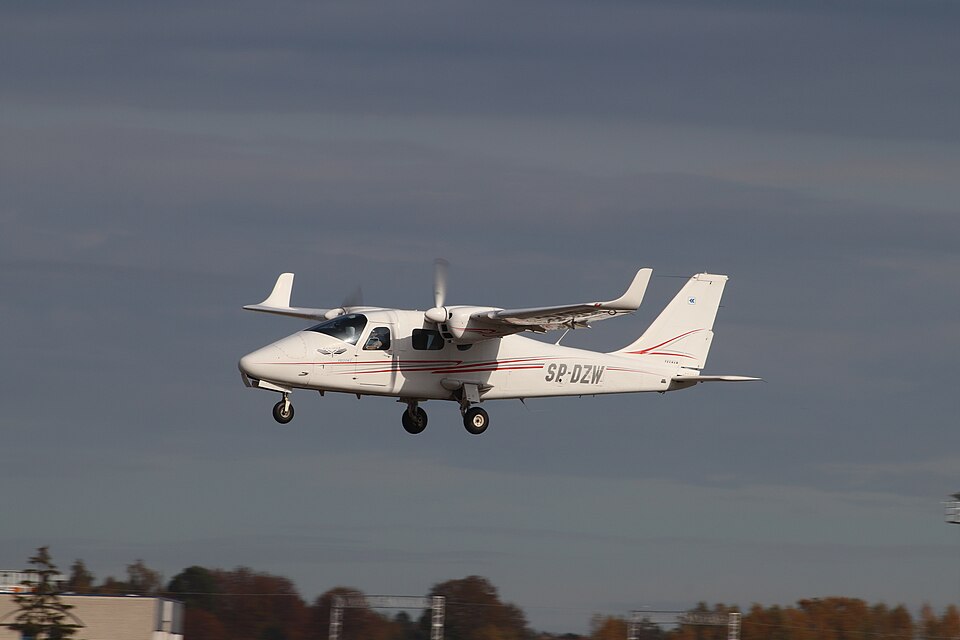
On June 13, 2019, a Tecnam P2006T aircraft, registration SP-DZW, was conducting a CPL (Commercial Pilot License) examination flight. The flight departed from EPWT at 06:51 LMT for a practice area, then proceeded to EPBY, where a landing was performed. After departing EPBY at 07:44 LMT, the aircraft flew via EPTO, where a go-around procedure was executed with full flaps. The aircraft then proceeded to EPWT, where several traffic circuits were flown. During a subsequent takeoff, after retracting the landing gear and flaps, at approximately 300 ft AGL, the right engine suddenly and rapidly shut down, with the propeller stopping within 3 to 5 seconds. The examiner, who was on board, took control and completed a circuit to land on the remaining left engine power. The aircraft landed safely at EPWT at 08:40 LMT, after 56 minutes of flight from EPBY. Throughout the flight, engine parameters remained within normal limits.
Engine Examination
The engine, which was under warranty and had accumulated only 2 hours 35 minutes since overhaul, was removed for investigation. Initial disassembly was conducted at Faston in Świdnik on September 4, 2019, with representatives from the operator and manufacturer (BRP-ROTAX GmbH & Co KG) present. The examination revealed extensive damage: material loss and ring damage on piston #1, seizure of pistons #2 and #3 in their cylinders, fracture of connecting rods #2 and #3, visible overheating on connecting rods and the crankshaft, a large quantity of metallic debris from damaged cylinders, pistons, connecting rods, and crankshaft, and a seized crankshaft. The cause of the damage was not determined during this initial examination, so the engine was sent to BRP-ROTAX in Austria for further study.
At the manufacturer's facility, additional checks of the ignition system, carburetors, cooling system, and hardness measurements of cylinders and cylinder heads revealed no abnormalities that could have contributed to the engine damage. The manufacturer issued report FMDS 676 on July 7, 2020, hypothesizing that the probable cause was detonation (knocking). However, the Polish State Commission on Aircraft Accident Investigation (PKBWL) analyzed the factors that could cause detonation and concluded that none were present during engine operation. The Commission noted that if detonation had occurred, it would likely have affected both engines or multiple cylinders, not a single cylinder. The Commission instead identified the following facts pointing to engine seizure due to mechanical failure: the sudden engine stoppage with propeller halt within seconds without prior symptoms; temperature differences between left and right engines during test flights after installation of new engines (right engine showed higher oil and coolant temperatures, though within limits); the nature of damage to pistons and connecting rods; and particularly the condition of piston #1, which showed extensive material loss, indentations, and damaged piston rings. The Commission found that fragments of the broken piston rings entered the combustion chamber, causing mechanical damage to the piston and cylinder bore. Evidence included a metal piece embedded in piston #1 that manufacturer analysis confirmed originated from a damaged ring.
Cause
The cause of the incident was damage to the piston rings in cylinder #1 to the extent that oil could flow into the combustion chamber and burn, ultimately increasing frictional resistance and causing the engine to seize.