History of Flight
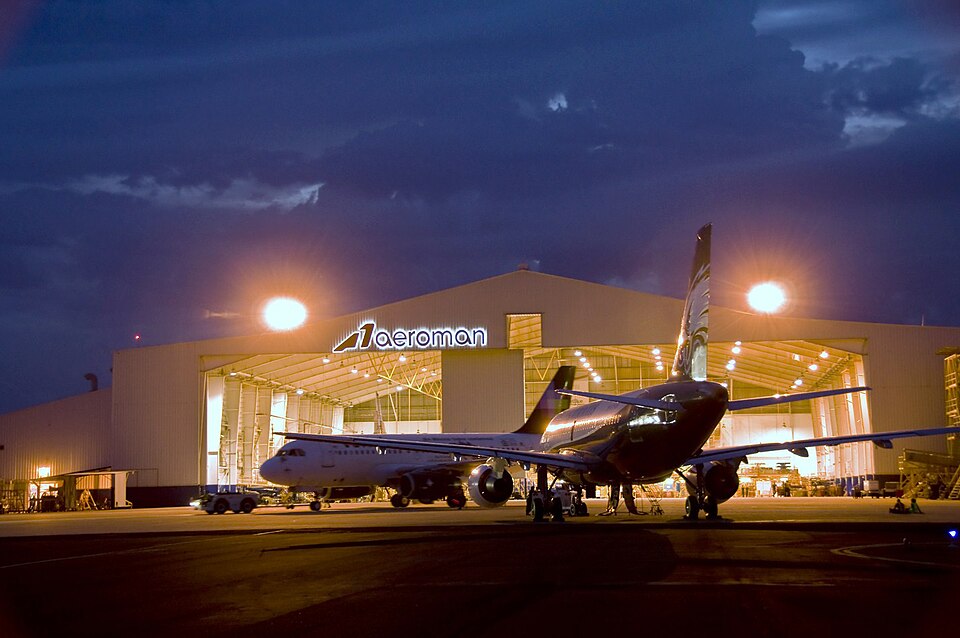
On February 15, 2020, at about 7:42 AM Pacific standard time, Spirit Airlines Flight 1818, an Airbus A319-132 registration N521NK, was operating a scheduled passenger flight under 14 CFR Part 121 from McCarran International Airport in Las Vegas, Nevada, to Sacramento International Airport in California. While descending from 4,000 to 2,000 feet on approach, the flight crew heard a clicking noise behind the captain's seat and observed an "ELEC GEN 2 FAULT" message on the lower Electronic Centralized Aircraft Monitor (ECAM). About 11 seconds later, another clicking noise was heard and an "ELEC GEN 1 FAULT" message appeared. These faults resulted in the loss of electrical power to both AC BUS 1 and AC BUS 2, leading to the loss of several flight deck displays and systems. The ram air turbine (RAT) automatically extended and drove the emergency generator to provide power to vital services.
The flight crew declared an emergency and requested an immediate visual approach to runway 34L. The aircraft landed without incident, was met by fire trucks, and was towed to the gate, where passengers deplaned normally. None of the 117 occupants were injured.
Aircraft Electrical System
The Airbus A319 is equipped with an electrical power system comprising two engine-driven integrated drive generators (IDGs), each supplying an AC bus (AC BUS 1 and AC BUS 2). The generators are controlled by generator control units (GCUs), which monitor parameters and protect the network. In the event of dual bus loss, a ram air turbine-driven emergency generator can supply essential services. The aircraft also has an auxiliary power unit (APU) generator and a ground power connection.
Previous Events
Maintenance records revealed that N521NK had experienced similar power losses prior to the incident. On January 19, 2020, the aircraft lost all electrical power and nose wheel steering after engine shutdown during taxi at Orlando International Airport. On January 23, the aircraft lost IDG1 power during single-engine taxi. On January 29, a loss of IDG1 was recorded during taxi. On February 14, the aircraft experienced a dual generator failure during approach to Atlanta. In each case, maintenance checks did not resolve the underlying issue, and the aircraft was returned to service.
Investigation Findings
After the incident, the No. 1 and No. 2 IDGs were removed and examined. Non-volatile memory (NVM) from the GCUs recorded fault code 145, indicating frequency modulation outside design limits. Testing at Collins Aerospace found that both IDGs failed frequency control tests. Disassembly of IDG1 revealed that the fixed cylinder block had been modified by a non-OEM process, and portions of the bronze bore lining were missing or flaked off. IDG2 showed similar severe wear in the fixed cylinder block. After replacing the damaged fixed blocks and pistons, both IDGs passed the Acceptance Test Procedure. The servo valves from both IDGs were tested separately and passed all tests, indicating that the wear in the fixed blocks was the likely source of the frequency anomalies.
Conclusion
The dual generator failure was attributed to wear in the fixed cylinder blocks of both IDGs, which caused frequency modulation faults. The source does not state a probable cause. No injuries or damage to the aircraft occurred.