Introduction
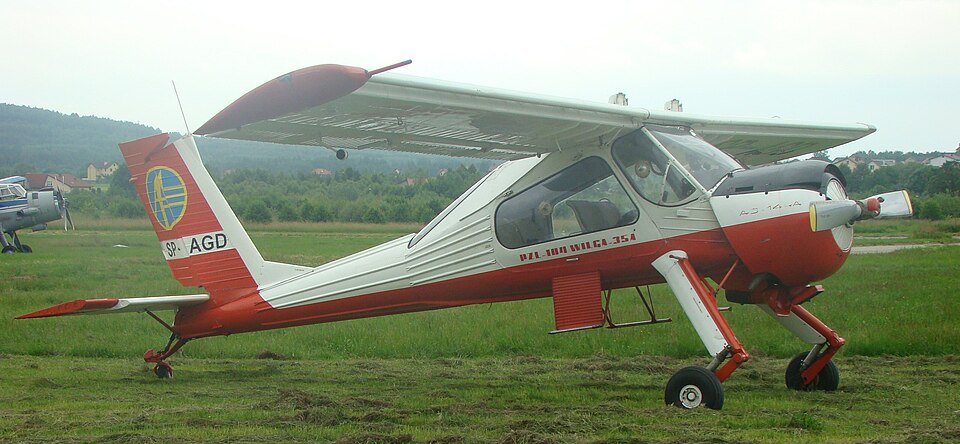
On 22 May 2020, a serious incident occurred involving a PZL-104 Wilga 35A aircraft, registration SP-AGD, operated by Aeroklub Kielecki. The incident took place at Kielce-Masłów airport (EPKA) during a glider towing task.
History of the Flight
At approximately 13:55 local time, the pilot of the towing aircraft was performing a task of towing a SZD-50-3 Puchacz glider to search for thermal lift. While circling in the vicinity of EPKA, the pilot lost the ability to control the ailerons. The pilot radioed the glider pilot: "Puchacz, release" and repeated: "Puchacz, release, I have no ailerons." The glider pilot released at an altitude of about 250 m AGL and began free flight in a thermal.
The aircraft was in a left turn over the northeastern part of the airfield. The flight director advised the pilot to use rudder control. After stabilizing level flight, the pilot decided to land at EPKA. The subsequent flight, approach, and landing were uneventful. After landing, the pilot taxied to the parking area, where the aircraft was inspected.
Injuries and Damage
No injuries were reported. The pilot was uninjured. During inspection of the aileron control system, a fracture was found: the lower fork end (P/N:X1148) of the aileron control pushrod (P/N:CE15509) had broken at the threaded portion. The pushrod is located in the left post of fuselage frame No. 2. No other damage to the aircraft or its systems was identified.
Investigation
The investigation was conducted by the Polish State Commission on Aircraft Accident Investigation (PKBWL). The team consisted of Andrzej Pussak (leader) and Tomasz Makowski, with assistance from expert Stanisław Nowakowski.
Cause
The PKBWL determined the cause of the incident: fatigue fracture of the lower fork end (P/N:X1148) of the left aileron control pushrod (P/N:CE15509).
Contributing circumstances included:
- Failure to secure the aileron control system during parking, leading to uncontrolled deflections from wind and excessive fatigue loading.
- Long-term operation of the aircraft.
- Difficult access to inspect the pushrod ends in the fuselage.
Conclusion
The incident resulted from a mechanical failure of a critical control component. The pilot's actions, including releasing the glider and using rudder for control, enabled a safe landing. No safety recommendations were specified in the report.