Synopsis
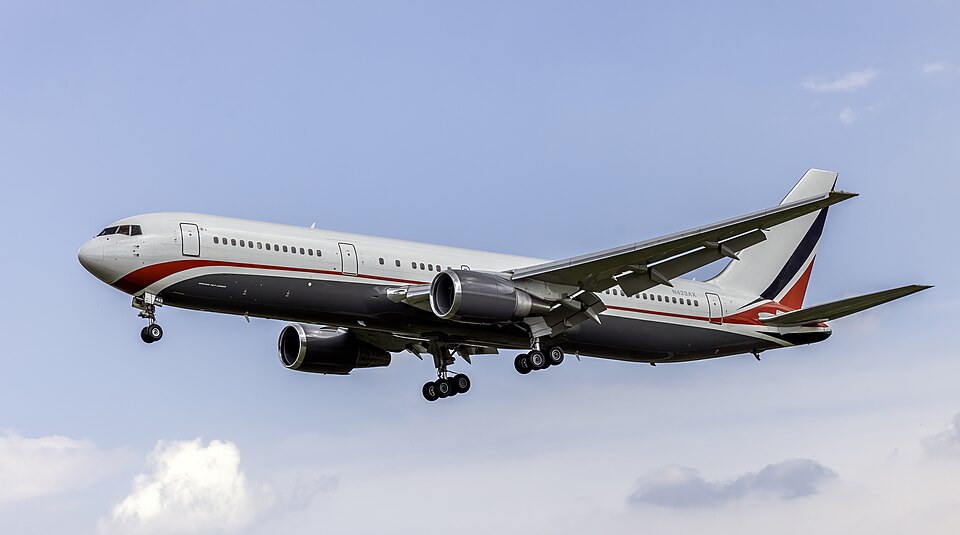
On 28 August 2020, a Boeing 767-324 aircraft, registration N423AX, operated by Omni Air International, was performing a flight from Hamid Karzai Kabul Airport in Afghanistan to Aurel Vlaicu International Airport Bucharest, Romania. The flight and approach were normal. Shortly after touchdown on runway 07, the left main landing gear (LH MLG) collapsed. The aircraft continued down the runway with the left engine nacelle, left main landing gear front wheels (#1 and #2), right main landing gear, and nose landing gear contacting the runway surface.
Flight History
The aircraft was on a flight from Kabul to Bucharest. The pilot-in-command acted as Pilot Monitoring and the co-pilot as Pilot Flying. The flight time was 5 hours 40 minutes. The approach was stabilized, and the aircraft touched down within the touchdown zone, approximately 2350 feet from the runway threshold, with a vertical load factor of 1.4G and an airspeed of 135 knots (Vref was 133 knots, approach at Vref+5 knots). After the LH MLG collapsed, the crew observed GEAR, CONFIG, and L ENGINE FIRE warnings. They shut down the left engine and pulled the fire switch, after which the fire indication ceased. The pilots maintained directional control, and the aircraft stopped slightly left of the runway centerline.
Damage and Injuries
The aircraft sustained damage to the left main landing gear, left engine nacelle, and other components in contact with the runway. During the evacuation, which was conducted using emergency exits and escape slides on the right side of the aircraft, a flight attendant suffered a small abrasion on the hand from contact with the slide surface. No other injuries were reported. Two airport emergency vehicles arrived and sprayed water and foam on the left engine and hydraulic fluid leaks.
Cause and Contributing Factors
The cause of the accident was the fracture of the outer cylinder of the LH MLG immediately after touchdown during the landing roll. The fracture resulted from base metal heat damage caused by abusive grinding during the overhaul process performed in 2015. Contributing factors included an inner diameter grinding machine operating outside of input parameters and the failure to perform a non-destructive testing (NDT) inspection between chrome plating cycles during the same overhaul.
Safety Recommendations
One safety recommendation was issued to the Federal Aviation Administration in conjunction with Boeing to review a potentially unsafe condition affecting 331 landing gears that may have been subjected to abusive grinding during overhaul and to initiate appropriate corrective action.