Occurrence
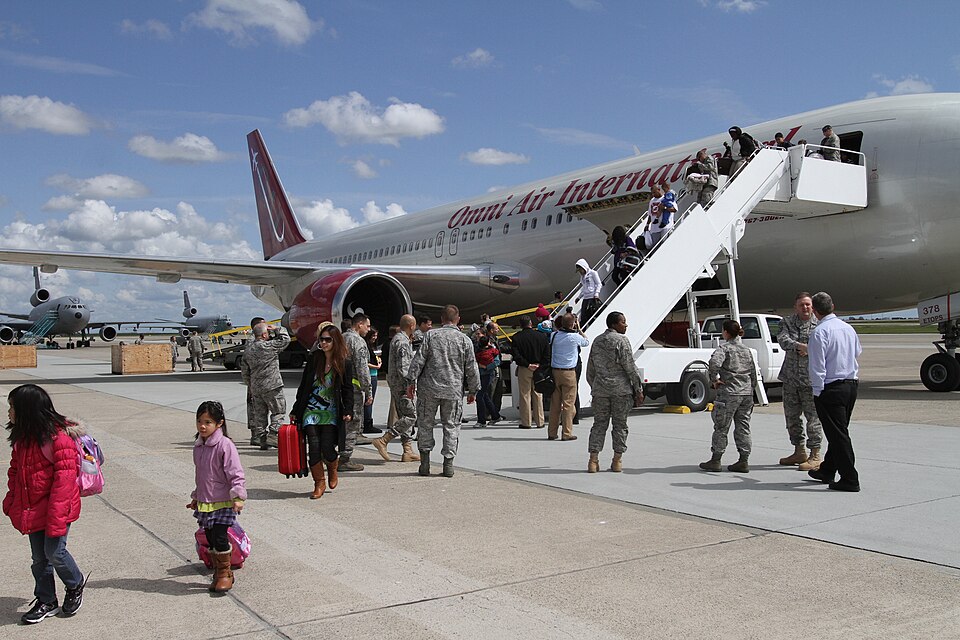
At 04:46 UTC on 15 August 2019, a Boeing 767-33A (ER), registration N378AX, was cleared for departure from Runway 24 at Shannon Airport (EINN). During the take-off roll, the Commander heard an unusual noise that increased in volume and decided to reject the take-off. The aircraft was brought to a stop on the runway. The Flight Crew taxied the aircraft to Taxiway A for checks and brake cooling, then to Taxiway C on instruction from Air Traffic Control (ATC). After consulting the operator's maintenance department, the Flight Crew was cleared to taxi back to the parking stand via Runway 24 and Taxiway A. At 05:13, while taxiing on Runway 24, ATC advised the Flight Crew that smoke was visible from the left main landing gear. Shortly thereafter, the airport Duty Office informed ATC that the left main landing gear was on fire. ATC directed an immediate evacuation from the right side. Airport Fire and Rescue Service vehicles were deployed and extinguished the fire. All passengers and crew evacuated using emergency slides. The Commander subsequently informed ATC that the Flight Crew was about to leave the aircraft.
Injuries
One passenger sustained a minor injury during the evacuation. There were no other injuries.
Damage to Aircraft
The two forward wheels (No. 1 and No. 2) and their associated brake units on the left main landing gear bogie sustained substantial fire damage and burst tyres. The two aft tyres on the left main bogie sustained minor fire damage. The left main landing gear bogie and associated hydraulic lines also sustained fire damage.
Investigation Details
The Air Accident Investigation Unit (AAIU) was notified by Shannon ATC and dispatched two Inspectors to the scene. The aircraft had 10 crew and 145 passengers on board. The Commander held an Airline Transport Pilot Licence issued by the US FAA, was aged 50, and had 6,623 total flight hours (1,231 on type). The aircraft was a Boeing 767-33A (ER), serial number 28147, year of manufacture 1996, powered by two GE CF6-80C2B6F engines. The Flight Crew consisted of a Commander, Co-Pilot, and International Relief Officer (IRO); the Commander was Pilot Monitoring and the Co-Pilot was Pilot Flying. The Commander estimated the rejected take-off speed at approximately 100 knots, while the Co-Pilot believed it was around 120 knots. Brake cooling time was calculated at 44 minutes using 120 knots. Prior to the flight, a left cockpit window had been opened due to a deferred defect on the Auxiliary Power Unit (APU) that affected air conditioning; the APU defect was rectified before departure and the window was closed and its indicator showed 'closed'. During the take-off roll, a rushing sound was heard after 80 knots. The Co-Pilot queried the window status above the noise. The IRO, seated in the jump seat, also heard the rushing noise. The aircraft had no wheel brake temperature indications on EICAS. During taxi back to stand, the brakes appeared to be 'grabbing'.