Flight History
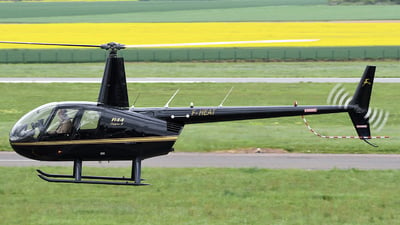
On 29 November 2025, a pilot planned a private flight with a Robinson R44 II helicopter, registration F-HEAT, from Krosno (EPKR) to Przeworsk. The pilot and two passengers departed from Krosno at 14:10 UTC. At 14:22, the pilot established contact with Rzeszów-Jasionka Tower (TWR EPRZ), reporting a landing near point Whiskey EPRZ and a brief stop. During the stop, one passenger exited the helicopter. After takeoff, the pilot again contacted TWR EPRZ and confirmed the intention to continue to Przeworsk, remaining outside the EPRZ control zone on its southern side.
At 14:52, TWR EPRZ attempted to contact the pilot, but received no response. At 14:59, a report from the rescue team's voice communication system indicated a possible forced landing south of Rzeszów, possibly involving the unresponsive helicopter. At 15:00, the assistant of the Rzeszów tower received a call from the airport fire brigade asking if information was available about a helicopter accident near Malawa. Subsequently, FIS Kraków inquired whether the helicopter with markings F-HEAT had contacted TWR EPRZ. The assistant confirmed it had not. At 15:02, a telephone call to the pilot went unanswered. At 15:06, the assistant called the Provincial Police Headquarters in Rzeszów, which reported receiving a notification before 15:00 about a helicopter accident in a wooded area near Malawa, with persons injured. This information was passed to FIS Kraków at 15:08 and to SAR RCC at 15:10.
Around 15:35, emergency services arrived at the site in Cierpisz, near Malawa (Łańcut municipality), where the bodies of two persons and the wreckage of the helicopter were found. The helicopter collided with trees in a forested area, and after impacting the ground, a fire broke out.
Injuries
According to the preliminary report, the single pilot and one passenger sustained fatal injuries. No other injuries were reported.
Aircraft Damage
The helicopter was completely destroyed. Impact with the forest caused destruction of the fuselage, main rotor blades, separation of the tail boom from the fuselage, and deformation of the tail rotor. During the ground impact, one fuel tank ruptured, leading to a fire, while the other tank detached from the fuselage.
Weather Conditions
On the day of the accident, most of Poland was under a high-pressure ridge from an anticyclone over western Russia, but the southeastern part of the country was influenced by a low-pressure trough associated with a low over the Aegean Sea. Maritime polar air mass prevailed. Initially, winds were light and variable in southeastern Poland. After 15:00, at Rzeszów-Jasionka station, winds shifted to easterly, while Krosno and Lesko still reported variable winds. Between 14:00 and 16:00, overcast conditions prevailed, and cloud bases lowered from 1000–2000 feet (300–600 m) to 160–330 feet (50–100 m). Visibility at Rzeszów-Jasionka gradually decreased from 5 km to 300 m between 15:00 and 17:00, initially due to haze, and by 17:00, the SYNOP report indicated fog. METAR data from Rzeszów-Jasionka between 11:30 and 17:00 showed gradual lowering of cloud bases and deteriorating visibility. Between 14:30 and 15:30, cloud bases dropped from 1000 to 500 feet, and visibility fell to 5 km. Between 16:00 and 17:00, cloud bases lowered to 100 feet, and fog was observed with 300 meters visibility. Satellite imagery from 15:00 and 16:00 on 29 November showed clouds at various levels, including a solid layer of low-level stratiform clouds, consistent with Rzeszów-Jasionka data. The accident site in Cierpisz is approximately 14 km from Rzeszów-Jasionka airport.
Investigation Actions
The Polish State Commission for Aircraft Accident Investigation (PKBWL) has conducted an on-site inspection of the wreckage and accident location. The helicopter wreckage has been secured for further examination. Documents regarding helicopter maintenance and the pilot’s training and qualifications have been collected and secured. A fuel sample was taken from the detached tank for analysis. Witness statements have been gathered. As of the issuance of this preliminary report, no safety recommendations have been formulated.