History of Flight
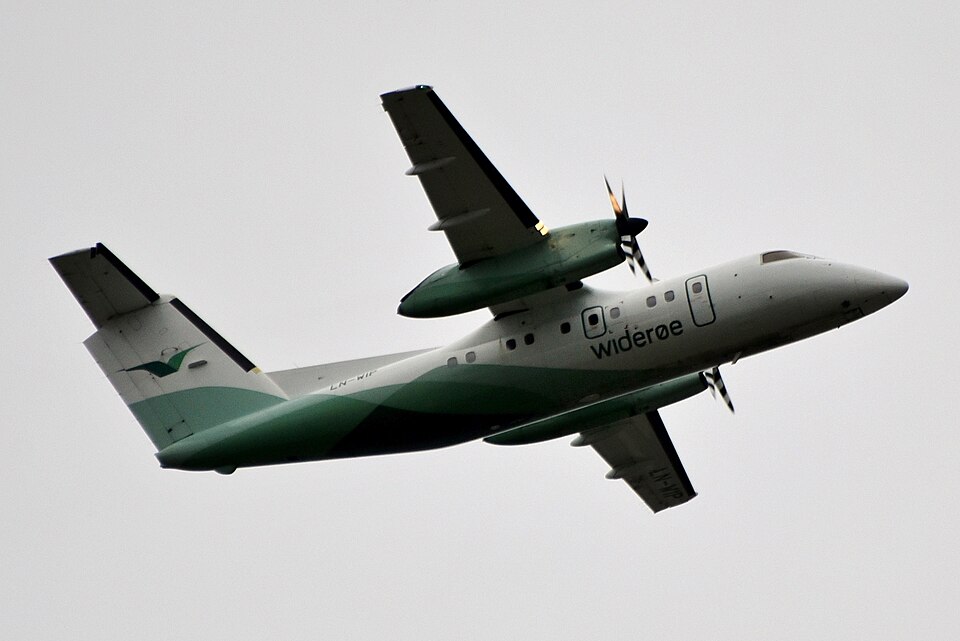
On 22 December 2022, a De Havilland Aircraft of Canada Limited DHC-8-103, registration LN-WIP, operated by Widerøe’s Flyveselskap AS, was on a flight from Bodø to Svolvær Airport Helle. The approach was planned with marginal weather conditions. En route, the crew were informed that snow needed to be cleared from the runway and were cleared to a holding pattern at the reporting point OSRUL. After approximately 10 minutes in the hold, they commenced the approach. However, the crew had not adjusted the local barometric pressure (QNH) setting on the aircraft’s altimeter, resulting in a discrepancy: the aircraft was about 213 m (700 ft) lower than the indicated altitude.
Incident Sequence
When the aircraft was 3.1 NM from the runway threshold, the Enhanced Ground Proximity Warning System (EGPWS) detected that the aircraft’s geometric altitude was below the Runway Field Clearance Floor (RFCF) vertical profile and issued an aural “Too Low terrain” alert. The crew immediately aborted the approach, initiated a climb, and returned to Bodø, where they landed without further incident. The lowest altitude reached during the approach was 292 ft (89 m). No injuries were reported among the 2 pilots, 1 cabin crew member, and 29 passengers.
Investigation Findings
The Norwegian Safety Investigation Authority (NSIA) determined that the checklists and procedures used by Widerøe to ensure correct QNH setting before landing were intended as individual barriers, but they had dependencies that reduced their effectiveness. No single technical system in Norwegian airspace was capable of detecting deviations between the reported QNH and the aircraft’s QNH setting; human barriers alone were insufficient. The air traffic services at Svolvær provided Aerodrome Flight Information Service (AFIS) and lacked procedures to monitor QNH settings. The aircraft was equipped with a transponder that could not transmit QNH values, preventing air traffic services from reading the setting.
Conclusion
The NSIA concluded that the incident occurred due to a combination of technical weaknesses and deficiencies, along with operational, human, and organizational factors. The NSIA issued three safety recommendations: one to the Norwegian Civil Aviation Authority to reassess risks and establish requirements for risk-reducing measures, and two to Widerøe (details not specified in this summary).