Incident Overview
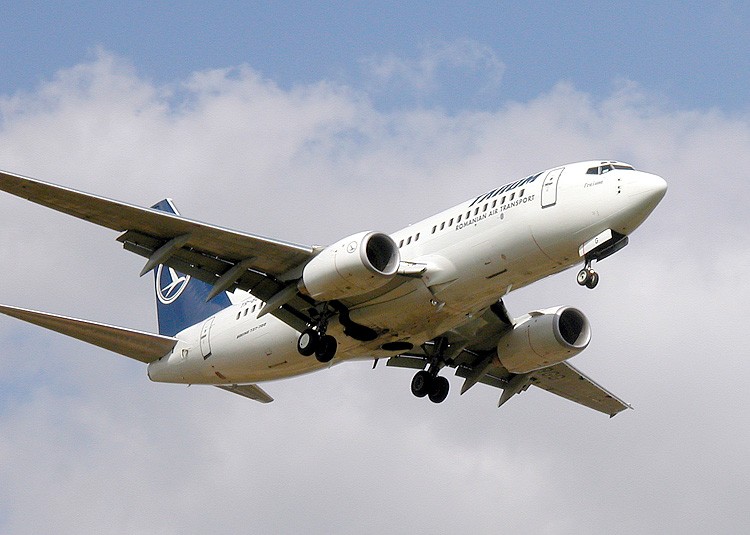
On 18 January 2025, a Boeing 737-700 registered YR-BGG, operated by TAROM, was involved in a serious incident at Henri Coandă International Airport (Otopeni), Bucharest. The aircraft had completed flight RO 608 from Timișoara and landed on runway 26L at 19:18 local time (17:18 UTC). After vacating the runway via taxiway G, it followed the route G–N–S–L to parking position 106. At approximately 20:10, TAROM maintenance personnel inspecting the aircraft discovered scratches and perforations on the lower fuselage, in the wing-to-fuselage fairing area, caused by asphalt material. Two pieces of asphalt were found embedded in the fuselage panel, and a radio antenna on the lower fuselage was also damaged.
Findings and Analysis
Airport operations staff inspected the taxiways used by the aircraft and identified a section of deteriorated asphalt on taxiway N. Loose asphalt fragments (foreign object debris – FOD) were removed. The investigation commission collected embedded asphalt from the aircraft and swept samples from the suspected area on taxiway N. Laboratory analysis compared the embedded material with samples from both Otopeni and Timișoara airports. The results showed that the material from the aircraft was petrographically identical to Otopeni pavement samples and distinct from those at Timișoara, confirming the debris originated from Otopeni.
The intersection of taxiways C, E, G, and N is designated a hot spot on the airport chart due to high traffic. In the 75 minutes before YR-BGG passed through, eight other aircraft had traversed this intersection, averaging one every nine minutes. None reported FOD. The flight crew of YR-BGG did not notice the impact.
The investigation concluded that the most likely sequence was: the asphalt wear layer, previously cracked, fragmented under the weight of preceding aircraft; pieces were then flung up by the nose wheel tires of YR-BGG, striking and penetrating the lower fuselage.
Aircraft and Pavement Details
The aircraft, a Boeing 737-700 (serial number 28442, built in 2001), has a maximum takeoff mass of 70,307 kg. The Airport Classification Number (ACN) for YR-BGG at maximum taxi weight on a flexible pavement with subgrade category D is 43/46/48/50 for varying subgrade strengths. The Pavement Classification Number (PCN) for the relevant taxiways at Otopeni are: C – 52, E – 57, G – 59, N – 71, all rigid pavement (R), very low subgrade strength (D), no tire pressure limit (W), determined by technical evaluation (T). The aircraft's ACN was below the PCN of all taxiways, indicating the pavement was rated for the load.
Conclusions
- The FOD that penetrated the fairing originated from the movement area of Otopeni Airport.
- The aircraft's ACN was lower than the PCN of the taxiways, indicating no structural overload.
- No crew or passenger injuries occurred.