What happened
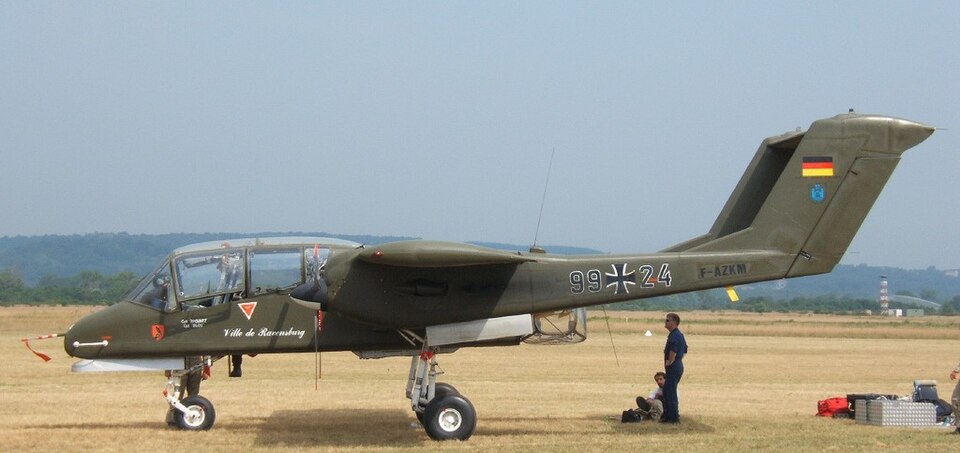
On June 19, 2026, a North American OV-10B Bronco registered as F-AZKM was conducting training flights at Leszno airfield (EPLS) in preparation for the Antidotum airshow. The specific exercise involved simulating the evacuation of an injured person from an AN-2 aircraft to the OV-10B, followed by a departure from the loading area.
Meteorological conditions were suitable for safe flight operations throughout the region during the morning hours. The pilot executed the pre-landing checklist, which included extending the flaps to 15 degrees, checking propeller pitch, moving the landing gear lever to the down position, and subsequently setting the flaps to 40 degrees.
The aircraft touched down on runway 23L with the flaps in the 40-degree position. However, the investigation notes that while the gear was unlocked, it was not fully extended. The impact caused serious damage to the airframe. The pilot successfully shut off the fuel supply and exited the cockpit under his own power. Airport emergency services conducted firefighting operations, and medical personnel transported the pilot to a hospital emergency department with minor injuries.
Following the incident, the training organizers suspended all flight activities. Runway 23L was closed to traffic due to surface damage and the presence of the wreckage.
The investigation
The State Commission for Investigation of Aviation Accidents (PKBWL) initiated its inquiry based on information available at the time of the preliminary report. The investigative team collected statements from the pilot, maintenance personnel, and airfield information service staff, including video recordings and radio communications logs. They also reviewed the pilot’s licensing documentation and the aircraft's technical records.
An on-site inspection of the wreckage was conducted on the day of the accident. The examination revealed that the engine mount for the right engine had broken off. Additionally, the propeller blades and cowlings of the left engine were torn away, while the right engine's blades were destroyed. Significant structural damage to the main airframe was also noted. Crucially, the condition of the propeller blades indicated that both engines were still running at the moment of ground impact.
The pilot held a commercial pilot license and possessed extensive experience with this specific aircraft type. All formal requirements for the flight were met. The OV-10B was technically airworthy and compliant with all regulatory standards prior to the incident. The Commission assessed that weather conditions did not contribute to the accident.
Findings
The primary factor established in the preliminary findings is that the aircraft landed with the landing gear unlocked but not fully extended, despite the pilot having moved the gear lever to the down position. This configuration led to a hard impact that caused severe structural and mechanical damage, including the failure of the engine mounts and destruction of propeller components.
The PKBWL is continuing its investigation to analyze the planning of the airshow exercises, review witness statements, and identify any other contributing factors. The Commission has not yet issued any safety recommendations as of the publication of this preliminary report.