Background
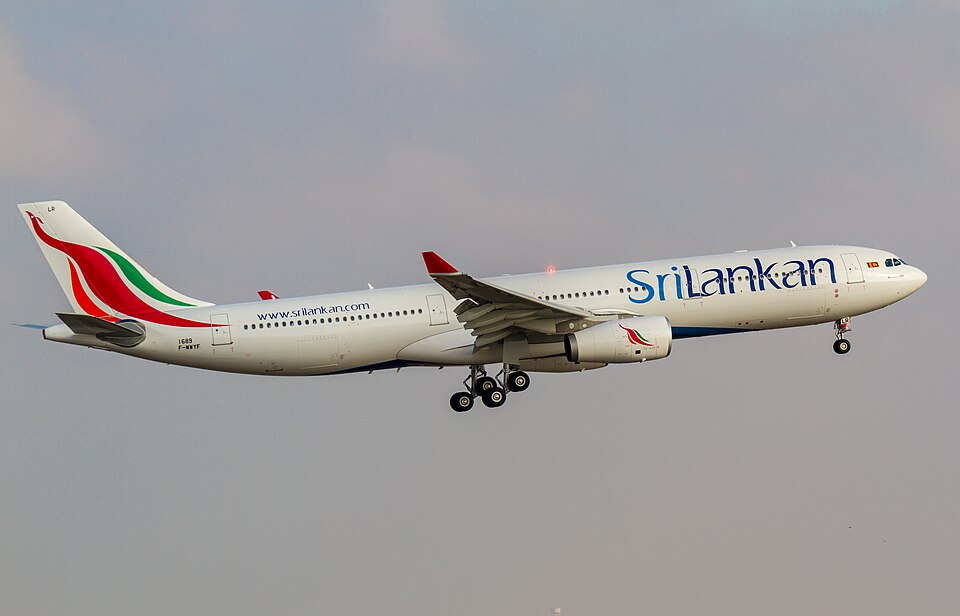
On 19 September 2023, three flights were involved in a separation minima infringement incident at Bandaranaike International Airport (VCBI), Katunayake, Sri Lanka. The aircraft involved were: AirAsia flight AXM46 (registration 9M-AJG, type A320) departing for Kuala Lumpur, Malaysia; SriLankan Airlines flight ALK607 (registration 4R-ALR, type A333) arriving from Sydney, Australia; and SriLankan Airlines flight ALK104 (registration 4R-EXR, type A320) arriving from the Maldives. At the time, runway 22 was in use for departures and some arrivals.
Sequence of Events
ALK607 had deviated west due to bad weather and was expecting to land on runway 04, but no confirmation of this request was provided. ALK104 was inbound for runway 22. The approach controller did not inform ALK607 of its arrival sequence or communicate the sequence to the control tower. ALK607 tracked toward the final approach area for runway 04 on its own initiative.
Meanwhile, the tower controller cleared AXM46 for takeoff on runway 22. While AXM46 was rolling, ALK607 established itself at 6 nautical miles final for runway 04. This placed the two aircraft on reciprocal tracks—one descending to land, the other climbing out—without the required separation. The approach controller then suggested ALK607 perform a right orbit, which it accepted. AXM46 became airborne at 1752 UTC and turned right to heading 310 degrees as instructed. The lateral distance between ALK607 and AXM46 reduced to 3.2 nautical miles, breaching the standard minimum lateral separation for surveillance airspace.
Subsequently, ALK104 was cleared for an ILS approach to runway 22 as number one and transferred to tower. The missed approach procedure for ILS Z runway 22 required climbing to 2000 feet on runway heading, but the approach controller instructed ALK607 to descend to 1500 feet and re-establish on the localizer for runway 04—placing ALK607 on the missed approach path of ALK104. At that time, the ILS localizer for runway 04 was not switched on because ALK104 was still using the ILS for runway 22. ALK104 landed on runway 22, then the ILS was switched to runway 04, and ALK607 landed on runway 04.
Analysis
The investigation found that significant weather information was not passed to succeeding arrivals and departures. Tower controllers’ work arrangement and human factors contributed to a failure to coordinate basic information. The approach controller did not provide a positive directive for ALK607 to join a point on final or rejoin a standard arrival route. The positioning and sequencing of aircraft were not managed effectively, leading to the separation minima infringement.
Safety Actions
The air navigation service provider and air traffic controller involved undertook safety actions, and safety recommendations were addressed to the provider.