Synopsis
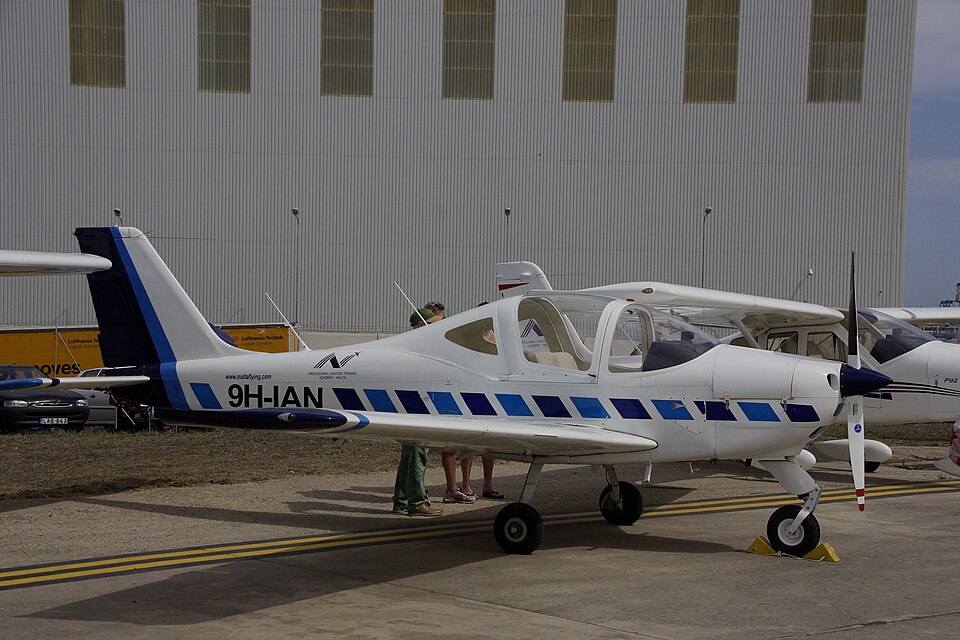
On 18 December 2020, at approximately 09:40 local time, a loss of separation occurred between two light aircraft operating in the traffic circuit at Malta International Airport. The aircraft involved were a Tecnam P2002 JF Sierra (registration 9H-IAN), flown solo by a student pilot, and a Piper PA-28-161 (registration 9H-EFA, call sign Falcon3C) carrying two other persons. Both aircraft were conducting visual flight rules (VFR) circuits on Runway 05.
Sequence of Events
9H-IAN was cleared for a touch-and-go on Runway 05 with initial instructions to maintain runway track until the Grand Harbour area and hold. After becoming airborne, air traffic control (ATC) cleared 9H-EFA to enter and take off from Runway 05 at 09:40:02, with a clearance to fly a right-hand circuit. At approximately 500 ft QNH (about 200 ft AGL), 9H-EFA turned right to join the right-hand crosswind leg and continued climbing to 1300 ft. Meanwhile, 9H-IAN was cleared to join the right-hand downwind at 1400 ft. The two aircraft crossed each other's path with only 100 ft of vertical separation. The pilot of 9H-IAN saw 9H-EFA climbing and crossing from right to left and reduced power to maintain visual separation. Both aircraft proceeded on downwind in close proximity. ATC later instructed 9H-IAN to extend downwind, and no further incident occurred.
Findings
Interviews with the pilots and ATC personnel revealed that the pilot of 9H-EFA was unaware of the developing situation and did not see the other aircraft at any time. The student ATC controller recalled being surprised by 9H-EFA's early turn. The OJTI (on-the-job training instructor) noted that no report was filed initially, as such occurrences were common in the circuit. The OJTI also expressed concern about the use of the call sign 'Falcon' followed by a number and a letter, which could cause confusion.
The Bureau of Air Accidents (Malta) determined that the incident resulted from two primary causal factors: 1. An early turn by 9H-EFA upon departure, joining the crosswind at 500 ft QNH (200 ft AGL) instead of the expected altitude. 2. Lack of use of ATC radar tools to ensure separation, as both aircraft were operating on a 'see and be seen' basis, and the tool could have helped pre-empt the situation.
Recommendations
The investigation issued three recommendations: 1. Update the Aeronautical Information Publication (AIP) to include specific units and restrictive details for circuit altitudes, turning, and entry points. 2. Discontinue the use of call signs followed by a number and a letter in favor of simplified single-digit call signs to reduce confusion. 3. Enforce mandatory safety reporting by all parties involved in occurrences to aid investigations and trend analysis.