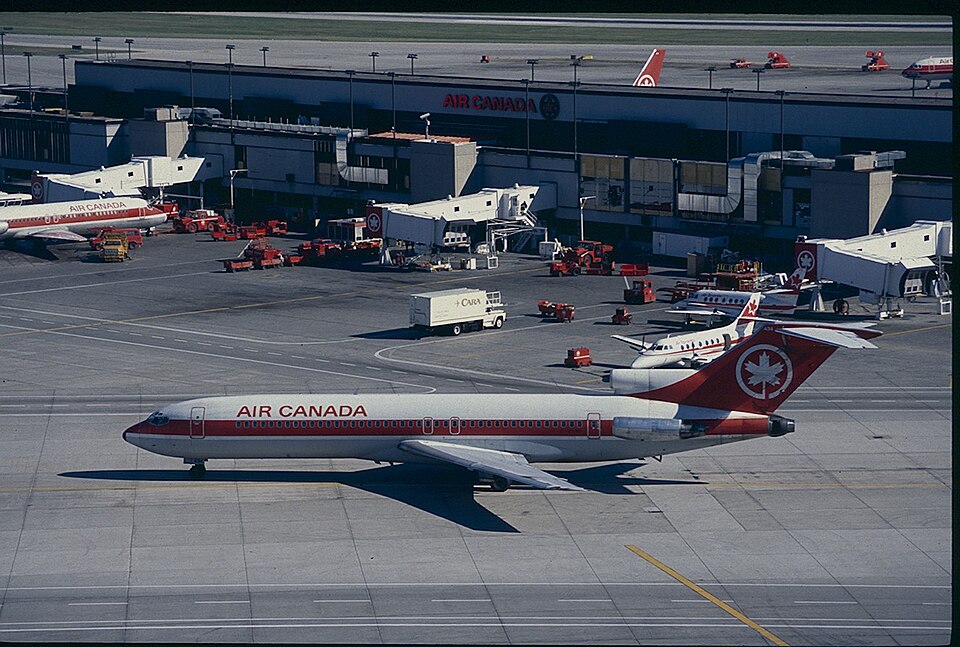
On August 31, 2004, a Boeing 727 C-GMSX operated by Morningstar Air Express Inc. was involved in an aviation accident near Greater Moncton International Airport,, CA. Investigators recorded the probable cause as: The pilot was unable to maintain directional control of the aircraft because of the combination of hydroplaning and a crosswind. This summary draws on records from the Transportation Safety Board of Canada (TSB); 8 related events involving the same aircraft type or operator are linked below.
A Boeing 727-200 cargo aircraft (C-GMSX) hydroplaned and left Runway 29 at Moncton in August 2004 due to standing water and crosswind. No injuries were reported.
Incident Overview and Aircraft Details On 31 August 2004, Morningstar Air Express Flight 8062, a Boeing 727-200 cargo aircraft with registration C-GMSX and serial number 21673, was operating a scheduled cargo flight from Toronto, Ontario, to Halifax, Nova Scotia, with intermediate stops at Montréal, Quebec, and Moncton, New Brunswick. The aircraft landed on Runway 29 at Moncton at approximately 1222 Atlantic daylight time. Following touchdown, the aircraft hydroplaned and departed the runway at the Charlie Taxiway intersection, crossing the taxiway and coming to rest on an abandoned runway threshold. Damage was limited to tread damage on the four main landing gear tires and the destruction of a taxiway light. No injuries were reported. ## Operational Context and Weather Conditions The flight crew, consisting of a captain, first officer, and flight engineer, reported for duty at 0325 Atlantic daylight time. The initial leg from Toronto to Montréal was uneventful. The aircraft departed Montréal for Moncton at 0706 but returned to Montréal and landed at 0954 due to thunderstorms in the Moncton area. At 1110, the aircraft departed Montréal again for Moncton, with the captain as the pilot flying. During the descent, the crew received Moncton ATIS information Alpha, which included a special weather observation from 1150 reporting surface winds of 190°M at 10 knots gusting to 17 knots and visibility of 4 statute miles in light rain showers and mist. The crew requested an ILS approach to Runway 29, which is serviced by a precision instrument landing system. A pilot report from a preceding aircraft indicated continuous light turbulence, standing water on the runway, and fair to poor braking action. Tower personnel also reported up to ¼ inch of standing water on all airport surfaces. ## Approach and Landing Sequence At 1220, the aircraft intercepted the ILS glideslope and completed landing checks. The surface wind was 210°M at 8 knots, equating to a crosswind from the left of about 8 knots. Flight data recorder data indicated a stable approach, with the runway environment acquired at 700 feet above ground level. At decision height, the aircraft was on the glideslope and slightly right of the runway centreline. During transition to landing, the aircraft briefly regained the centreline, drifted right, and corrected again, with a modest deviation below the glideslope before touchdown. The aircraft landed approximately 1,400 feet from the runway threshold at 135 knots indicated airspeed on a heading of 284°M, four degrees left of the runway heading of 288°M. In accordance with standard operating procedures, speed brakes were deployed, wing flaps were raised from 30° to 25°, and thrust reversers were deployed immediately after touchdown. Three seconds after touchdown, the aircraft began to weathercock to the left. Reverse thrust reached a maximum engine pressure ratio of 1.7 on engines one and two, and 2.0 on engine three. The higher EPR on engine three had been apparent on previous landings, suggesting the number three thrust lever was likely out of adjustment, though the mismatch was approximately twice as much on the incident landing, indicating it was used to counter the weathercocking tendency. ## Loss of Directional Control and Excursion The initial application of reverse thrust was maintained for four seconds, but the aircraft continued to drift toward the right side of the runway, and its heading continued to decrease. The thrust levers were stowed and redeployed twice in an attempt to regain directional control, but the aircraft remained right of the centreline. The pilot applied full right rudder and significant right control wheel input with no significant result. At about 70 knots indicated airspeed, with the aircraft heading about 250°M, tire friction began to take effect, and the aircraft departed the left side of the runway. The left main landing gear struck a taxiway light just before Taxiway Charlie. The aircraft continued across a grassy area, entered Taxiway Charlie, and came to rest with all three landing gear on an abandoned runway threshold adjacent to Taxiway Charlie. Moncton tower personnel observed the incident and notified the airport rescue and fire-fighting unit, which arrived at the aircraft in approximately two minutes. Maintenance personnel inspected the aircraft and determined it could be taxied safely. Further inspection revealed tire damage consistent with hydroplaning, specifically reverted rubber. ## Contributing Factors and Findings A special weather observation taken shortly after the incident reported surface winds of 200°M at seven knots, with heavy thunderstorms and rain evident. The Boeing 727 aircraft operating manual contains a section titled “Landing on Wet or Slippery Runways,” which discusses crosswinds and the use of reverse thrust. The manual notes that reverse thrust side force and a crosswind can cause the airplane to drift to the downwind side of the runway if the airplane is allowed to weathervane into the wind. The Transport Canada Aeronautical Information Manual advises that a 10-knot crosswind can drift an aircraft off the side of a 200-foot wide runway in approximately 7 seconds under hydroplaning conditions. The investigation found that the crew did not anticipate the effects of the adverse landing conditions and elected to continue the approach and landing. The pilot was unable to maintain directional control due to the combination of hydroplaning and a crosswind. Once tire-runway contact occurred, there was insufficient time for the pilot to avoid the runway excursion. The flight data recorder portion of the cockpit voice and flight data recorder had not been checked in accordance with regulations, resulting in poor data quality with some parameters not identified. Since the occurrence, Morningstar Air Express Inc. has modified flight operations procedures and training with respect to slippery runway conditions, and flight crew and maintenance procedures have been amended for the maintenance/testing portion of the CVFDR. The Transportation Safety Board of Canada authorized the release of this report on 02 October 2006.
Probable cause
The pilot was unable to maintain directional control of the aircraft because of the combination of hydroplaning and a crosswind.