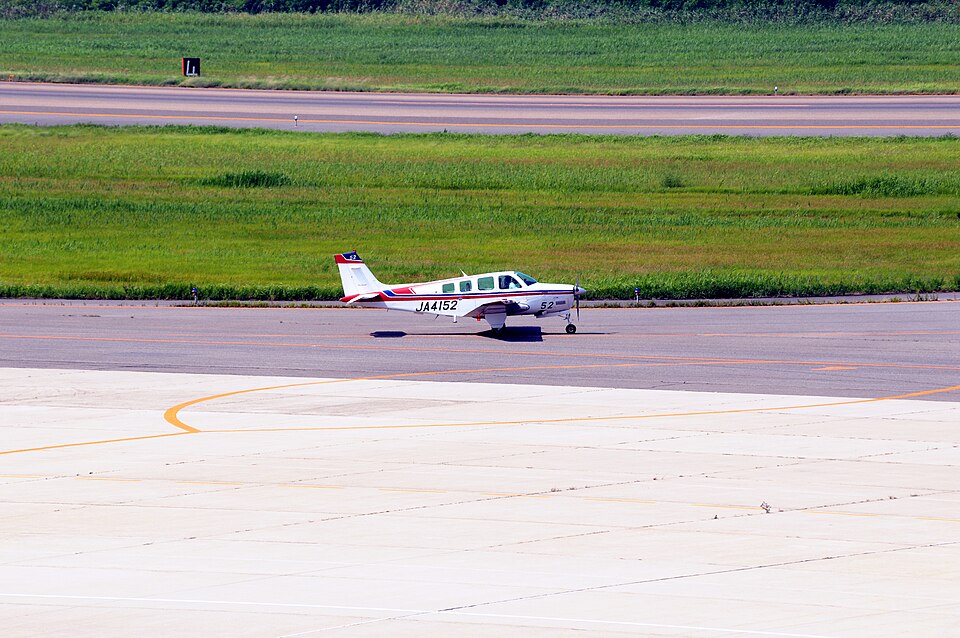
Flight History
On August 18, 2013, a privately owned Beechcraft A36, registered JA4152, departed Matsumoto Airport at 12:57 JST for Ami Airfield with a pilot and three passengers on board. The flight was conducted under visual flight rules. The aircraft had flown from Ami to Matsumoto earlier that day. After obtaining landing information from the Ami Flight Service around 13:42, the aircraft entered the traffic pattern for Runway 27 at about 13:50.
Accident Sequence
During the final approach, the pilot felt unstable wind conditions. The aircraft sank before the runway threshold, prompting the pilot to raise the nose and add power. The approach became higher than usual with reduced airspeed. The aircraft flew horizontally 5–7 m above the runway with the stall warning actuating. Concerned about overrun when about two-thirds of the runway remained, the pilot decided to execute a go-around and moved the throttle to full power, but perceived no increase in engine sound or power.
The pilot attempted to maintain aircraft attitude using only aileron inputs without rudder, despite feeling the aircraft yaw left after a gust from the right. The pilot believed rudder control would be ineffective at low speed. The aircraft continued yawing left, rolling left, and sideslipping. The nose dropped, and the left wing struck the ground while the stall warning was still sounding. The aircraft was destroyed; there was no fire. All four occupants sustained injuries.
Probable Cause
The Japan Transport Safety Board determined that the accident occurred when the aircraft stalled during the go-around attempt in a low-speed condition with the stall warning actuating. The stall resulted from the pilot using only aileron operations without coordinated rudder inputs while increasing engine power, leading to loss of directional control and inability to maintain airplane attitude.