Accident Details
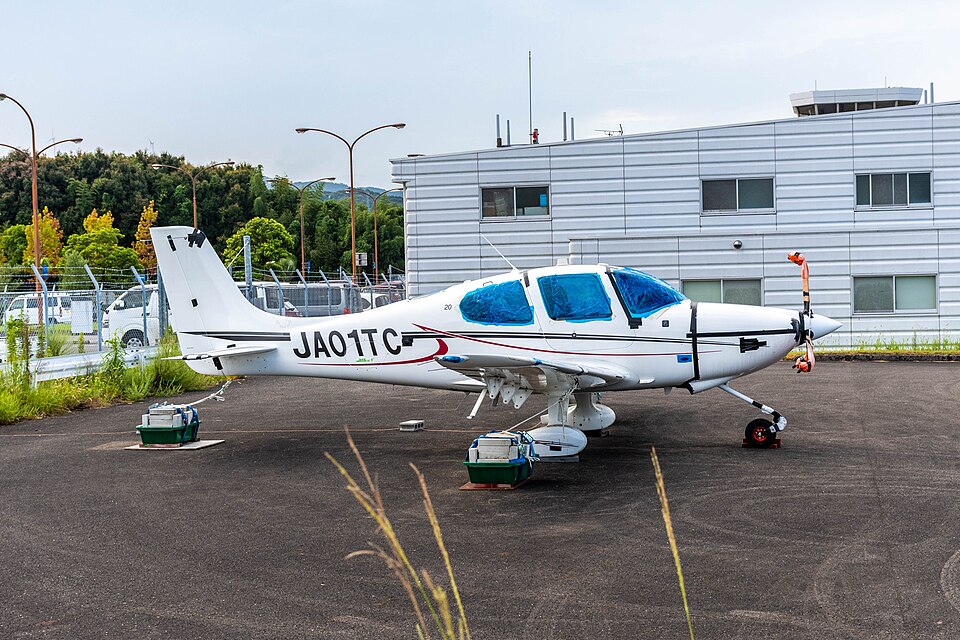
On December 26, 2022, at approximately 11:05 Japan Standard Time, a Cirrus SR20 aircraft, registration JA01TC, operated by Japan General Aviation Service Co., Ltd., was involved in an accident at Amakusa Airfield in Kumamoto Prefecture. The aircraft was performing touch-and-go training on Runway 31 when the crew attempted a go-around. During the maneuver, the aircraft touched down on its nose landing gear first, resulting in damage to the airframe. The captain and two trainees evacuated without injury.
Aircraft and Crew
The aircraft, a Cirrus SR20 (serial number 2268, manufactured August 6, 2014), was piloted by a 72-year-old captain holding an airline transport pilot certificate, with 18,863 hours total flight time and 805 hours on type. The right-seat trainee (Trainee A), aged 36, held a commercial pilot certificate and had 350 hours total flight time, including 16 hours on type. A second trainee (Trainee B) occupied the aft right seat. This was Trainee A's first flight in the right pilot seat of a Cirrus SR20.
Flight History
The aircraft departed Kagoshima Airport at 10:31 for cross-country and touch-and-go training at Amakusa Airfield. The captain acted as instructor in the left seat. During the approach to Runway 31, the descent path and speed were unstable, and the captain issued multiple instructions. Approaching the threshold, the descent was low and speed below approach speed, prompting the captain to call for a go-around. The aircraft's nose dropped, and despite a second go-around command and an attempted takeover, the aircraft touched down nose-first. Trainee A reported feeling as if they pushed the control yoke forward when trying to execute the go-around.
Weather and Runway Conditions
At 11:00, the aviation routine weather report indicated wind from 020° at 5 knots, fluctuating between 340° and 060°, visibility 10 km or more, scattered clouds at 2,500 ft, temperature 9°C, dew point 2°C, and altimeter 30.20 inHg.
Damage to the Aircraft
The nose landing gear fractured, with the detached gear found in grass south of the runway. The right main landing gear tire cover was broken, and strike marks were observed on the lower fuselage and left horizontal stabilizer. Three propeller blades were bent backward and scratched. Internal fuselage inspection revealed damage equivalent to major repair: separation of the adhesive surface between the fuselage outer skin and the right-side central longeron.
Probable Cause
The Japan Transport Safety Board determined the probable cause was most likely that the aircraft's nose dropped during the go-around attempt, causing the aircraft to touch down on its nose landing gear first. The broken landing gear then struck the lower fuselage, damaging the right central fuselage longeron. Trainee A likely pushed the control yoke forward when attempting the go-around, possibly mistaking it for the power lever due to operating from the right pilot seat for the first time.