Background
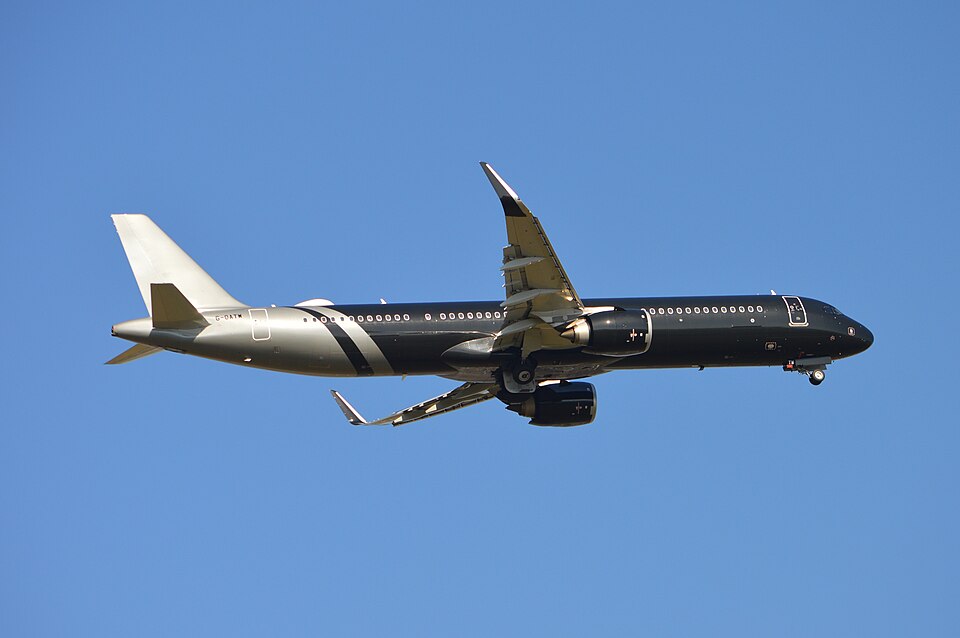
On 4 October 2023, an Airbus A321-253NX (registration G-OATW) operated a scheduled passenger flight from London Stansted Airport to Orlando International Airport. The aircraft, manufactured in 2020 and powered by two CFM LEAP-1A33 engines, carried 11 crew and 9 passengers. The flight crew consisted of three pilots, an engineer, a load master, and six cabin crew.
Flight History
The aircraft departed Runway 22 at 1115 UTC. Shortly after takeoff, the loadmaster observed a cabin window on the left side with its seal flapping and the windowpane displaced. The cabin was noticeably noisier and colder. The crew stopped the climb at FL140 and assessed the situation, deciding to return to Stansted. The aircraft held northwest of the airport to complete an overweight landing checklist, then landed uneventfully at 1151 UTC with a total flight time of 36 minutes. Fire and rescue services attended the landing. After parking, ground inspection revealed two window assemblies missing entirely, a third with the inner pane and seal dislodged, and a fourth with the forward edge protruding. The crew had only been aware of a single window issue during flight; cabin pressurization remained normal throughout.
Window Damage and Cause
Examination showed that the damaged windows were located just aft of the left overwing exit. The outer and inner windowpanes of two assemblies were missing, and the inner pane of a third was shrunk and deformed, failing to interface with its seal. A shattered inner pane was recovered from a taxiway, likely separated during takeoff. Foam ring material on the cabin liners adjacent to the damaged windows showed evidence of melting, indicating elevated temperatures.
Previous Activity
The day before the flight, the aircraft was used for ground filming. High-intensity flood lights were shone through cabin windows to simulate a sunrise. Lights illuminated the right side for approximately 5.5 hours and the left side for 4 hours, focusing on the area just aft of the overwing exits. The infrared energy from these lights damaged the acrylic windowpanes, causing them to shrink and distort.
Aircraft Examination
Detailed examination of the cabin windows confirmed that the retainers and nuts were correctly installed. The horizontal stabilizer sustained impact damage from acrylic fragments; small pieces were found inside the leading-edge panel. Similar but less severe thermal damage was found on the right side of the aircraft. The flight data recorder and cockpit voice recorder were downloaded; no pressurization warnings were recorded. The cabin altitude reached a maximum of 1,536 ft during the flight.
Response
The investigation identified four similar occurrences on other aircraft, though awareness was limited. In response, the aircraft manufacturer plans to publish articles highlighting the risk of high-intensity light damage, and the operator emphasized the need for aviation-focused risk assessments for such activities.