Flight History
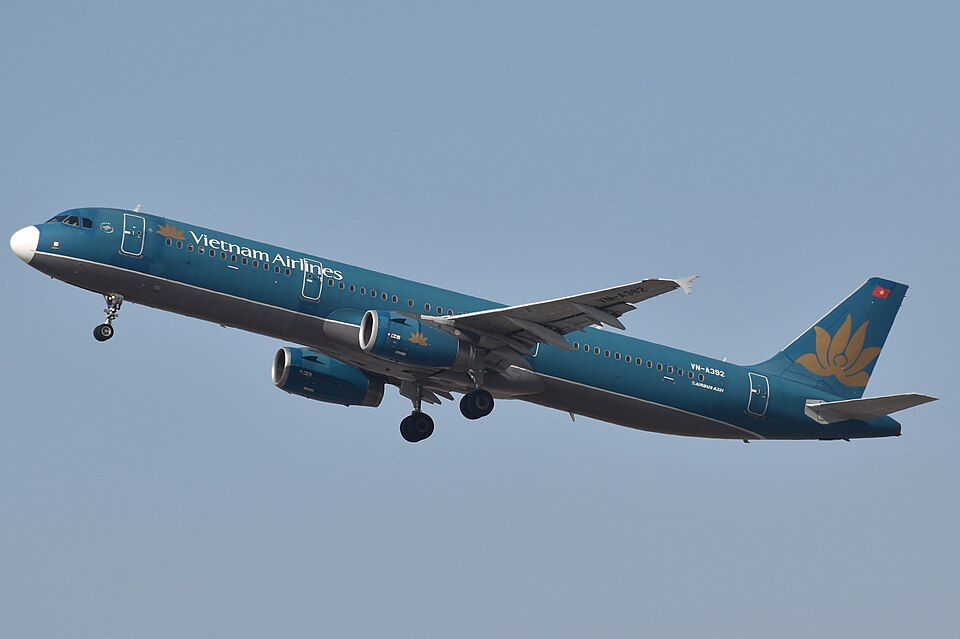
On March 18, 2020, Vietnam Airlines flight VN920, an Airbus A321 (registration VN-A392), was departing from Tan Son Nhat International Airport in Ho Chi Minh City, Vietnam, en route to Phnom Penh, Cambodia. The aircraft carried 152 passengers, 2 pilots, and 5 flight attendants. At 09:02:49 UTC, the aircraft lined up on runway 25L. After receiving takeoff clearance, the first officer, as pilot flying, advanced the thrust levers. At 09:04:07 UTC, with the aircraft at a ground speed of 132 knots and the thrust lever at FLX-MCT, parameters for engine #2 began to change, and the aircraft tended to drift right. The crew heard a loud explosion on the right side. At 09:04:08 UTC, the crew initiated a rejected takeoff per the operation manual. The aircraft stopped safely on the runway at 09:04:23 UTC. The crew informed air traffic control, performed ECAM procedures, shut down engine #2, and discharged the fire extinguisher. Passengers disembarked via ladder and were transported to the terminal without injury.
Injuries to Persons
No persons were injured.
Damage to Aircraft
Engine #2 sustained major damage: the high-pressure turbine (HPT) 1st stage disc broke and separated from the engine; the thrust reverser was torn; the fan cowling was ejected; and other internal components were liberated. Main wheels #3 and #4 blew out; main wheel #2 was worn beyond limits. One hole was found on the right side of engine #1. Scratches and gouges were observed on the primary structure of the wings and fuselage.
Other Damages
Fragments from the engine struck runway 25L/07R, creating seven small holes and igniting grass on the north side. One fragment of the HPT disc was thrown into a weather radar station office, breaking a window.
Aircraft Information
The aircraft, an Airbus A321-231 (MSN 5306), was delivered in October 2012. Its airworthiness certificate was valid until February 28, 2021. The aircraft had no pre-existing damage related to engine #2 before the flight. Engine #2, model IAE V2533-A5 (MSN V16580), was manufactured on September 19, 2012. It was sent for overhaul at Christchurch Engine Center, New Zealand, in November 2018 and installed on VN-A392 on March 18, 2019. At the time of the incident, the engine had accumulated 17,911.18 hours and 12,634 cycles since manufacture, and 2,631.6 hours and 1,926 cycles since the last shop visit. During that shop visit, the HPT #1 stage disk was replaced.
Personnel Information
The pilot-in-command, a Russian national born December 4, 1965, held an ATPL and had 16,509 total flight hours, with 7,345 hours on the A321. The first officer, a Vietnamese national born April 18, 1991, held a CPL and had 1,194 total flight hours, with 961 hours on the A321. Both held valid medical certificates. A maintenance staff member was also listed.
Meteorological Information
TAF and METAR reports indicated weather conditions were within operational standards for takeoff, with wind from 100 degrees at 10 knots, visibility 10 km or more, and scattered clouds at 1,700 feet.
Investigation
The Civil Aviation Authority of Vietnam conducted the investigation with input from the state of manufacture (United States for the engine, France for the aircraft). The report includes metallurgical analysis of the HPT disc and flight data recorder analysis. No probable cause was stated in the report excerpt.