Incident Overview
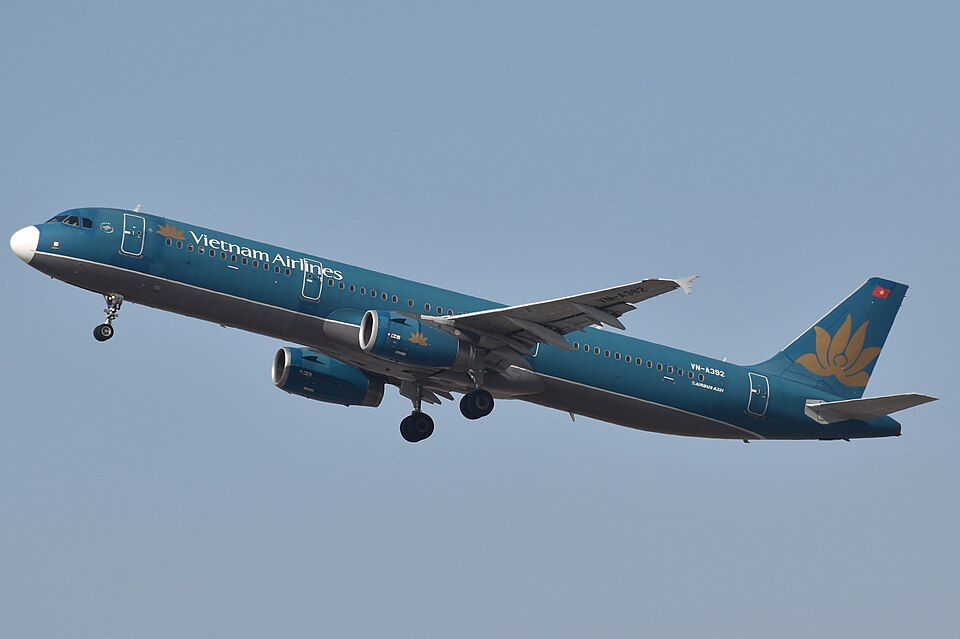
On March 18, 2020, at 16:05 local time (09:05 UTC), Vietnam Airlines flight VN920, an Airbus A321 registered as VN-A392, was departing from Ho Chi Minh City's Tan Son Nhat International Airport en route to Phnom Penh. As the aircraft accelerated through approximately 100 to 120 knots (185 to 222 km/h), the flight crew heard a loud explosion emanating from the right side of the aircraft. The aircraft began to deviate to the right of the runway.
Crew Actions and Emergency Response
The captain executed a rejected takeoff procedure in accordance with the Aircraft Operation Manual, bringing the aircraft to a stop on the runway. After stopping, the crew notified Air Traffic Control and initiated troubleshooting via the Electronic Centralized Aircraft Monitor (ECAM). They shut down engine number 2 and discharged the number 1 fire extinguisher for that engine.
Upon notification, the Southern Airport Authority and Tan Son Nhat International Airport activated safety emergency protocols. Personnel collected and marked debris, and secured the aircraft per regulations. At 16:33, all passengers disembarked via a ladder truck and were transported back to the terminal without any reported injuries to passengers or crew.
Initial Inspection and Investigation
Initial inspection revealed damage to engine number 2. Investigators from the Civil Aviation Authority of Vietnam (CAAV) arrived at the site to gather information. The Flight Data Recorder (FDR) and Cockpit Voice Recorder (CVR) were secured and sent to CAAV for analysis.
CAAV notified the International Civil Aviation Organization (ICAO), the U.S. National Transportation Safety Board (NTSB) as the representative of the engine manufacturer's country, the French Bureau of Enquiry and Analysis for Civil Aviation Safety (BEA) as the aircraft manufacturer's national representative, and Pratt & Whitney (P&W) as the engine manufacturer. Preliminary information, along with FDR and CVR data, was shared with NTSB and BEA.
Upon issuance of an Emergency Airworthiness Directive by the U.S. Federal Aviation Administration (FAA), CAAV disseminated the directive to all operators of V2500 engine series.
Metallurgical Examination and Findings
CAAV sent two fragments of the high-pressure turbine (HPT) first stage disc to Pratt & Whitney for metallurgical examination. The BEA conducted an initial assessment and analyzed FDR and CVR data. The NTSB and Pratt & Whitney suspected a manufacturing anomaly in the HPT first stage disc, noted three days after the incident.
In April 2020, CAAV provided the two disc fragments to Pratt & Whitney, who performed metallurgical examinations and collaborated with CAAV, NTSB, and BEA. On May 11, 2021, Pratt & Whitney completed the Metallurgical Investigation Final Report for the fragments.
Ongoing Analysis
As of the source document, CAAV, NTSB, and BEA were continuing analysis of data to determine root causes and were drafting a final report.