History of the Flight
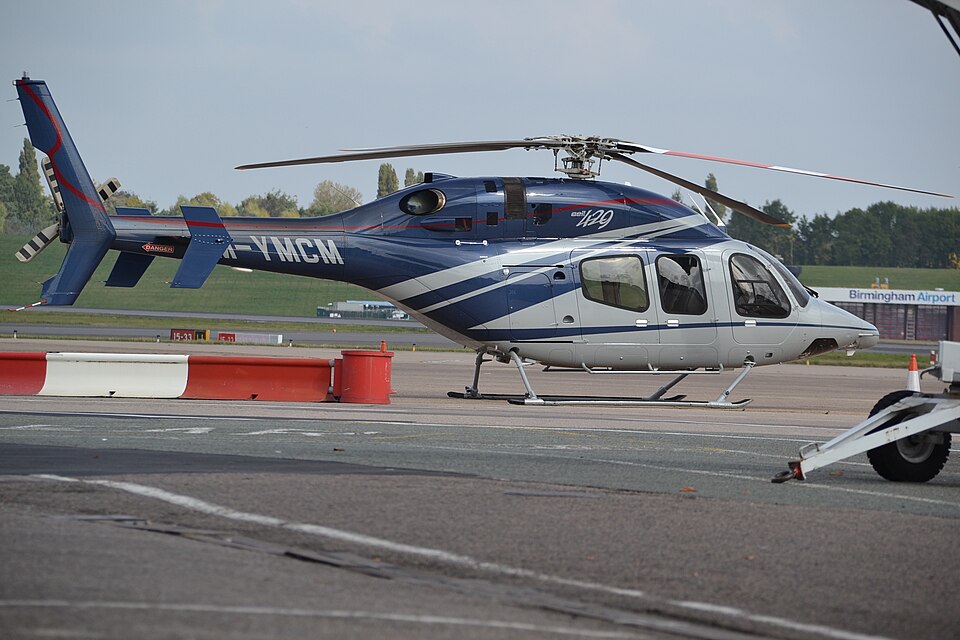
The Bell 429 (registration M-YMCM) was conducting a private flight from Blackpool to Edinburgh on 25 November 2018. The pilot, occupying the right seat, flew the helicopter while a passenger—also a qualified Bell 429 pilot—sat in the left seat. While on short final approach to Edinburgh Airport at approximately 100 knots, the pilot observed several birds to the left. He then noticed a single bird crossing from right to left directly ahead. The pilot banked the helicopter to the right but could not avoid the bird, which struck the left windscreen. The windscreen shattered, and debris entered the cockpit, causing facial and hand injuries to the passenger. The pilot declared a MAYDAY and landed successfully; the passenger received hospital treatment.
Examination of the Helicopter
The left windscreen disintegrated, and fragments of the acrylic material were found throughout the cockpit and passenger area. The bird, a wood pigeon weighing approximately 640 g, was killed on impact and discovered inside the passenger area. The helicopter manufacturer reviewed photographs of the damage and concluded that the outcome was expected given the bird size and airspeed, consistent with previous events.
Certification Requirements
The Bell 429 is certified under Canadian Airworthiness Manual Chapter 527 (Normal category), which does not specify bird strike resistance. Equivalent European (CS-27) and US (FAR-27) regulations similarly lack such requirements. In contrast, Transport category rotorcraft (CS-29/FAR-29) must withstand a 1 kg bird strike. The Bell 429's windscreen is stretched acrylic, which offers additional protection over standard acrylic, but the manufacturer does not claim bird strike protection. Polycarbonate windscreens are available as an option.
Previous Incidents and Safety Actions
The AAIB has reported three similar bird strike events on Normal category helicopters (N109TK in 2012, G-ODAZ in 2014, G-BZBO in 2016). In 2010, the NTSB recommended that FAA amend Part 27 to include bird strike protection. The Rotorcraft Bird Strike Working Group, established by the Aviation Rulemaking Advisory Committee, issued recommendations in November 2017, including introducing a 1 kg bird strike requirement for new Normal category rotorcraft and encouraging operators to adopt safety procedures such as reducing airspeed below 80 knots in bird-prone areas, increasing altitude, and using personal protective equipment like helmets and visors.
Regulatory Developments
EASA’s European Plan for Aviation Safety (2019–2023) includes Rule Making Task 0726 to improve rotorcraft occupant safety during bird strikes, with a target completion by 2024. The FAA’s Rotorcraft Standards Branch is reviewing the working group report and plans to pursue rulemaking in fiscal year 2020, aiming to harmonize with EASA. The FAA considers pilots and operators the first line of defense and may issue guidance materials such as Advisory Circulars.