History of the Flight
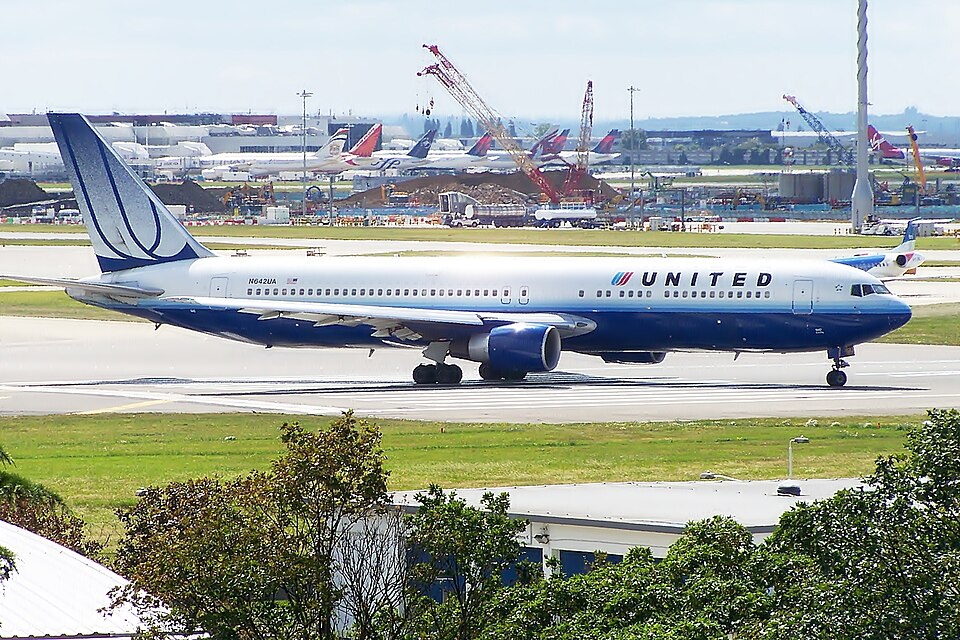
On 12 July 2016, a Boeing 767-322 (registration N642UA) operated a scheduled passenger flight from London Heathrow Airport to Chicago O'Hare Airport. Approximately 35 minutes into the flight, the flight crew were notified that a passenger had observed a fuel leak on the right wing. The crew confirmed the leak originated from the over-wing fuel filler cap. They declared a MAYDAY and elected to divert to Edinburgh Airport, coordinating with Air Traffic Control to dump fuel to reduce weight below the maximum landing weight. The landing at Edinburgh was uneventful. The Airport Rescue Fire Fighting Service (ARFFS) inspected the right wing and right engine area after landing. The aircraft was towed to a remote parking stand where passengers and crew disembarked normally.
Maintenance engineers at Edinburgh replaced the over-wing fuel filler cap. The fuel tank was then filled to maximum capacity with no observed leaks. The aircraft remained overnight in this condition with no further leaks.
The following day, the aircraft departed Edinburgh on a ferry flight to Chicago with the same flight crew and flight attendants but no passengers. During climb-out, flight attendants again observed fuel streaming from the over-wing fuel filler cap on the right wing. The crew declared a MAYDAY and returned to Edinburgh. Fuel dumping was not required as the aircraft was already below maximum landing weight. The landing was uneventful, and after ARFFS evaluation, the aircraft was towed to a remote stand. Further maintenance investigation revealed a damaged O-ring in the over-wing fuelling port.
Background Information
Aircraft maintenance records indicated the last heavy maintenance check was completed in June 2015, with no reference to maintenance on the over-wing fuelling port at that time or since.
Comment
The damaged O-ring indicated it may have been pinched or improperly seated during installation. There was no record of recent maintenance that could have caused the damage. Once damaged, the O-ring's condition likely degraded over time until it could no longer form an effective seal, leading to the fuel leaks.