History of the Flight
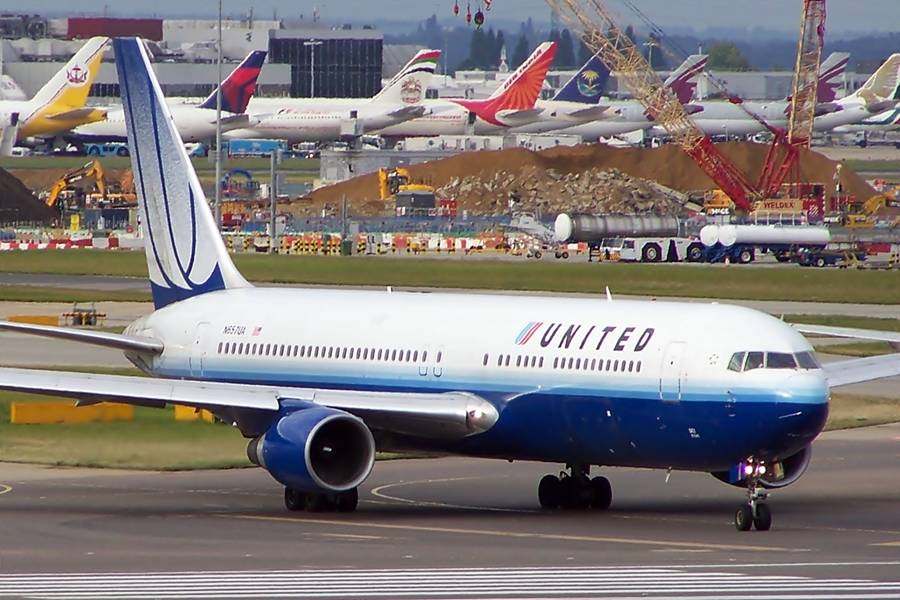
On 29 April 2019, a Boeing 767-322 (registration N657UA) departed London Heathrow Airport (LHR) en route to Chicago O'Hare. While climbing through 15,000 feet, the commander received a call from cabin staff reporting smoke in the cabin. Passengers and crew noted an electrical burning smell and haze near Row 20. The crew decided to return to LHR rather than divert. The commander declared a PAN to London ATC, who granted permission for the return. The crew performed the smoke and fumes checklist, which included selecting the utility bus switches to off. After this action, the purser reported that the smoke and haze had dispersed, though the electrical burning smell remained but was dissipating.
The commander conducted the QRH procedures for an overweight landing and configured the aircraft accordingly. ATC and the commander agreed that after landing, unless the situation deteriorated, the aircraft should turn off the runway and stop at a convenient location for assessment by the airport fire service. The aircraft landed without further incident and stopped at a remote stand. The fire service boarded and found no signs of heat or fire. There were no injuries to passengers or crew.
Investigation
A passenger reported seeing a momentary flash above the overhead ceiling panels near Row 20. The operator examined the area and identified the source of the smoke and haze. Wiring in the cabin ceiling lighting harness above Rows 19/20 on the left side showed evidence of electrical arcing and heat damage. Soot was present on the insulation surrounding a section of wiring. The circuit breaker (CB) protecting the circuit had tripped. The wiring harness, CB, and the lighting ballast connected to the harness were removed for examination by the manufacturer. The CB and lighting ballast passed functional tests.
Conclusion
Damage to the harness was caused by an unidentified electrical event between two insulated wires within the harness. This event led to arcing between the wires, generating sufficient heat to cause localised melting of the copper strands. The exact nature of the electrical event could not be determined.