Incident Overview
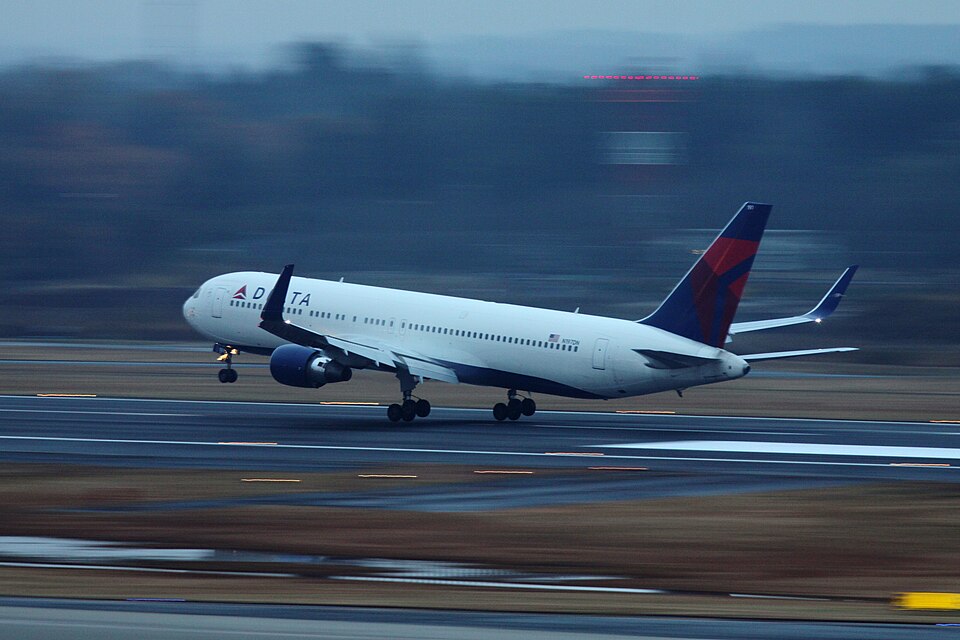
On 10 February 2023, a Boeing 767-332(ER) registered as N197DN experienced a serious incident during a scheduled passenger flight from Edinburgh Airport to New York JFK. The aircraft, powered by two Pratt & Whitney PW4060 engines, was carrying 10 crew and 211 passengers. No injuries were reported.
Sequence of Events
While taxiing to Runway 24 at Edinburgh, cabin crew stationed at overwing exits heard a rattling sound from the cargo compartment. During takeoff at approximately 1102 UTC, the flight crew set power normally, but cabin crew reported a continuous loud vibration from the mid-cabin after takeoff power was set. Shortly after climb power was set, the autothrottle disconnected, the right engine's Electronic Engine Control (EEC) alternate mode light illuminated, and an EICAS advisory message appeared.
The flight crew attempted to reset the EEC using the Quick Reference Handbook procedure but were unsuccessful. The commander requested to level at FL100 and maintain 250 KIAS. After observing fluctuating exhaust gas temperature on the right engine, the commander decided to divert. The relief pilot assessed the cabin and found no obvious abnormality. The aircraft was heavy above maximum landing weight, so the crew sought a long runway and were directed to Prestwick Airport.
During the diversion, while at 6,000 ft on a long right base leg, the commander throttled back the right engine, reducing vibration. As flaps were selected, the crew noted increasing vibration. A passenger recorded video showing flames emerging from under the right wing. The flames extinguished before landing. The commander preferred to keep both engines running and performed an autoland using flaps 25 on Prestwick's Runway 30.
Damage and Response
The aircraft landed at 1131 UTC with wet runway conditions and wind from 210° at 16 kt. While vacating the runway, the flight crew noticed right engine primary indications read zero. After parking, the airport fire service observed fuel leaking from the right wing and deployed equipment to capture the fuel, preventing ignition on hot engine or brakes. Passengers were rapidly disembarked with no injuries.
Examination revealed that a high-pressure turbine blade fractured in the right engine, damaging five additional blades. The resultant vibration caused a slat track housing drain tube in the right wing to fracture, allowing fuel to escape. The leaking fuel ignited by the hot engine exhaust but extinguished before landing.
Safety Recommendation
The AAIB issued a Safety Recommendation to the Federal Aviation Administration, requiring Boeing to demonstrate that the design of the slat track housing drain tube on the Boeing 767 family continues to comply with certification requirements for large transport aircraft.