Flight History
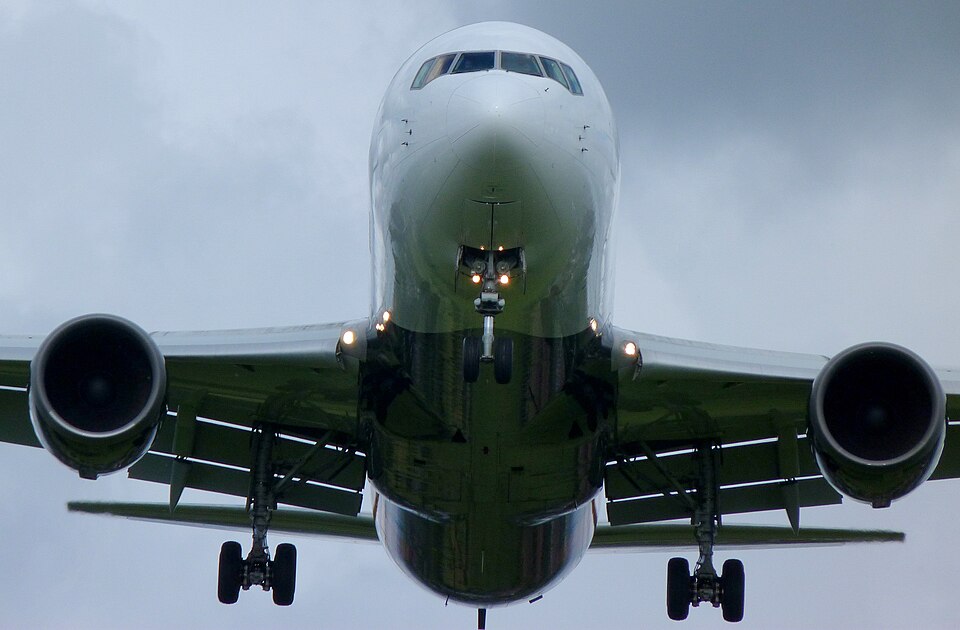
On 19 March 2017, a Boeing 767-36N (registration G-POWD) operated a commercial passenger flight from London Stansted Airport to Rzeszow-Jasionka Airport in Poland. The aircraft had undergone heavy maintenance, including replacement of both positive pressure relief valves (PPRVs), and completed a post-maintenance check flight the previous day without pressurisation issues.
After departing at 0921 hrs, the aircraft step climbed to its cruising altitude of FL370. As it passed the TULIP waypoint, the cabin altitude aural warning sounded and the red cabin altitude warning caption illuminated. The crew immediately donned oxygen masks and initiated depressurisation drills. The co-pilot required assistance with his mask and suspected mild hypoxia. The cabin altitude indicator showed approximately 10,000 ft with a differential pressure of about 7 psi.
A MAYDAY call was transmitted to Maastricht ATC, and the crew commenced an emergency descent, first to 20,000 ft, then 10,000 ft, and finally levelling at 7,000 ft. The passenger oxygen system was deployed. The aircraft diverted to Amsterdam Schiphol Airport, landing uneventfully on Runway 27 at 1007 hrs.
Crew Actions
The flight crew comprised two pilots and a maintenance engineer occupying the jump seat. The commander flew the outbound sector while the co-pilot acted as pilot monitoring. Upon activation of the cabin altitude warning, both pilots and the engineer donned oxygen masks and established communication. The crew followed the operator's rapid depressurisation procedure. After the emergency descent, the commander removed his oxygen mask at 10,000 ft, while the co-pilot remained on oxygen until levelling at 7,000 ft. The aircraft's flight management system was programmed for an approach to Runway 27 at Schiphol.
Technical Findings
External inspection revealed that the upper PPRV's indicator flag was visible, indicating that the valve had opened in flight, allowing cabin air to leak overboard. Flight data recorder information showed the seat belt signs activated at 09:40:59 hrs, followed by a cabin altitude EICAS message and master warning 38 seconds later. Crew oxygen system pressure dropped 25 seconds later, and emergency descent began after a further 60 seconds. The average descent rate was approximately 4,500 fpm. The FDR did not record cabin pressure differential or altitude.
The cockpit voice recorder stopped recording after external power was removed on the ground at Stansted and only resumed at Amsterdam. Examination of the CVR found no defects; the operator subsequently introduced an additional CVR check after each engine start.
Maintenance Background
Both PPRVs had been replaced during a recent C-check heavy maintenance with overhauled units. The scheduled in-situ test could not be performed due to unserviceable test equipment, so an alternate leak check procedure from the Aircraft Maintenance Manual was used. The faulty PPRV (part number 103642-3, serial number 69-A0674) had been removed from a Boeing 757 as 'inoperative' and overhauled in January 2012. It was then stored for over five years before installation on G-POWD. The Component Maintenance Manual required re-testing if not fitted within twelve months, but this instruction was not included on the EASA Form 1 accompanying the valve.
Testing and strip examination of the faulty valve revealed that it allowed flow at differential pressures as low as 3.36 psi, well below the intended threshold of 8.95 psi. The strip examination was inconclusive; however, the manufacturer calculated that a debris particle as small as 0.0033 inches trapped under the ball valve could cause premature opening. No evidence of debris was found.
Probable Cause
null