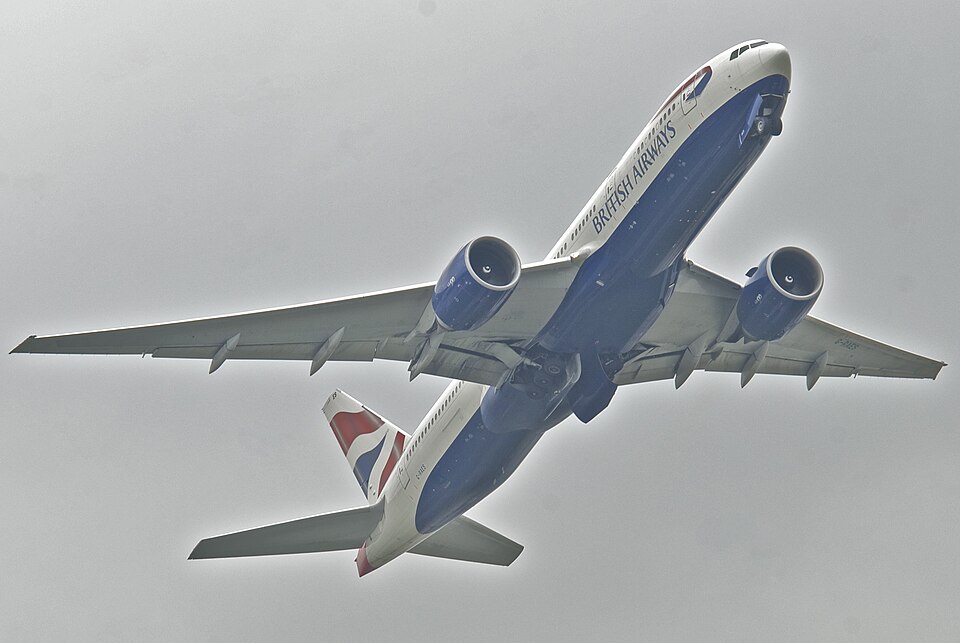
Incident Overview
On 6 March 2015, a Boeing 777-236, registration G-RAES, operated a commercial passenger flight from London Heathrow Airport. During taxi, takeoff, and initial climb, the cockpit crew noticed very low airflow from the flight deck vents and an unusually warm environment. The flight deck temperature control had no effect. The pressurisation and cabin temperatures were normal, with no EICAS or STATUS messages, and no smoke or fumes detected.
Flight History
While passing 10,000 ft, the crew contacted MAINTROL for technical support but could not resolve the issue. At initial cruise level (FL 340), all three crew members began feeling unwell—symptoms included headache, nausea, light-headedness, a constant urge to take deep breaths, and difficulty concentrating. Each co-pilot briefly visited the passenger cabin and felt better outside the flight deck. The cabin crew reported no symptoms.
The crew cycled air conditioning pack, trim air, and recirculation fan switches without improvement. They opened the flight deck door temporarily to lower temperature and improve air quality, stationing two cabin crew by the open door for security. The forward toilet was withdrawn from passenger use and curtains drawn to prevent passengers from seeing the open cockpit door. The temperature reduced, but symptoms persisted.
The operating co-pilot (Pilot Flying) donned an oxygen mask and noted most symptoms subsided. After a third call to MAINTROL yielded no further solutions, the crew decided to return to Heathrow with all three crew using oxygen masks and the cockpit door closed. A PAN PAN call was made to ATC, fuel was jettisoned over the Irish Sea, and the aircraft landed normally, escorted by the Airport Fire Service as a precaution.
Engineering Investigation
On the Boeing 777, conditioned air from the left pack reaches the cockpit via two mufflers and ducting. Engineers found no airflow in the distribution ducting forward of panel P310 in the Main Equipment Centre. Disassembly revealed a large amount of debris—wire, bubble wrap, and insulation material—blocking the duct about 12 inches upstream. Further debris was found via borescope; its blackened, brittle appearance suggested long-term presence.
Technical records showed that across the B777 fleet, similar pilot reports of low airflow were rare. On G-RAES, there had been a report of inadequate airflow on 18 February 2015, rectified by cleaning restrictors. On 26 February, another report of poor airflow and high temperatures was addressed by cleaning contaminated temperature sensors, but the engineer noted the defect had history. On 28 February, a report of minimal airflow from punkah louvres was resolved by adjusting one misassembled louvre.
Conclusion
The problems with flight deck ventilation on G-RAES during February 2015 and the incident flight were almost certainly caused by debris migration that had accumulated in the underfloor ducting from an unknown source at an unknown time. The airline's internal investigation identified two potential preventive actions: publicising the event across the airline to improve awareness, and requesting the aircraft manufacturer clarify references in the Fault Isolation Manual regarding airflow being 'satisfactory' or 'not satisfactory'.